
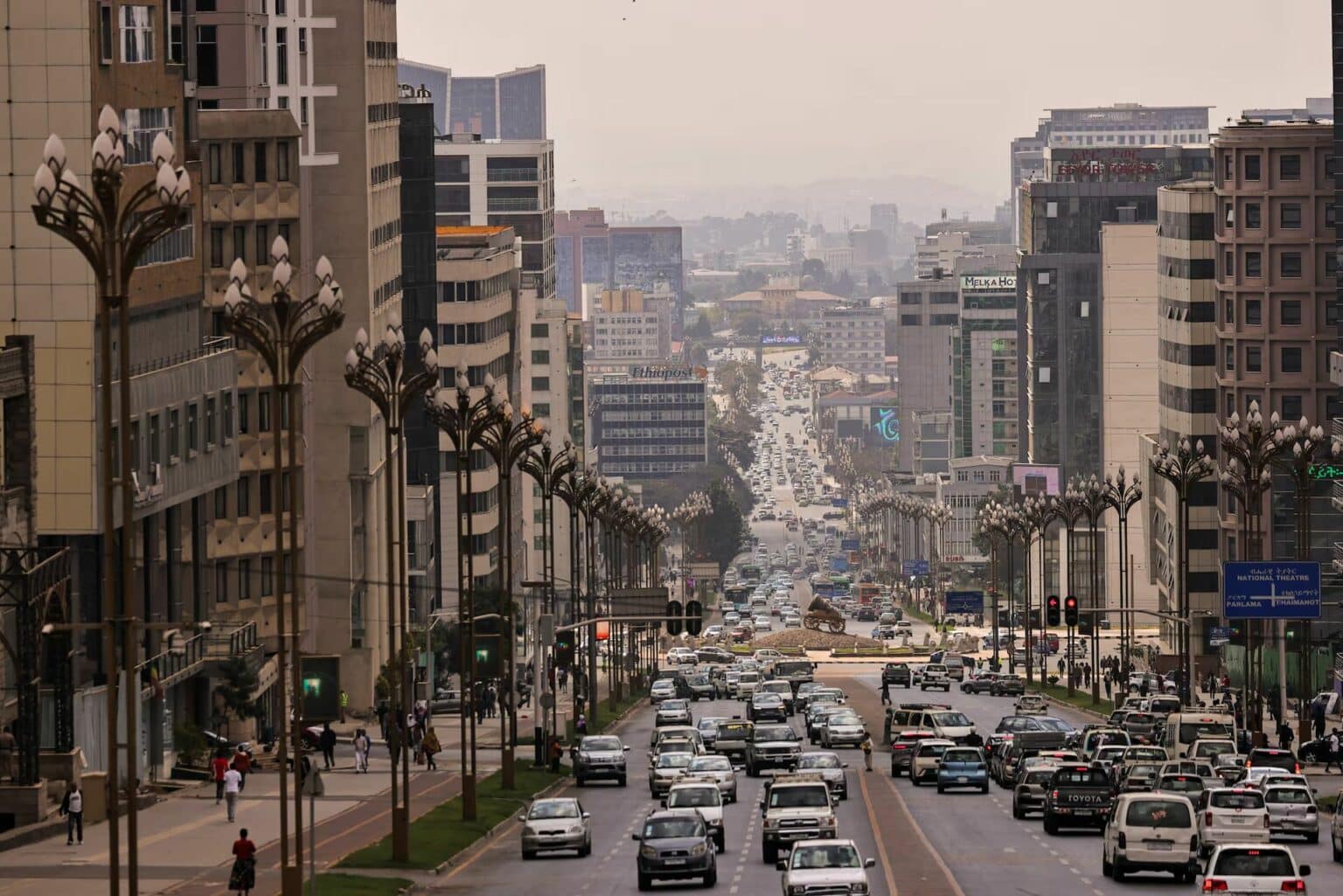
ADDIS ABABA, Nov 5 – Ethiopia has become Africa’s fifth-largest economy following a major revision of its national accounts that increased the measured size of its economy and incorporated emerging sectors, including digital financial services.
Gross domestic product (GDP) for the fiscal year ended July 2025 was estimated at $210.7 billion, Finance Minister Fitsum Assefa said in a post on X. The revised estimate for the new 2024/25 base year stood at $201.4 billion, approximately 59% higher than the previous calculation.
The revision replaces the 2015/16 base year, which Fitsum said “no longer captured the economy’s structural transformation, sectoral expansion and emerging activities such as digital finance and services.”
The updated figures place Ethiopia among the continent’s five largest economies by nominal GDP, reflecting a substantial change in its measured economic output and relative position in Africa.
New methodology captures broader economic activity
The revised national accounts draw on a recent agricultural census and household surveys, while incorporating data from state-owned enterprises and non-profit institutions for the first time.
The updated estimates also provide a revised picture of the sectoral composition of the economy. Services accounted for almost 36% of GDP, making it the largest contributor, followed by agriculture at 32% and industry at 30%.
The services sector includes transport and contributions from Ethiopian Airlines, Africa’s largest carrier. The revised figures highlight the importance of services alongside agriculture and industry in Ethiopia’s economic structure.
GDP rebasing updates the reference year and statistical methods used to measure economic activity. The exercise can increase reported nominal output by capturing industries, businesses and economic activities that were previously underrepresented in national accounts.
Similar exercises have recently been undertaken in Nigeria, Kenya and South Africa as governments seek to improve the accuracy of their economic statistics.
Debt ratios improve, but obligations remain unchanged
The expanded GDP estimate is also expected to reduce Ethiopia’s headline debt-to-GDP ratio, potentially improving indicators used by creditors and investors to assess the country’s debt sustainability.
In a research note, Oxford Economics said the statistical revision would mechanically lower Ethiopia’s debt ratios as the government continues restructuring its external obligations under the G20 Common Framework.
However, the adjustment does not reduce the amount of debt owed or the cost of servicing it.
“However, outstanding debt, servicing costs, and foreign-currency financing requirements remain unchanged,” Oxford Economics economist Alexander Venter said.
The distinction is particularly important as Ethiopia works through its external debt restructuring. A larger nominal GDP increases the economic base against which debt is measured, but does not automatically improve the government’s capacity to generate foreign exchange or meet repayment obligations.
A similar GDP rebasing exercise in South Africa last week also resulted in lower reported debt ratios, illustrating how updated national accounts can alter fiscal indicators without an equivalent change in outstanding public debt.
Economic reforms underpin growth ambitions
Ethiopia, Africa’s second-most populous country, is projecting economic growth of 10.2% in the current fiscal year. The government expects growth to be supported by economic reforms intended to attract foreign investment and expand private-sector participation.
The reform programme includes opening previously restricted industries to international investors, particularly telecommunications and banking, which have historically operated under significant state controls.
Two years ago, the authorities also allowed the birr to trade more freely against the US dollar as part of an economic reform programme backed by the International Monetary Fund.
The changes are intended to improve market access, attract foreign capital and support a broader transformation of the economy. However, the country continues to face challenges linked to foreign-exchange availability, external debt obligations and the adjustment costs associated with its reform programme.
Ethiopia’s revised GDP figures provide a broader statistical representation of its economy and elevate its position among Africa’s largest markets. The longer-term significance of the adjustment will depend on whether the country can translate its measured economic scale into stronger productivity, revenue generation, export capacity and sustainable foreign-exchange earnings.
