
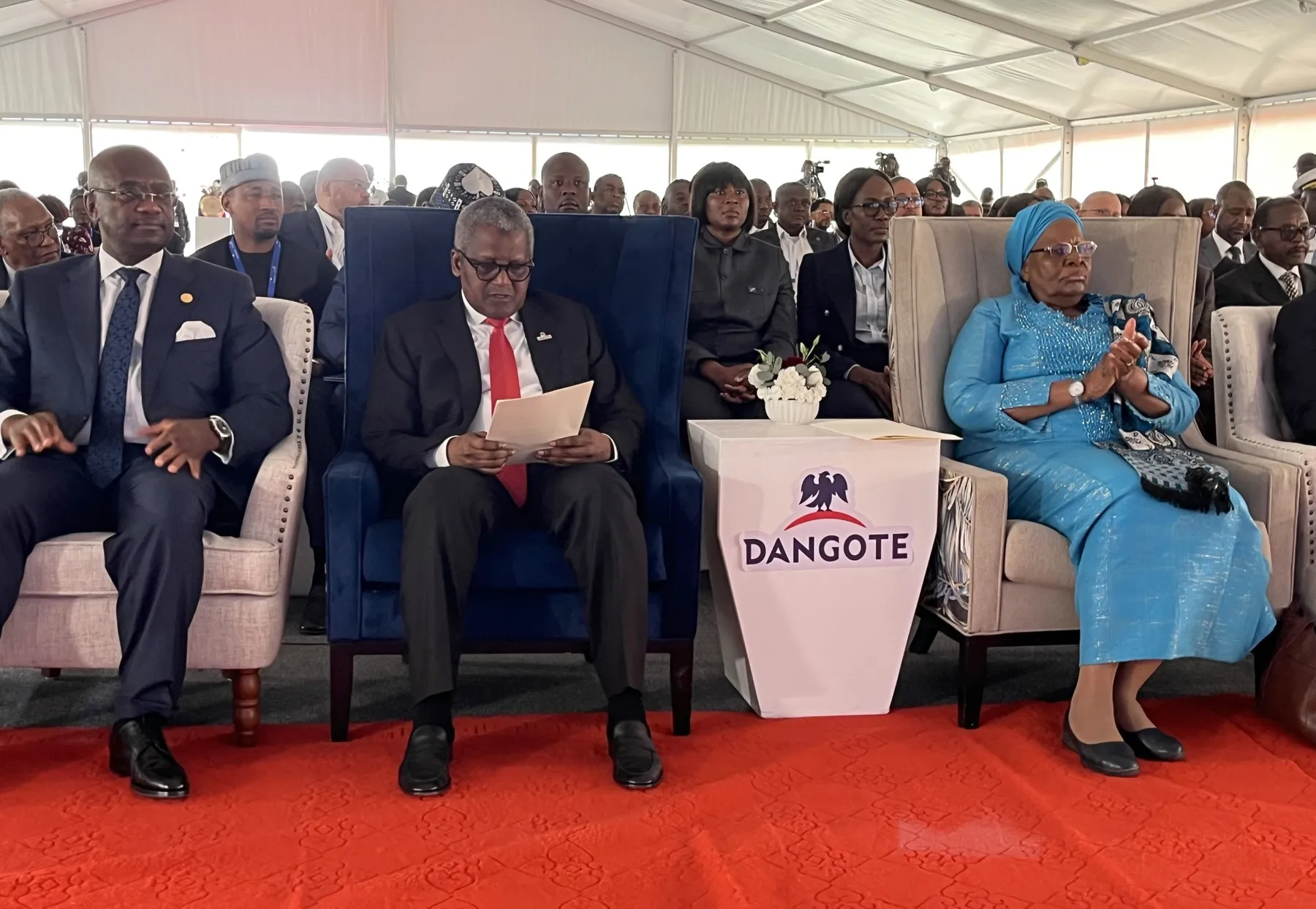
WINDHOEK, Nov 4 – Nigerian industrialist Aliko Dangote has launched construction of a planned fuel storage depot in Namibia, marking another expansion of Dangote Group’s petroleum infrastructure business across Africa. The $2.5 billion project will combine storage facilities with a proposed regional pipeline network designed to distribute petroleum products to landlocked markets in southern Africa.
The groundbreaking ceremony took place near Walvis Bay, Namibia’s main port, where Dangote said the investment would improve access to fuel across the region and reduce supply costs for countries dependent on imports.
“We want to heavily invest so that most of the landlocked countries will be able to access petroleum products at a cheaper price,” Dangote said at the event on Wednesday.
The proposed infrastructure includes a pipeline of approximately 1,700 kilometres (1,056 miles), planned to run through neighbouring Botswana and South Africa, with the possibility of extending into other countries.
The project is expected to include around 4 million barrels of storage capacity, comprising 360 million litres for diesel and 240 million litres for gasoline, according to Dangote.
Speaking at the site, approximately 10 kilometres east of Walvis Bay, Dangote said the investment would lower petroleum prices and improve regional access to fuel.
“Your petroleum prices will be much much cheaper than where they are,” Dangote said. He added that the project would “strengthen Namibia’s energy security and advance regional trade and industrial development across southern Africa.”
Namibia, with a population of approximately 3 million, is seeking to strengthen its fuel supply infrastructure amid concerns about potential shortages following the conflict involving the United States, Israel and Iran. The wider region remains exposed to imported fuel supplies and logistical constraints, particularly in countries without direct access to seaports.
Botswana, for example, is negotiating fuel purchases from multiple sources, including Oman and Dangote, as it seeks to diversify supply and reduce the risk of disruptions. Governments across the region have also entered exclusive supply arrangements with international trading companies, including Vitol Group, to secure petroleum availability.
The proposed Namibian storage and pipeline network could change how fuel is transported to inland markets. Mining regions have traditionally relied partly on road transport, with trucking companies operating specialised trailers to move diesel from Namibia into the interior and return with copper.
By bringing storage and distribution infrastructure closer to major mining areas, Dangote’s project could reduce dependence on long-distance trucking and introduce additional competition among regional fuel distributors.
The investment forms part of a broader expansion of Dangote’s energy business. The group has announced more than $35 billion in infrastructure projects across Africa this year, representing nearly three-quarters of its expansion programme through 2030.
A central component of the strategy is the expansion of Dangote Petroleum Refinery in Lagos. The company is progressing with plans to increase the refinery’s capacity to 1.4 million barrels per day within three years, positioning it to compete with the world’s largest refining facilities.
The expansion is expected to support the group’s ambition to supply petroleum products to markets beyond Nigeria, including southern and eastern Africa. Some of the fuel distributed through the proposed Namibian network could therefore originate from the Nigerian refinery once the expansion is completed.
Dangote Group is also developing fuel-storage facilities and a pipeline connecting Djibouti and Ethiopia. The company is considering a separate pipeline to transport fuel from its proposed Lamu refinery in Kenya to Ethiopia, while Cameroon is also expected to host another infrastructure project.
The Namibian investment adds a southern African distribution corridor to the group’s expanding network. Its commercial impact will depend on the development of the pipeline, the participation of transit countries and the ability to secure long-term supply arrangements across the region.
