
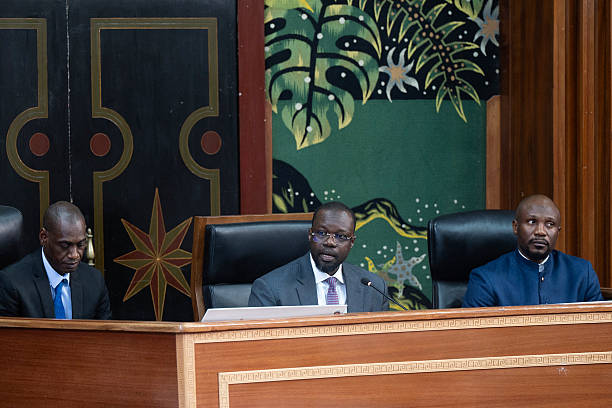
DAKAR, Nov 3 – Senegal’s parliament has rejected proposed revisions to the 2026 budget, prolonging uncertainty over the government’s fiscal plans as authorities negotiate a new $2.2 billion financing programme with the International Monetary Fund (IMF).
Lawmakers from the ruling Pastef group, led by Prime Minister Ousmane Sonko, opposed the amended budget by 109 votes to 20, with three abstentions, according to the first vice president of the National Assembly.
The vote marks the first time the legislative chamber has rejected the proposed revisions, following two unsuccessful attempts to secure approval from parliament’s finance committee.
The rejection leaves the government without parliamentary approval for additional spending and financing adjustments intended to address revenue shortfalls, meet subsidy costs and clear outstanding obligations to businesses.
Dispute over fiscal adjustment and debt transparency
The parliamentary standoff comes as Senegal continues to address the consequences of billions of dollars in previously undisclosed loans accumulated under the previous administration. The debt was discovered in 2024, prompting a reassessment of the country’s public finances and the suspension of its previous IMF arrangement.
Pastef lawmakers have argued that the proposed budget revisions place an excessive share of the fiscal adjustment burden on households and priority sectors.
The party has also accused President Bassirou Diomaye Faye’s administration of withholding information required by lawmakers to scrutinise the government’s debt position and financing assumptions.
The Finance Ministry, however, said it had provided detailed responses to Pastef’s questions, alongside supporting documentation. It also criticised lawmakers for failing to submit amendments or alternative proposals.
The disagreement reflects a broader challenge facing Senegal’s fiscal authorities: securing political support for spending adjustments while restoring confidence in the country’s public finances and debt reporting.
Revenue shortfall and spending pressures
The proposed budget revision was intended to address a projected revenue shortfall of 340 billion CFA francs, equivalent to approximately $580 million.
The additional financing requirements include energy subsidies, other government costs and the clearance of arrears owed to businesses. The revisions are also linked to fiscal conditions associated with a new IMF programme.
With parliament rejecting the amended bill, the existing 2026 spending plan remains in force. This leaves the government without the additional funding earmarked to cover the identified shortfall and other expenditure commitments.
The Finance Ministry has warned that continued uncertainty surrounding the budget could undermine efforts to mobilise financing for the government’s funding gaps and increase pressure on state cash flows.
Such constraints could also affect the government’s ability to maintain spending on priority sectors and meet outstanding payment obligations.
$2.2 billion IMF programme remains central
Senegal is negotiating a three-year financing programme worth $2.2 billion with the IMF, following the suspension of its previous arrangement after the discovery of undisclosed government debt.
The negotiations are taking place against the backdrop of efforts to establish a credible fiscal adjustment framework and provide financing assurances from official creditors.
The IMF agreement is important to Senegal’s broader financing strategy, as it could help restore confidence in the country’s fiscal management and support access to additional external financing.
The government’s ability to demonstrate credible fiscal adjustments and secure assurances from its official creditors remains central to the negotiations. Authorities are aiming for approval by the IMF board as soon as November 2026.
However, the parliamentary rejection introduces another source of uncertainty into the process, particularly as the government seeks legislative support for the fiscal measures underpinning its financing strategy.
Fiscal uncertainty raises pressure on government financing
The rejection of the revised budget highlights the political and institutional challenges involved in implementing Senegal’s fiscal adjustment programme.
Without approval for the proposed changes, the government must continue operating under the existing spending framework while addressing revenue pressures, subsidy requirements and outstanding payments.
The outcome of the dispute could influence the pace of negotiations with the IMF and the government’s ability to secure the financing needed to manage its fiscal commitments.
For Senegal, restoring confidence in public finances will require more than securing external financing. It will also depend on transparent debt reporting, credible budget assumptions and sufficient political support for the measures required to stabilise government finances.
