
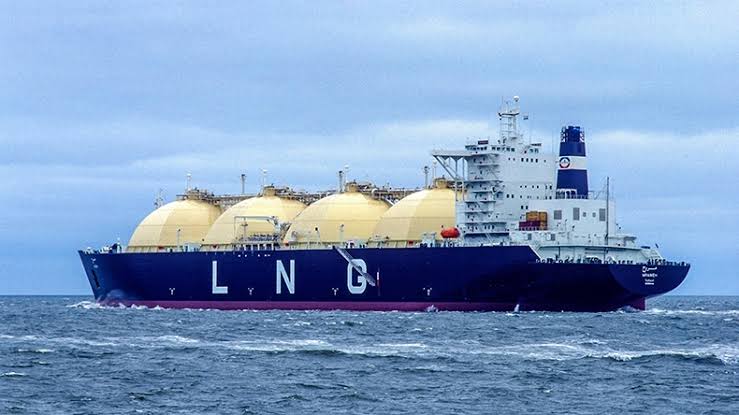
LAGOS, July 7 – Nigeria’s UTM Offshore has secured a 15-year gas supply agreement for its proposed $3 billion floating liquefied natural gas (FLNG) project, removing one of the project’s final major hurdles ahead of an expected final investment decision in the fourth quarter of 2026.
According to a Reuters report, under the agreement, a joint venture comprising NNPC Limited and Seplat Energy Producing Nigeria Unlimited will supply 200 million standard cubic feet of natural gas per day (approximately 5.7 million cubic metres) to the offshore facility.
The gas will be sourced from the Yoho field and will feed the FLNG project, which is designed to produce 1.8 million tonnes of liquefied natural gas annually for export markets.
The floating LNG project is jointly owned by UTM Offshore, which holds a 72% stake, NNPC Limited with 20%, and the Delta State Government, which owns the remaining 8%.
The project received Nigeria’s first licence for a floating LNG export facility in 2024, reflecting the government’s broader strategy to commercialise stranded natural gas resources, diversify energy exports and strengthen the country’s position in the global LNG market.
Speaking at the signing ceremony in Abuja, UTM Offshore Chief Executive Julius Rone said the agreement represents a significant milestone for the project.
According to Rone, “The execution of this agreement establishes the long-term feed gas framework needed to advance project financing, construction and operations.”
He added that the long-term supply arrangement would provide greater confidence for investors, lenders and prospective LNG buyers, positioning the project for a final investment decision in the fourth quarter of 2026.
Front-end engineering and design (FEED) for the project was completed in 2023 by JGC Corporation and Technip Energies, laying the technical foundation for the development phase.
Despite holding some of Africa’s largest proven natural gas reserves, Nigeria has historically struggled to fully commercialise its gas resources due to infrastructure shortages, financing constraints and regulatory uncertainty. The UTM FLNG project is expected to contribute to unlocking stranded gas reserves while supporting export earnings and long-term investment in the country’s gas sector.
