
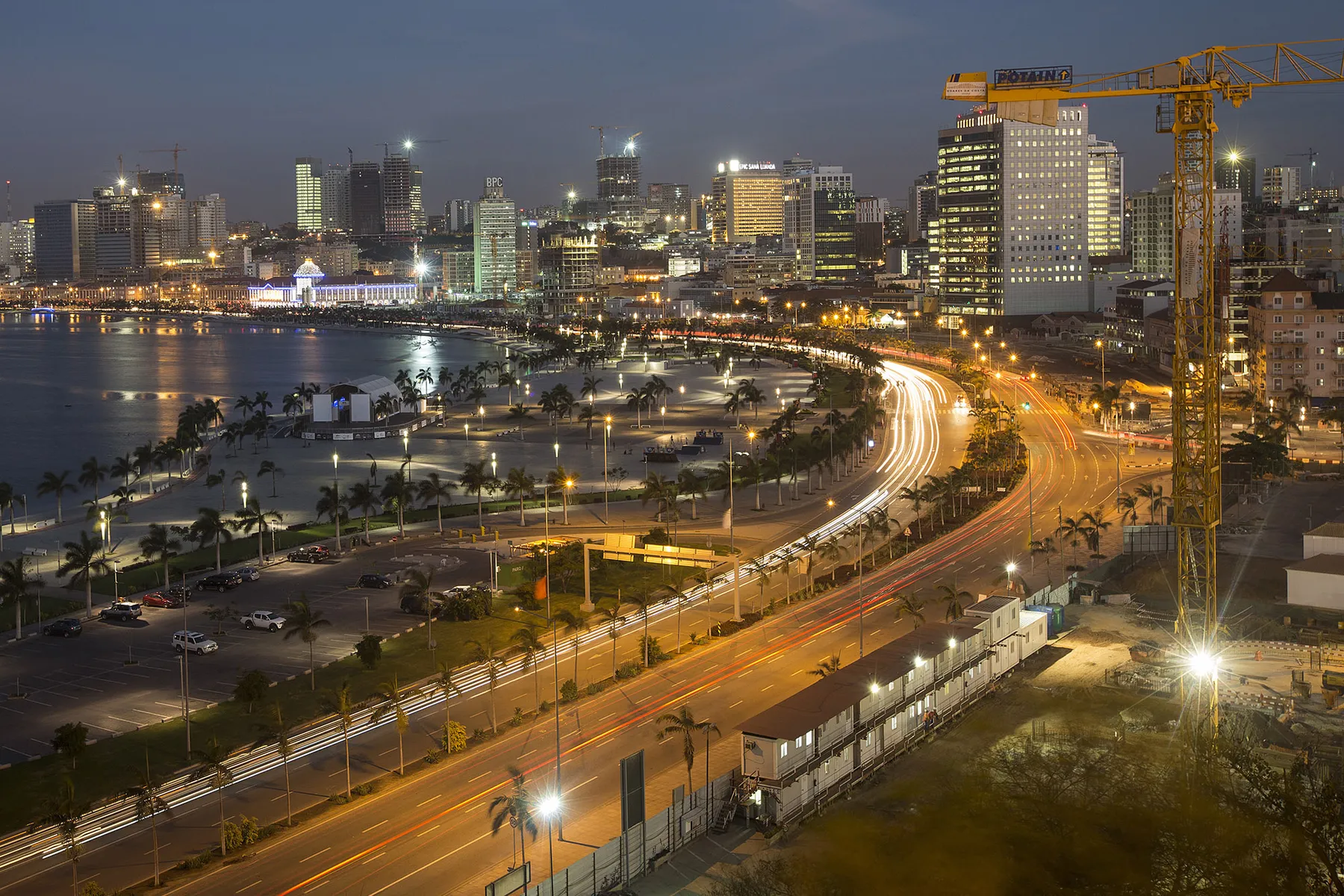
LUANDA, Nov 5 – Africa needs deeper financial markets, stronger institutional capacity and more investment-ready projects to attract significantly greater volumes of private capital, according to an official at the International Finance Corporation (IFC), the private-sector arm of the World Bank Group.
The development lender is targeting a mobilization ratio under which every dollar of development finance attracts an additional $10 in commercial investment. However, Mary Porter Peschka, IFC’s division director for East Africa, said the institution was not yet prepared to confirm that its African portfolio could consistently achieve the target.
While the so-called golden ratio is already being met or exceeded in some markets and sectors, Peschka described the broader ambition as “extremely ambitious”.
“There’s a shallow financial system in a lot of the markets we’re working in, so this context is going to require a lot deeper and more sustained engagement and and support,” she said Wednesday during a panel at the Africa Financial Summit in Luanda, Angola.
“It’s really critical to think about the long-term enabling market structures that are going to allow the high mobilization ratios to become possible.”
The IFC delivered $22 billion in investment in Africa last year. However, fragile states and a shortage of investable projects continue to constrain the ability of guarantees, risk-sharing facilities and capital-market platforms to mobilise private financing at scale across the region.
The challenge comes despite the substantial volume of domestic financial resources available across African economies. The continent holds more than $4 trillion in domestic financial assets and savings, according to estimates from Africa Finance Corporation. Yet less than 2.7% of capital held on institutional balance sheets is directed towards long-term productive investment, the African Development Bank says.
A significant share of these resources remains concentrated in commercial banks, government securities and a relatively small number of developed financial markets. South Africa alone accounts for about 70% of Africa’s pension assets, according to Samira Mensah, managing director for research and analytics in Africa at S&P Global.
Beyond the concentration of capital, limited technical, contractual and legal capacity is also holding back infrastructure development. Samuel Goldstein, managing director at strategic-advisory firm Skykapital, said weaknesses in public-sector expertise often prevent projects from progressing beyond the feasibility stage.
“It’s still an obstacle for the development of many infrastructure projects,” he said, adding that governments require more support to manage complex developments.
The mobilisation challenge also reflects a gap between the growth of domestic capital pools and the availability of financial structures capable of directing those resources towards productive investment.
Cyrille Nkontchou, co-founder and managing partner of Africa-focused asset manager Enko Capital Investment Ltd., said domestic capital was expanding and the financial industry needed to develop mechanisms to channel more of it into the economy. Enko Capital manages $1.8 billion in assets, with approximately 60% of its capital sourced locally.
He said multilateral development institutions had an important role in mobilizing domestic investors, particularly by helping establish financial markets that could support longer-term investment.
Real estate, he added, represents a significant but underutilised source of domestic capital across African economies.
“Development agencies can basically facilitate the development of a properly functioning mortgage market,” Nkontchou said. “There’s huge opportunity. We’re talking about numbers that are in billions.”
Developing deeper mortgage markets, strengthening institutional investment frameworks and improving public-sector project preparation could help connect domestic savings with infrastructure and other productive assets.
For development lenders, the broader task is therefore not limited to providing guarantees or financing individual projects. It also involves building the market structures, institutional capacity and financial instruments required to make private investment more accessible and commercially viable across African economies.
