
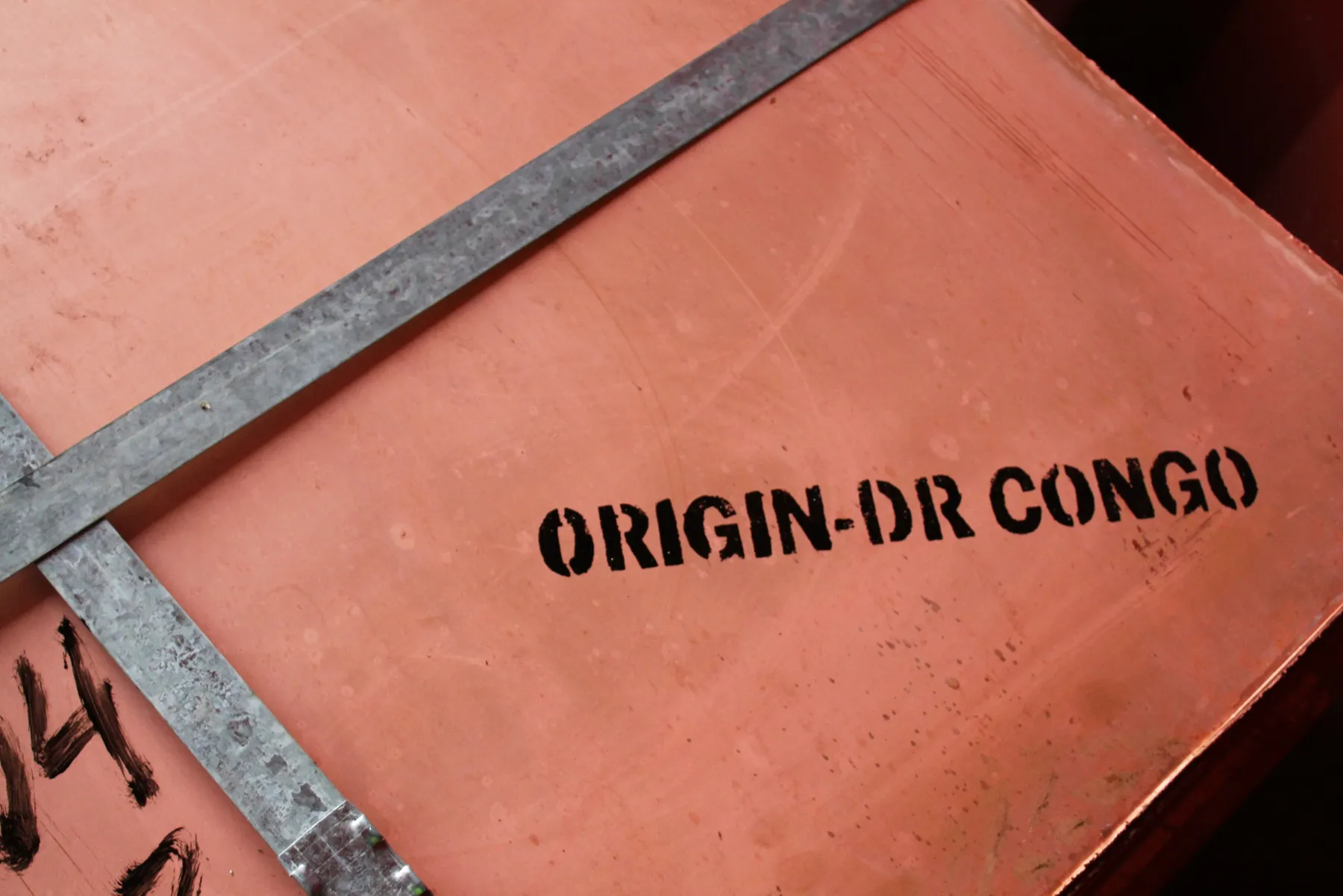
KINSHASA, Sept 16 – The Democratic Republic of Congo’s copper exports reached a record 1.72 million metric tons in the first half of 2026, while the share directed to the United States and Europe doubled from 2025 levels as Kinshasa intensified efforts to diversify its critical-minerals trade.
Copper exports rose to 1,724,217 tons between January and June, compared with 1,650,189 tons during the same period a year earlier, according to the Congolese mines ministry’s first-half mining statistics report cited by Reuters.
The increase comes as Congo seeks to broaden its customer base beyond China, which remains deeply embedded in the country’s mining industry. Chinese-linked companies including CMOC, Huayou Cobalt and Zijin have major positions across Congo’s copper and cobalt sectors.
The country is also facing growing international competition for access to critical minerals, with the United States and European Union seeking to establish alternative supply chains for strategic metals.
Congo Accelerates Export Diversification
The mining ministry described the first six months of 2026 as a period of intensified efforts to redirect mineral exports toward alternative markets.
“The first half of 2026 was marked by the implementation of the export diversification offensive,” the report said.
The share of Congo’s copper sales going to the United States and Europe doubled compared with 2025, according to the report, although it did not disclose the underlying sales volumes.
The shift follows Congo’s strategic minerals partnership with Washington signed in December 2025. State mining company Gecamines has subsequently used offtake agreements with commodities traders Mercuria and Glencore to market its share of copper production from major mining operations, including assets operated with Chinese-linked partners.
The strategy includes copper from Tenke Fungurume Mining and Kamoto Copper Company, among other ventures in which Gecamines holds interests.
The Congolese mines ministry did not immediately respond to requests for comment.
Cobalt Exports Decline Under Quotas
While copper exports increased, cobalt shipments declined as Kinshasa continued to regulate exports of the battery metal.
Cobalt exports fell 6.4% to 41,140 tons in the first half of 2026 from 43,930 tons a year earlier, reflecting export quotas imposed by the government.
Congo also introduced a ban on exports of copper and cobalt concentrates in June. Despite the measure, first-half copper concentrate exports amounted to 151,202 tons, containing 50,629 tons of copper.
The largest exporters of copper concentrates during the period were Eurasian Resources Group’s Frontier Mining, Chinese-owned Kinsenda Copper Company, Everbright Mining and Sabwe Mining.
In cobalt hydroxide, CMOC’s Kisanfu mine was the largest exporter, shipping 24,825 tons, followed by Glencore’s Kamoto Copper Company and ERG’s Metalkol.
Critical Minerals Competition Intensifies
Congo’s export strategy comes as its position in global critical-mineral supply chains attracts increasing attention from competing economic powers.
The country is the world’s largest cobalt producer and the second-largest copper producer, making its mineral output increasingly important to industries ranging from electric vehicles and batteries to power infrastructure and advanced manufacturing.
The expansion of sales to Western markets represents a shift in the commercial geography of Congo’s mineral exports, while the government’s use of state-owned Gecamines to pursue alternative offtake arrangements gives Kinshasa a more direct role in determining how some of its strategic mineral production reaches international markets.
