
– Business, Finance, Markets & Economic News
  • Home
  • Economy
  • Business
  • Markets
  • Finance
  • Credit Ratings
  • Policy
  • Tech
– Business, Finance, Markets & Economic News
  • Home
  • Economy
  • Business
  • Markets
  • Finance
  • Credit Ratings
  • Policy
  • Tech
Top News
Developing Countries’ External Debt Hits Record $9.4 Trillion in 2025, World Bank Warns
AngloGold Ashanti to Invest $900 Million in Gold Mine Expansions Across Africa and Brazil
AfDB Arranges $1.2 Billion Financing for Tanzania’s Tabora–Kigoma Standard Gauge Railway
Caledonia Mining Secures $150 Million Bridge Facility for Zimbabwe’s Bilboes Gold Project
AfDB President Calls for New African Financial Architecture to Accelerate Private-Sector Growth
US and Egypt Sign $125 Million Agreement to Expand Private-Sector Opportunities
Ethiopia Becomes Africa’s Fifth-Largest Economy After GDP Rebasing to $210.7 Billion
CANEX WKND 2026: Afreximbank Pushes Financing and Market Access for Africa’s Creative Industries
World Bank’s IFC Says Africa Needs Deeper Financial Markets to Mobilize Private Capital at Scale
Dangote Explores Cross-Border Share Trading as Refinery IPO Attracts $4.77 Billion in Orders
OPay Suspends $304 Million US IPO Following Chinese Regulatory Inquiry
Egypt Raises $500 Million Through International Bond Market Reopening
Ramaphosa Sees Opportunity to Reset South Africa-US Relations After Midterm Elections
Ghana Inflation Rises for Third Consecutive Month to 5.5% in October 2026
Dangote Unveils $2.5 Billion Namibia Fuel Storage and Regional Pipeline Project
SUBSCRIBE
– Business, Finance, Markets & Economic News
Subscribe
– Business, Finance, Markets & Economic News
  • Home
  • Economy
  • Business
  • Markets
  • Finance
  • Credit Ratings
  • Policy
  • Tech
Copyright 2026 - All Right Reserved
Home » Finance » World Bank Urges African Cities to Issue More Debt to Finance Urban Infrastructure
Finance

World Bank Urges African Cities to Issue More Debt to Finance Urban Infrastructure

by Oluebube Elechi November 4, 2026
written by Oluebube Elechi November 4, 2026
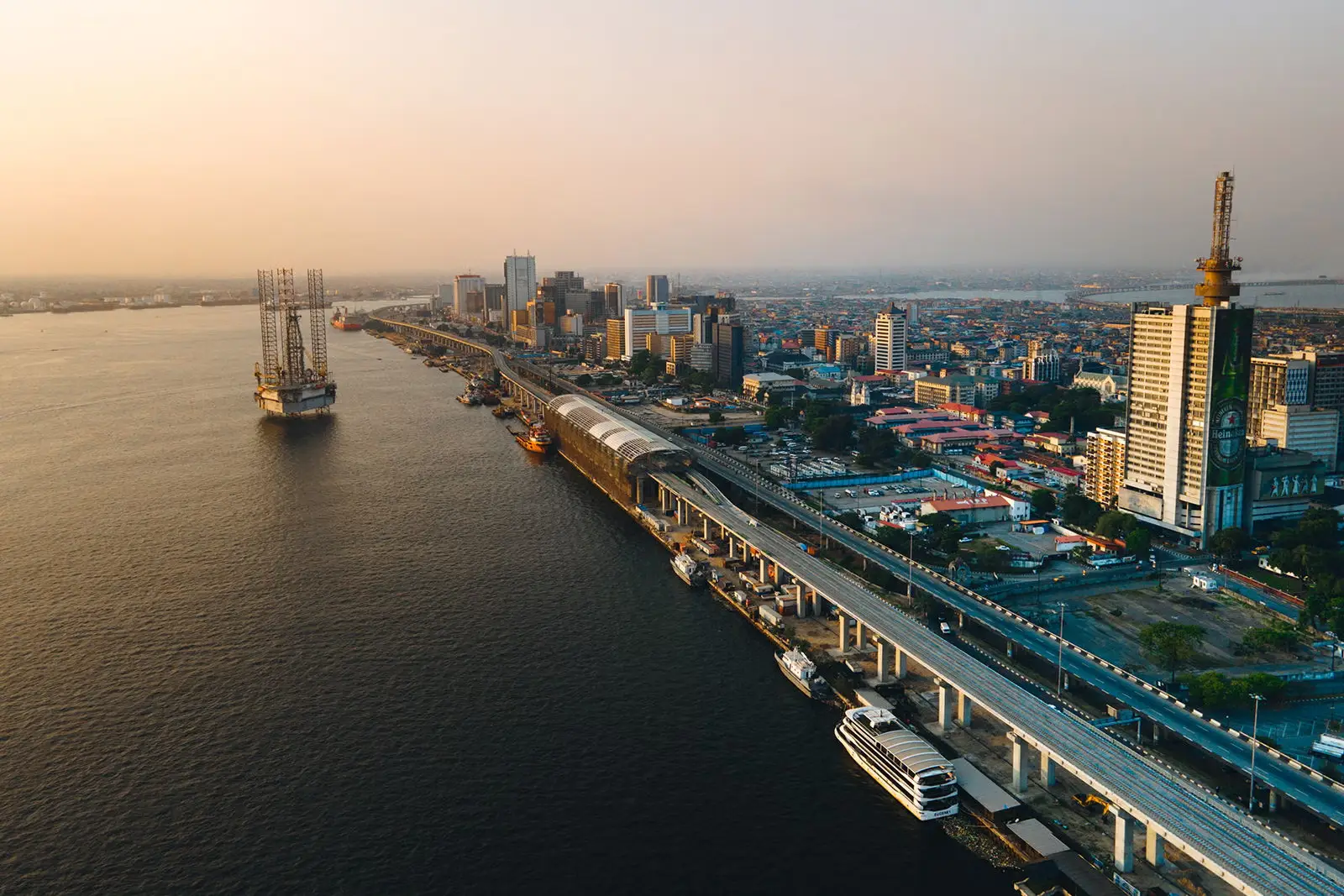
A drone view of commercial hub of Lagos Island, in Lagos, Nigeria. (The World Bank Group)
FacebookTwitterLinkedinEmail
11

LAGOS, Nov 4 – The World Bank is calling on cities across sub-Saharan Africa to increase their use of municipal debt and attract greater private-sector investment to finance infrastructure needed to accommodate rapidly expanding urban populations.

The multilateral development institution, which has invested in urban infrastructure across the region, said cities would need to develop stronger financing capacity to fund roads, water systems, electricity networks and other essential services.

While the bank is prepared to provide policy advice and direct lending to governments and municipalities, it said the scale of the investment requirement would require significant participation from private capital.

“We are recognizing it needs to be a bigger part of our investment plans in times ahead,” said Paschal Donohoe, the World Bank’s chief knowledge officer, in an interview with Bloomberg.

You Might Be Interested In
  • South Africa Names Seiso Mohai as Public Investment Corporation Chairman

Donohoe said African cities would need stronger leadership and improved revenue-raising capacity, including the ability to collect taxes, to support the issuance of their own debt.

Municipal bond markets remain relatively underdeveloped across much of sub-Saharan Africa. South Africa is among the few countries where major cities have established a record of issuing municipal bonds, with Cape Town, Durban, Pretoria and Johannesburg having accessed the market.

Johannesburg repaid a bond earlier in 2026 and has indicated plans to issue new debt.

The World Bank’s push comes as urbanisation across sub-Saharan Africa accelerates, creating mounting pressure on infrastructure and public services. The continent’s urban expansion is taking place at a pace comparable to East Asia’s urbanisation during the 1980s, when several cities in the region developed into major centres of economic activity and productivity.

World Bank calculations show that cities in sub-Saharan Africa are currently expanding at approximately 2.2% annually. This follows more than seven decades of urban growth, during which population increases in some periods reached as high as 7% per year.

By comparison, urban populations in East Asia are growing at around 0.2% annually, following an earlier period of expansion that peaked at approximately 4.6% in the 1960s before entering another phase of rapid growth two decades later.

By 2050, close to 1 billion people are expected to live in sub-Saharan African cities, bringing the region’s urban population to a level comparable to that of East Asia.

The World Bank sees the demographic shift as both an infrastructure challenge and an opportunity to expand economic activity and employment.

“Urbanization is not only good for the growth of the city, but if it’s going very, very well it can step-change the abilities of cities to contribute to job creation,” Donohoe said. “We have seen many cities in Asia become very successful centers for job creation.”

He cited Cape Town, which has a population of close to 5 million, as an example of a city managing rapid population growth while investing in infrastructure. Its population has increased by approximately 80% since 2000.

“We’ve had engagement with the cities, but the one we have with Cape Town is particularly advanced,” Donohoe said. “We can see the progress that has been made there, but we believe and know similar opportunities exist in sub-Saharan Africa.”

Cape Town has expanded infrastructure spending and used capital markets to finance specific projects. In 2017, the municipality issued a green bond to support investment in water infrastructure. The city is also expanding public transport services and has committed to purchasing electricity from dedicated generation projects.

The World Bank’s approach points to a broader financing challenge for African urban centres: translating rapid population growth into productive economic activity will depend partly on whether municipal governments can mobilise sufficient long-term capital.

Developing municipal bond markets, strengthening local revenue collection and attracting private investment could provide cities with additional financing options beyond traditional government transfers and development finance. However, the capacity to issue debt will depend on stronger municipal institutions, credible financial management and the ability to generate predictable revenue streams.

You may also like

Germany Grants €200M Concessional Loan to South Africa for Energy Transition

Read Next

  • Ethiopia Says It Does Not Need Permission to Develop Abay River Resources

    August 21, 2026
  • Apple Applies Morocco’s 20% VAT to App Store Proceeds and Prices

    September 1, 2026
  • President Ruto Rejects Further Fuel Tax Cuts as Kenya Moves to Ease Diesel Prices

    May 22, 2026
  • IMF Warns Rising Living Costs Could Weaken Nigeria’s Poverty Reduction Efforts

    July 9, 2026
  • Zambia Sees $1.8 Billion Gold Opportunity as State Investor Targets Informal Mining

    September 2, 2026

Newsletter

Subscribe to our newsletter for trusted insights on Africa’s economies, markets, and business.

African Economy Inc. Logo

About Us

We are a business and economic intelligence platform delivering in-depth reporting, analysis, and insights on markets, companies and economic developments across Africa.

Our Company

  • AEI Intelligence
  • About
  • Editorial Standard
  • Partnerships
  • Advertise With Us
  • Careers
  • Ownership

News

  • Economy
  • Business
  • Markets
  • Finance
  • Credit Ratings
  • Policy
  • Tech

Useful Links

  • Privacy Policy
  • Terms of Use
  • Closed Captioning Policy
  • Accessibility Statement
  • Personal Information
  • Data Tracking
  • Register New Account

Subscribe Newsletter

Subscribe to our newsletter for trusted insights on Africa’s economies, markets, and business.

©2026 Majons Media Inc. All Rights Reserved.

Facebook Twitter Instagram Linkedin
Manage Consent
To provide the best experiences, we use technologies like cookies to store and/or access device information. Consenting to these technologies will allow us to process data such as browsing behavior or unique IDs on this site. Not consenting or withdrawing consent, may adversely affect certain features and functions.
Functional Always active
The technical storage or access is strictly necessary for the legitimate purpose of enabling the use of a specific service explicitly requested by the subscriber or user, or for the sole purpose of carrying out the transmission of a communication over an electronic communications network.
Preferences
The technical storage or access is necessary for the legitimate purpose of storing preferences that are not requested by the subscriber or user.
Statistics
The technical storage or access that is used exclusively for statistical purposes. The technical storage or access that is used exclusively for anonymous statistical purposes. Without a subpoena, voluntary compliance on the part of your Internet Service Provider, or additional records from a third party, information stored or retrieved for this purpose alone cannot usually be used to identify you.
Marketing
The technical storage or access is required to create user profiles to send advertising, or to track the user on a website or across several websites for similar marketing purposes.
  • Manage options
  • Manage services
  • Manage {vendor_count} vendors
  • Read more about these purposes
View preferences
  • {title}
  • {title}
  • {title}
– Business, Finance, Markets & Economic News
  • Economy
  • Business
  • Markets
  • Banking & Finance
  • Energy
  • Tech
  • Policy
  • African Economy Inc.