
BANGUI, Sept 21 – The International Finance Corporation (IFC) is seeking to mobilize greater private investment in the Central African Republic by leveraging a $1.5 billion World Bank portfolio to support reforms, infrastructure development and investment opportunities under the country’s National Development Plan 2024-2028.
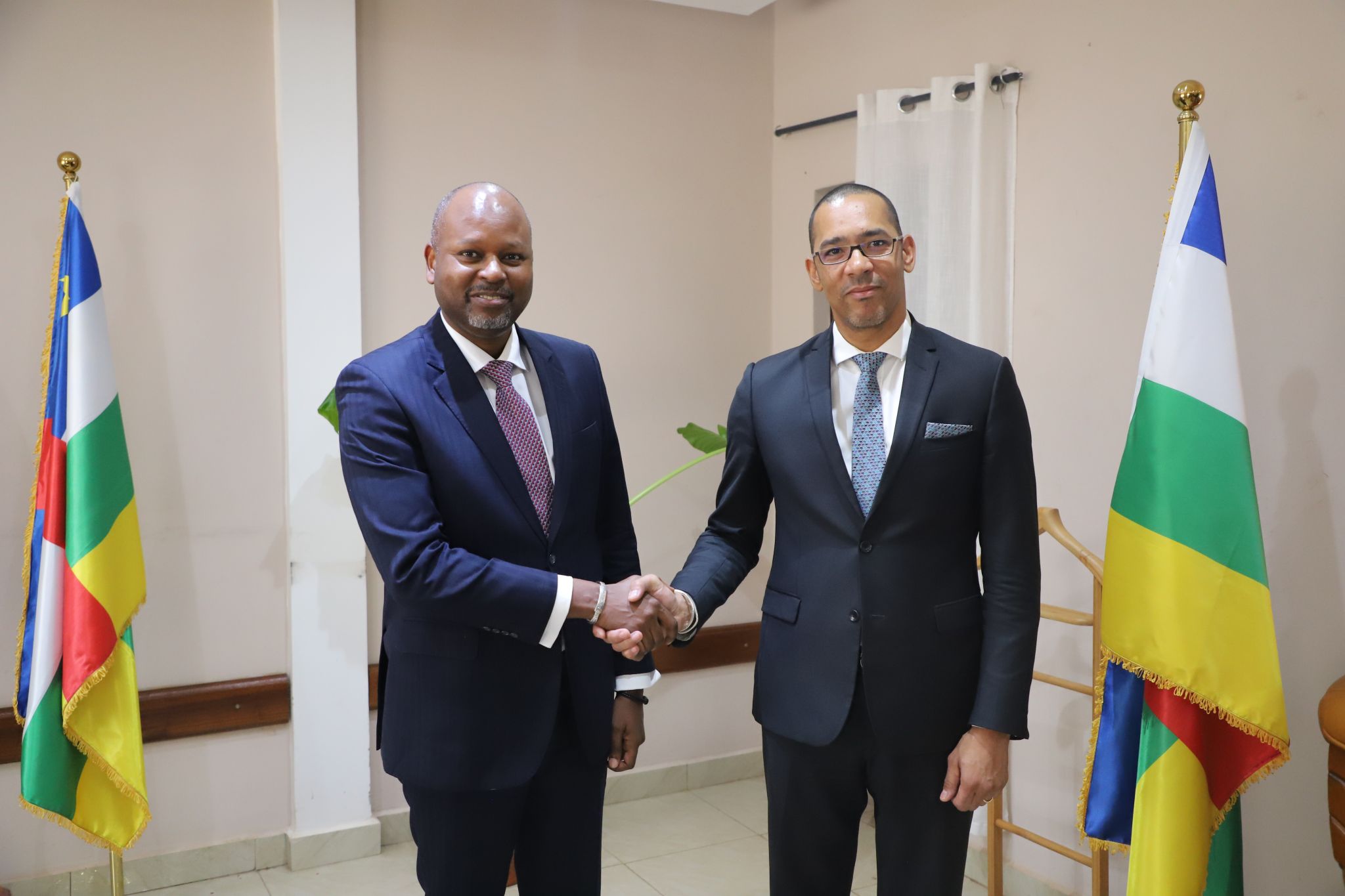
Olivier Buyoya, IFC Division Director for Nigeria and Central Africa, outlined the approach following a mission to Bangui, where he met with President Faustin-Archange Touadéra, Prime Minister Félix Moloua and senior government officials.
Buyoya said the World Bank Group’s existing portfolio is intended to improve the conditions required for larger-scale private investment in sectors identified as priorities under the national development plan.
“The World Bank’s $1.5 billion portfolio is intended to initiate and create the conditions for massive private investment in the priority sectors of the National Development Plan 2024-2028.”
IFC targets energy and infrastructure
Energy is a key area of focus, with the IFC seeking to build on reforms at state-owned electricity utility ENERCA supported by the World Bank.
According to Buyoya, improving ENERCA’s operational performance could help create a stronger platform for independent power producers and other private investors to enter the electricity market.
Additional generation capacity, including hydropower, is expected to complement the 25 MW Danzi solar power plant, with the broader objective of improving electricity availability and supporting economic competitiveness.
The IFC also plans to support the development of secure petroleum-products storage infrastructure while expanding financing and other support for small and medium-sized enterprises.
The strategy reflects the World Bank Group’s effort to combine public-sector reforms, development finance and private capital to reduce investment risks and make infrastructure and productive-sector projects more investable.
Strengthening a major regional trade corridor
Transport infrastructure is another area where the IFC sees potential for private-sector participation.
Buyoya highlighted the Douala-Garoua-Boulaï-Bangui corridor, which provides a critical connection between the Central African Republic and the port of Douala in Cameroon. He estimated that around 80% of the Central African Republic’s imports move through the corridor.
Improving the route could reduce transportation costs and delays while facilitating regional trade and improving the flow of goods into the landlocked economy.
The IFC is also looking at the expansion of CATRAMP, a logistics company operating in the region, as an example of private-sector activity that could contribute to strengthening the country’s transport and logistics network. IFC disclosures show CATRAMP has operations in Douala and Bangui and has been subject to IFC environmental and social due diligence.
“The improvement of this corridor will reduce supply costs and delays, facilitate regional trade and strengthen the impact of the Central African port on trade, investment and employment.”
Combining reforms with private capital
Buyoya said the World Bank Group is seeking to operate more closely as a unified platform by combining policy reforms, technical expertise, development finance and private investment.
The objective is to create conditions that allow companies to invest and expand while addressing some of the structural constraints that have limited private-sector development in the Central African Republic.
“Acting as one World Bank Group means combining reforms, expertise, investment, and private capital to enable companies to invest, grow, and create jobs.”
For the IFC, the strategy extends beyond individual projects. The institution is seeking to strengthen the broader investment environment by improving infrastructure, supporting institutional reforms and developing projects that can attract commercial capital.
The approach is consistent with IFC’s wider mandate of using investment and advisory support to develop private-sector opportunities in emerging markets. IFC’s recent disclosures also show its continued use of blended finance and risk-mitigation structures to attract private investment into infrastructure and other sectors across Africa.
For the Central African Republic, the focus on energy, transport, logistics, petroleum storage and SMEs could provide a pathway for development finance to be used as a catalyst for larger private-sector investment.
