
– Business, Finance, Markets & Economic News
  • Home
  • Economy
  • Business
  • Markets
  • Finance
  • Credit Ratings
  • Policy
  • Tech
– Business, Finance, Markets & Economic News
  • Home
  • Economy
  • Business
  • Markets
  • Finance
  • Credit Ratings
  • Policy
  • Tech
Top News
Kenya’s Inflation Rises to 7.3%, Highest Level in More Than Three Years
Afreximbank Plans $1 Billion Syndicated Loan With Potential Offshore Yuan Tranche
Moody’s Warns El Niño Could Weaken Sovereign Credit Profiles Across Emerging Markets
Tanzania and Angola Plan Railway Link Connecting Atlantic and Indian Ocean Trade Corridors
Moody’s Downgrades Senegal’s Sovereign Rating to Ca, Citing Higher Creditor Losses
Egypt’s central bank Raises Key Interest Rates to 21% as Pound Hits Record Low
Rusal Plans Ghana Bauxite Joint Venture With 5 Million-Tonne Annual Production Target
South Africa’s Economy Revised 4.9% Higher After GDP Rebasing Exercise
Shell Posts Highest Quarterly Profit Since 2022, Raises Share Buybacks to $5 Billion
Mozambique Seeks Debt Relief and $528 Million in Financing as Debt Pressures Mount
From a Ghanaian Village to Wall Street’s World of Banking: The Story of Frederick Odame
Dangote Cement Profit Rises 31% to $714 million Ahead of London Listing
Ethiopia Receives First Russian Su-35 Fighter Jets, Plans S-400 Air Defense Systems
Rosatom in Advanced Talks With Four African Countries Over Floating Nuclear Plants
Zambia Names Brenda Tambatamba Mines Minister as Copper Output Target Reaches 3 Million Tonnes
SUBSCRIBE
– Business, Finance, Markets & Economic News
Subscribe
– Business, Finance, Markets & Economic News
  • Home
  • Economy
  • Business
  • Markets
  • Finance
  • Credit Ratings
  • Policy
  • Tech
Copyright 2026 - All Right Reserved
Home » Economy » Moody’s Warns El Niño Could Weaken Sovereign Credit Profiles Across Emerging Markets
Economy

Moody’s Warns El Niño Could Weaken Sovereign Credit Profiles Across Emerging Markets

by Oluebube Elechi October 30, 2026
written by Oluebube Elechi October 30, 2026
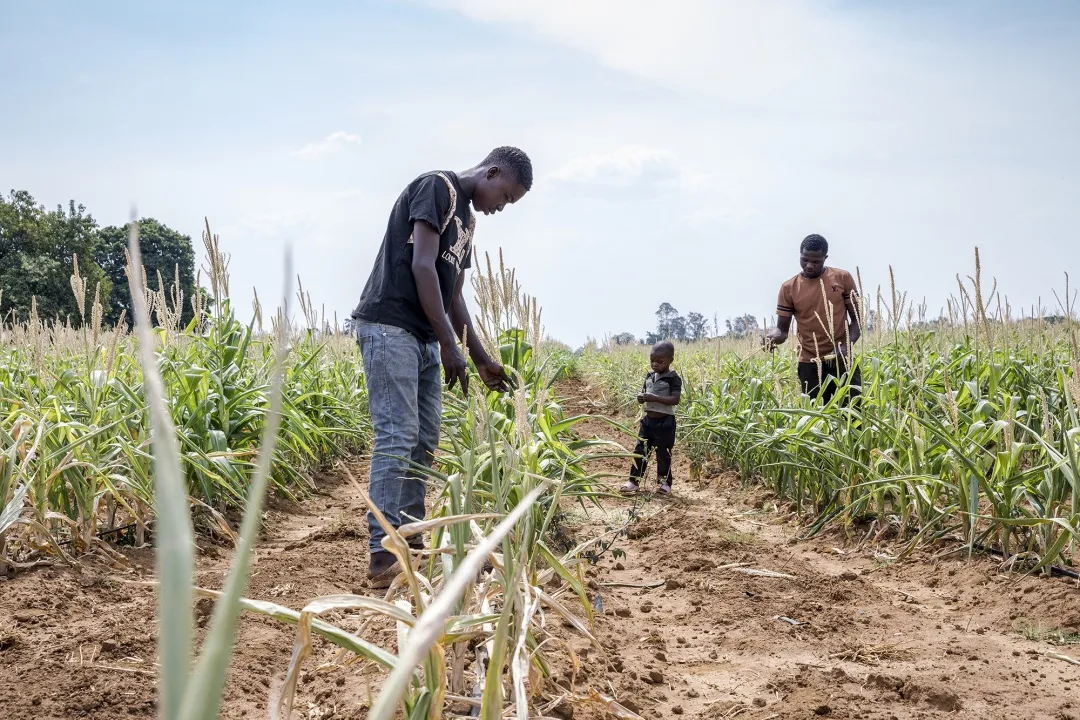
Farmers maintain maize fields on a farm in Lusaka, Zambia. Source: The Washington Post/Getty Images
FacebookTwitterLinkedinEmail
3

MAPUTO, Oct 30 – The anticipated effects of El Niño could intensify fiscal and economic pressures across emerging markets, particularly in countries with high public debt, limited foreign-exchange reserves and weak access to international financing, according to global credit rating agency Moody’s.

The agency warned that government spending on emergency relief, subsidies and reconstruction could strain public finances as climate-related disruptions affect agriculture, electricity generation and infrastructure.

Mozambique and Zambia face heightened exposure because their high debt burdens and limited market access constrain their ability to respond to economic shocks. By contrast, stronger institutions and more reliable access to funding provide sovereigns in parts of Asia and Latin America with greater fiscal flexibility.

The assessment highlights the potential for climate-related events to affect sovereign creditworthiness through multiple channels, including increased government expenditure, weaker economic output, higher inflation and pressure on external balances.

You Might Be Interested In
  • South Africa’s Inflation Expectations Ease to 3.6% as Oil Price Risks Cloud Outlook

Agricultural disruption could intensify food inflation

High energy and fertiliser costs are already putting pressure on agricultural producers and food prices. El Niño-related crop losses could further reduce agricultural output, employment and food security in vulnerable economies.

Mozambique faces risks from potential domestic production losses, while Latin American countries could experience disruptions to agricultural exports.

The impact could extend beyond producing countries. Export restrictions introduced in response to domestic shortages could amplify food supply risks for net importers such as the Philippines.

India and Indonesia have greater buffers against potential agricultural disruptions, with rising food reserves and irrigation capacity helping to cushion production risks.

For countries with limited domestic food production and weak fiscal capacity, higher import costs could increase pressure on household incomes and government budgets, particularly where authorities need to expand food subsidies or emergency assistance.

Drought threatens electricity generation and energy security

Moody’s also identified electricity generation as a major channel through which El Niño could affect sovereign credit profiles.

Drought conditions can reduce hydroelectric output in water-dependent parts of Southern Africa and Latin America, potentially forcing governments and utilities to introduce electricity rationing or rely on more expensive power imports.

The agency expects Brent crude prices to remain between $90 and $110 per barrel for the rest of 2026, adding to credit risks in countries with limited domestic energy supplies, insufficient generation diversity and low fuel stocks.

Higher energy costs could increase electricity production expenses, worsen external financing requirements and place additional pressure on government support for state-owned utilities.

Flood damage presents another potential source of fiscal pressure, particularly where governments must finance emergency response and infrastructure reconstruction.

Mozambique and Zambia face constraints on climate resilience

Southern African governments are expanding adaptation initiatives, including climate-smart agriculture, irrigation infrastructure and early-warning systems designed to reduce the economic consequences of extreme weather.

However, limited rural electricity access and inadequate irrigation infrastructure continue to constrain resilience, particularly in Mozambique and Zambia.

These structural weaknesses increase the vulnerability of agricultural production and rural livelihoods to prolonged drought conditions.

Moody’s also warned that undernourishment could amplify social risks if El Niño disrupts food production and adds to inflationary pressures. Rising food costs and declining agricultural employment could deepen economic hardship in vulnerable communities.

Climate exposure increasingly relevant to sovereign credit risk

The potential economic consequences of El Niño extend beyond immediate agricultural and infrastructure losses. Governments may face simultaneous pressure from weaker tax revenues, higher food and energy import bills, emergency spending and increased demands for social support.

For highly indebted countries with limited access to external financing, these pressures could further restrict fiscal flexibility and complicate debt management.

The contrast between Mozambique and Zambia and more financially resilient sovereigns in Asia and Latin America underscores the importance of fiscal buffers, institutional capacity and infrastructure investment in managing climate-related economic shocks.

As governments expand adaptation programmes, access to reliable financing, improved irrigation, diversified energy generation and stronger food reserves will remain important factors in limiting the potential impact of climate disruptions on sovereign credit profiles.

Read Next

  • Kenya Fast-Tracks $16 Billion Lamu Refinery as Dangote Targets Larger East African Complex

    September 28, 2026
  • Ethiopian Airlines Buys Six Boeing 787 Jets to Expand Global Network

    April 21, 2026
  • Intra-African Trade Reaches $213.8 Billion in 2025 as South Africa Leads, Afreximbank Says

    June 25, 2026
  • Kenya Extends Pipeline IPO to Next Week as Subscriptions Lag

    February 20, 2026
  • Dangote Plans Ambitious 20,000MW Power Project to Transform Nigeria’s Energy Sector

    May 6, 2026

Newsletter

Subscribe to our newsletter for trusted insights on Africa’s economies, markets, and business.

African Economy Inc. Logo

About Us

We are a business and economic intelligence platform delivering in-depth reporting, analysis, and insights on markets, companies and economic developments across Africa.

Our Company

  • AEI Intelligence
  • About
  • Editorial Standard
  • Partnerships
  • Advertise With Us
  • Careers
  • Ownership

News

  • Economy
  • Business
  • Markets
  • Finance
  • Credit Ratings
  • Policy
  • Tech

Useful Links

  • Privacy Policy
  • Terms of Use
  • Closed Captioning Policy
  • Accessibility Statement
  • Personal Information
  • Data Tracking
  • Register New Account

Subscribe Newsletter

Subscribe to our newsletter for trusted insights on Africa’s economies, markets, and business.

©2026 Majons Media Inc. All Rights Reserved.

Facebook Twitter Instagram Linkedin
Manage Consent
To provide the best experiences, we use technologies like cookies to store and/or access device information. Consenting to these technologies will allow us to process data such as browsing behavior or unique IDs on this site. Not consenting or withdrawing consent, may adversely affect certain features and functions.
Functional Always active
The technical storage or access is strictly necessary for the legitimate purpose of enabling the use of a specific service explicitly requested by the subscriber or user, or for the sole purpose of carrying out the transmission of a communication over an electronic communications network.
Preferences
The technical storage or access is necessary for the legitimate purpose of storing preferences that are not requested by the subscriber or user.
Statistics
The technical storage or access that is used exclusively for statistical purposes. The technical storage or access that is used exclusively for anonymous statistical purposes. Without a subpoena, voluntary compliance on the part of your Internet Service Provider, or additional records from a third party, information stored or retrieved for this purpose alone cannot usually be used to identify you.
Marketing
The technical storage or access is required to create user profiles to send advertising, or to track the user on a website or across several websites for similar marketing purposes.
  • Manage options
  • Manage services
  • Manage {vendor_count} vendors
  • Read more about these purposes
View preferences
  • {title}
  • {title}
  • {title}
– Business, Finance, Markets & Economic News
  • Economy
  • Business
  • Markets
  • Banking & Finance
  • Energy
  • Tech
  • Policy
  • African Economy Inc.