

Frederick Odame grew up in rural Ghana with limited access to education and basic infrastructure. Decades later, he would build a career in American banking. His forthcoming memoir, The Life of Alulu, revisits the journey between those two worlds.
Long before Frederick Odame became a vice president and senior business banking officer at PNC Bank, his story began in Ghana’s rural Afram Plains, where the circumstances of his childhood would shape the course of his life.
Raised by his grandmother in Ghana’s rural Afram Plains, Odame grew up without his father in his life and did not meet his biological mother until he was 21. In a community where access to water, electricity and education was limited, collecting water could mean hours of walking, while the demands of daily life required resilience from an early age. By 13, he had yet to learn to read or write.
His grandmother became the foundation of his life, providing the care and grounding that would remain central to his story. The boy she raised would eventually travel to the United States, attend Northern Kentucky University and build a career spanning nearly two decades at PNC Bank, rising to the position of Vice President and Senior Business Banking Officer.
It is a detail that gives his later career a particular significance. His rise into American banking was not simply a matter of professional advancement. It followed a childhood in which some of the foundations of that career, especially formal education, remained difficult to access.
His forthcoming memoir, The Life of Alulu, returns to those beginnings. It traces a journey from rural Ghana to the United States, through physical injury, educational challenges and the uncertainties of migration, toward a career in financial services and a continuing involvement in African community networks.
The distance between those chapters is considerable. Yet Odame’s story is not only about how far he travelled. It is also about the opportunities that became available along the way, the people and institutions that helped him progress, and the connection he has maintained with the community where his life began.
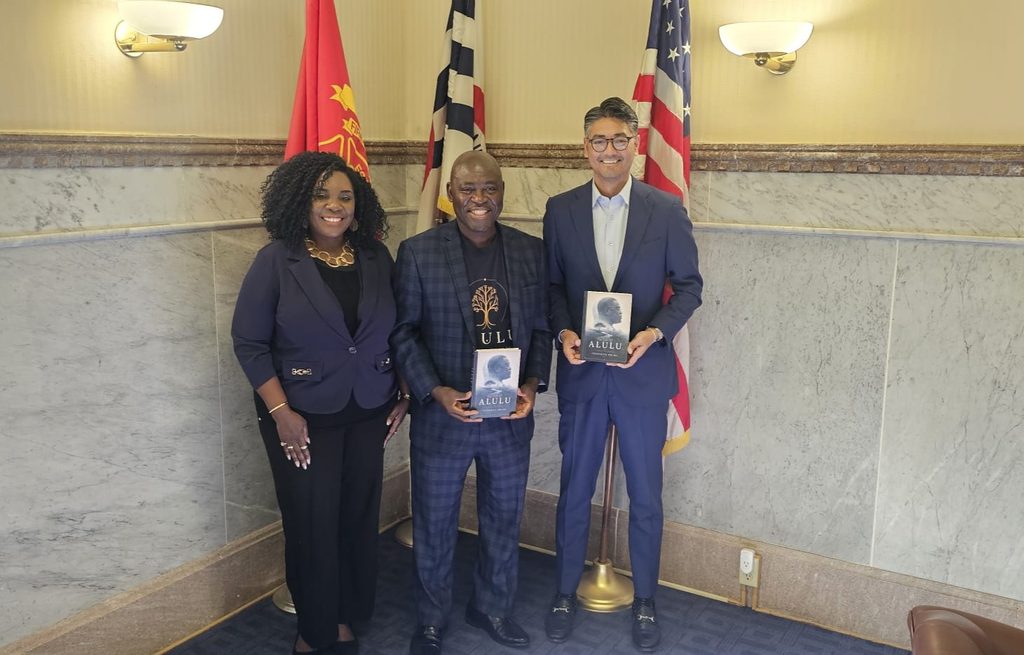
A childhood far removed from corporate America
Afram Plains was the starting point for a life that would eventually unfold in a very different environment.
As a child, Odame helped with the daily responsibilities of a household of 12. Accessing water required time and physical effort, while limited electricity and educational opportunities formed part of the wider conditions of rural life.
These circumstances placed practical demands on the family and shaped the environment in which Odame grew up. The professional world he would later enter, with its formal qualifications, financial systems and institutional expectations, was far removed from his early experience.
But the significance of those years extends beyond the contrast between poverty and professional success.
Odame’s account places his upbringing at the centre of his identity. Afram Plains was not merely the place he came from before moving abroad. It was the community through which he first encountered responsibility, uncertainty and the everyday demands of family life. That connection remains central to The Life of Alulu, whose title draws on his childhood and the village that shaped him.
The accident, the uncertainty and a new opening
At 13, Odame was involved in a serious tractor accident. His account describes being injured and lying on a cement floor without pain medication, uncertain about what would follow.
The accident became one of the defining episodes in the story of his early life. It occurred at an age when he was still struggling with literacy and before the opportunities that would eventually take him to the United States had emerged.
His path forward was not straightforward. Odame also describes experiences of bullying, rejection and uncertainty about belonging as he moved between different environments.
Then came an unexpected opening: a handwritten letter that helped him gain admission to Northern Kentucky University in the United States.
The opportunity marked a decisive transition. Moving to another country meant confronting a new education system, a different social environment and the challenge of establishing a professional future far from home.
Admission to a university did not, by itself, guarantee the outcome that followed. It created an opportunity to pursue a different path, one that would require further effort, adaptation and the ability to navigate unfamiliar institutions.
For Odame, that transition became an important bridge between the circumstances of his childhood and the career he would eventually build.

Entering the world of banking
Today, Odame serves as a Vice President and Senior Business Banking Officer at PNC Bank, where he has spent nearly two decades, according to the biographical information supplied for this profile.
His career has been recognised through a series of professional awards, including the PNC Performance Award, the Chairman’s Circle Award, the Elite Banker Award and repeated recognition as a Market All Star. He has also received an alumni distinction from Northern Kentucky University and the Gallup Workplace Award of Leadership Excellence.
These honours provide evidence of a sustained professional career. They also place his journey in a broader context: the transition from a childhood marked by limited access to education into a field where financial knowledge, professional relationships and institutional credibility are central.
Business banking serves companies at different stages of development, connecting their financial needs with the services and expertise of a financial institution. For entrepreneurs, understanding that environment can be important when seeking financing, managing business finances or building relationships with lenders.
Odame’s experience in the sector has also informed his interest in helping immigrants and African entrepreneurs navigate financial opportunities. His own journey across educational, cultural and professional environments gives that work a personal dimension, while his banking career provides a professional foundation.
The connection is particularly relevant for entrepreneurs building businesses in unfamiliar markets. Access to financial services is not only about the availability of capital; it also depends on understanding requirements, establishing credibility and knowing how to engage with institutions.
Odame’s work with African professional networks reflects an interest in making those connections more accessible.
Beyond the bank
Odame’s activities outside his corporate role have focused on community leadership and professional connections.
He is identified in the supplied biography as founder and president of the Afram Plains Foundation and as a co-founder and first vice president of the African Professionals Network, known as APNET.
Both roles connect his professional life to a wider interest in African communities and the diaspora. Professional networks can help people exchange knowledge, find mentors and establish relationships across industries. Community organisations can also provide a structure through which individuals direct attention and resources toward shared priorities.
For African professionals living abroad, those connections can help maintain links to their communities of origin while creating new opportunities in their countries of residence.
Odame’s public service has also included an appointment by former Ohio Governor John Kasich to serve on the New Americans Committee, according to the supplied biography. The appointment added a civic dimension to a career that had already developed across professional and community settings.
These roles suggest a conception of professional achievement that extends beyond an individual’s position within an organisation. They reflect an interest in using experience, relationships and community involvement to support others navigating their own paths.
The precise scope and outcomes of these initiatives warrant further examination, but their place in Odame’s biography helps explain why his story extends beyond a career in banking.
The meaning of returning to one’s roots
Odame’s forthcoming memoir, The Life of Alulu, brings the focus back to the experiences that preceded his professional life.
The book’s premise is rooted in the distance between his early circumstances and his later achievements. But the story also raises questions about identity: what people carry with them when they leave home, how early experiences influence later decisions, and how success changes a person’s relationship with the community from which they came.
For Odame, faith, family and mentorship are important parts of that account. Married and a father of four, he describes his life through a framework that places personal convictions and family relationships alongside professional progress.
The result is a story that reaches beyond the familiar narrative of an individual overcoming hardship. It points toward the complicated relationship between personal determination and opportunity.
Resilience matters, but it does not eliminate the importance of education, access to institutions, supportive relationships or the circumstances that allow people to develop their abilities. Odame’s journey involved both the challenges he faced and the opportunities that eventually opened before him.
That distinction matters in a story about social mobility. The fact that one person has crossed a difficult distance does not mean that the barriers along the way have disappeared for others.
Instead, his experience invites a more useful question: what can be learned from the opportunities that made his journey possible, and how might similar opportunities become more accessible to others?

A story that travels beyond Ghana
Across Africa and its diaspora, people build lives across different educational systems, labour markets and social environments. Their experiences vary widely, but many must navigate the challenge of turning ambition into opportunity while working with limited resources or unfamiliar institutions.
Odame’s journey connects several of those experiences. His childhood in rural Ghana, his transition to higher education in the United States, his career in banking and his involvement in diaspora networks form a narrative that crosses geography without severing the connection to its point of origin.
The Life of Alulu offers an opportunity to explore that journey in greater depth, including the personal experiences and decisions that shaped it.
Its significance will depend on the story the memoir tells and the reflections it offers beyond the milestones of a professional career. Yet the central tension is already apparent in the outline of Odame’s life: a childhood in which the future was difficult to imagine, followed by opportunities that opened paths he could not readily have seen from where he began.
The boy from Afram Plains did not enter American banking by a single act of determination or through one defining moment. His journey unfolded through hardship, educational opportunity, adaptation and years of professional development.
That is what makes the distance between his beginnings and his career worth examining. Not because it proves that circumstances never matter, but because it shows how a life can change when individual effort meets opportunities to advance.
For Odame, returning to his beginnings through The Life of Alulu is a way of placing those experiences back into the story of the person he became.
Afram Plains remains the starting point. The rest of the story is about everything that followed.
