
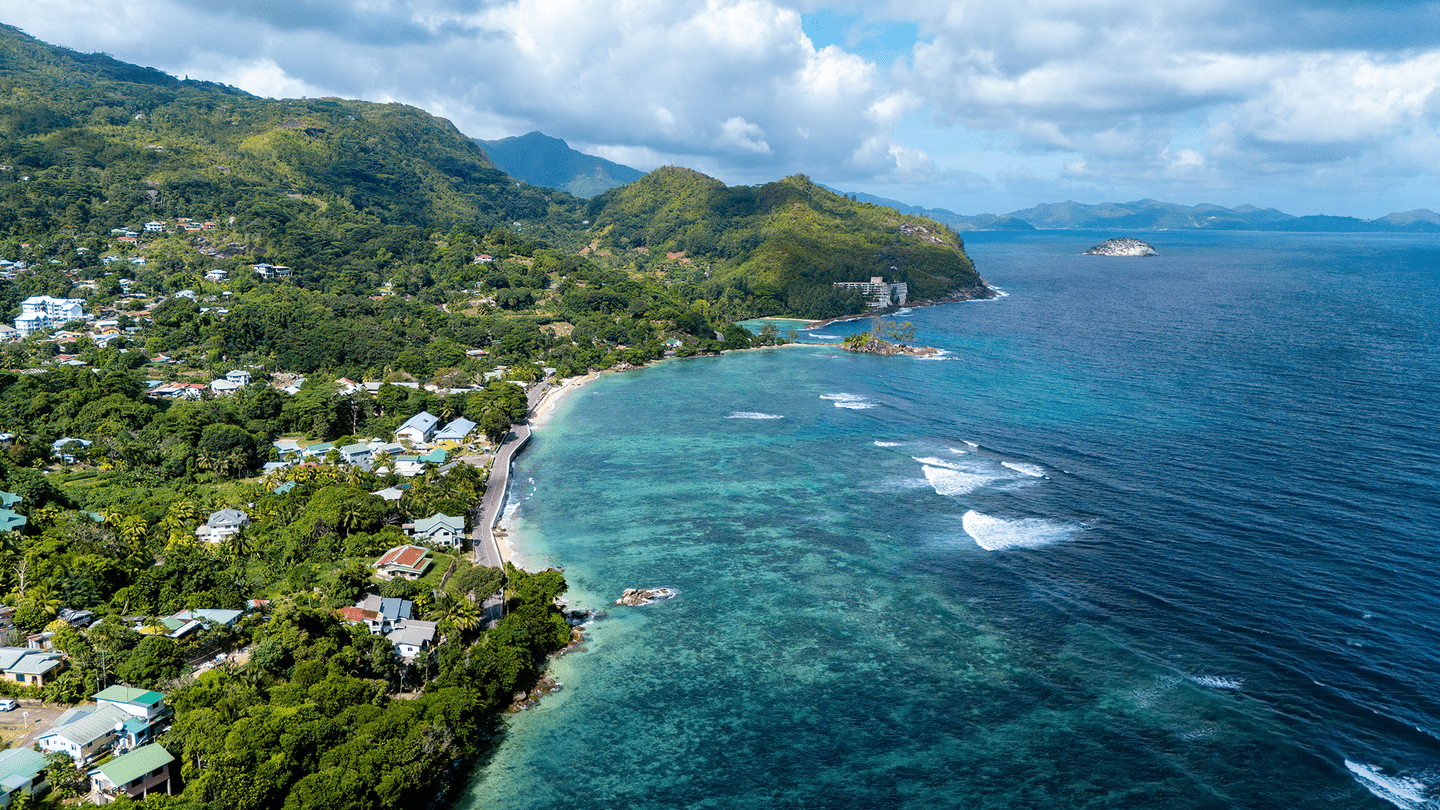
Aug 22 – Seychelles has launched a $10.48 million initiative with the United Nations Development Programme (UNDP) to integrate biodiversity, natural capital and ecosystem services more deeply into the country’s economic planning, marking a major step in its efforts to build a more sustainable and climate-resilient economy.
The project, titled “Enabling the Transition to a Blue and Green Economy in the Seychelles”, was formally launched on August 21 during an inception workshop attended by government institutions, development partners, civil society organisations, academia, private-sector representatives and community stakeholders.
Funded through the Global Environment Facility’s eighth funding cycle, the seven-year initiative is the largest GEF project ever signed by Seychelles. It forms part of the Blue and Green Islands Integrated Programme, which supports 15 Small Island Developing States in developing nature-positive economic models.
The programme will focus on embedding biodiversity conservation, ecosystem services and natural capital considerations into decision-making across key areas of the Seychelles economy, including tourism, food systems and urban development. It will also seek to strengthen climate resilience and create more sustainable livelihood opportunities.
UNDP Resident Representative for Mauritius and Seychelles, Alka Bhatia, described the initiative as a long-term partnership between the organisation and the Seychelles government. According to Bhatia, “Over the next seven years, we look forward to supporting Seychelles in strengthening governance and policy coherence, delivering nature-based solutions on the ground, and sharing lessons learned regionally and globally through the wider BGI programme family.”
She added that the project’s effectiveness would ultimately depend on collaboration among participating institutions, saying, “The strength of this project will not lie in the document we launch today, but in the quality of the partnership and collaboration we strengthen from this point forward towards a nature-positive economy.”
Environment, Climate, Energy and Natural Resources Minister Marie-May Jeremie said the programme could also expand opportunities for private investment in sustainable activities. “The project will also help improve access to financing for nature-based solutions, and create opportunities for businesses, and entrepreneurs interested in more sustainable forms of investment,” she said.
The initiative will address challenges that are closely linked to Seychelles’ economic and environmental conditions, including food security, tourism sustainability, waste management, coastal protection and ecosystem health.
A central component will be improving the information available to policymakers through natural capital accounting and ecosystem valuation. These tools are intended to quantify the economic contribution of natural resources and incorporate environmental considerations into government planning, budgeting and investment decisions.
The project is expected to directly benefit about 10,000 people while supporting stronger institutions, improved ecosystem management and greater coordination across economic sectors.
Its implementation will be organised around four principal areas: policy and governance reform; mobilisation of financing for nature-based solutions; interventions across landscapes and seascapes; and capacity development, learning and knowledge-sharing.
The inception workshop also examined implementation arrangements, including governance structures, first-year workplans and budgets, monitoring and evaluation, safeguards, risk management, stakeholder engagement, gender considerations and communications.
