
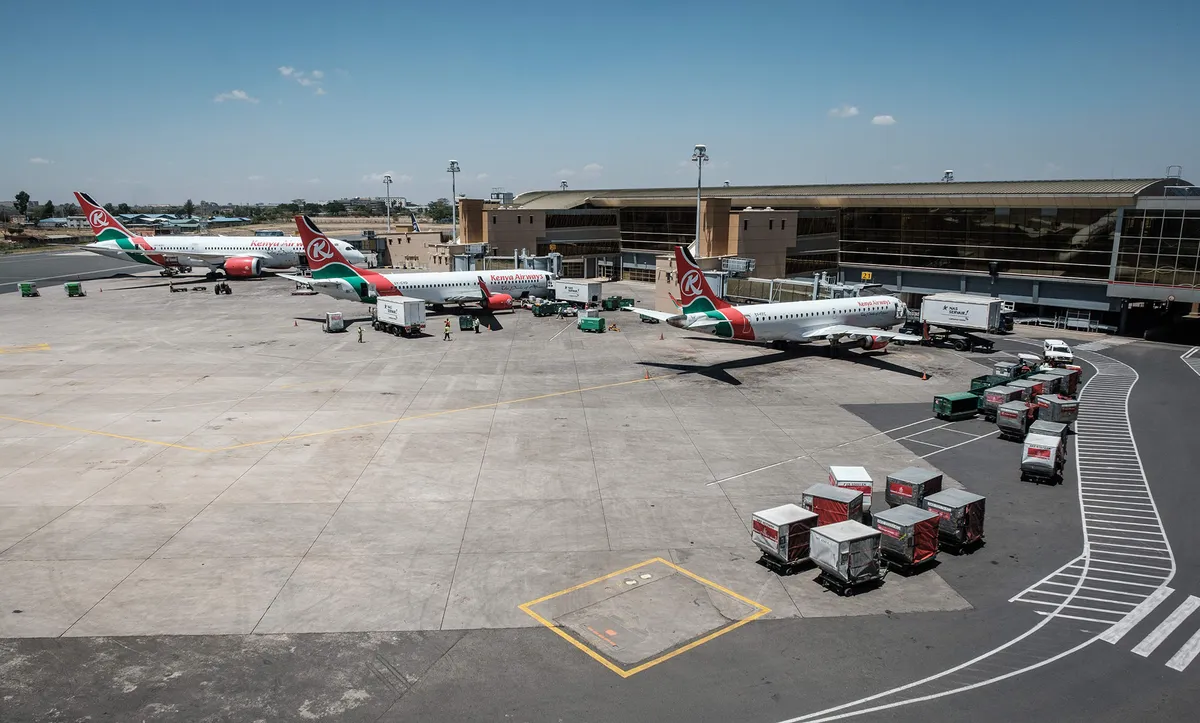
NAIROBI, June 19 – Kenya has appointed the Africa Finance Corporation (AFC) and Trade and Development Bank to arrange financing for the planned $1.2 billion expansion of Jomo Kenyatta International Airport, a major infrastructure project designed to strengthen the country’s position as East Africa’s leading aviation hub.
According to Transport Minister Davis Chirchir, the project will be financed by leveraging airport-generated revenue, with AFC and TDB tasked with mobilizing funding from development finance institutions and commercial banks.
The expansion is expected to cost up to 154.2 billion Kenyan shillings, or approximately $1.19 billion, with construction scheduled to take three years.
The project aims to increase Jomo Kenyatta International Airport’s annual passenger handling capacity from 7.5 million to 22 million passengers through the construction of a new passenger terminal and the rehabilitation of existing infrastructure, including runways and aircraft aprons.
Kenya suspended earlier expansion plans after cancelling a concession agreement with India’s Adani Group in 2024 following legal issues involving the company’s founder in the United States.
The government has since pursued a new procurement process for the airport upgrade.
Transport Minister Chirchir said an international competitive bidding process has already been completed, although he did not comment on reports that China Communications Construction Company had secured the construction contract.
The airport modernization forms part of Kenya’s broader strategy to maintain its status as a regional aviation gateway as competition intensifies from neighbouring countries.
Both Ethiopia and Rwanda are investing heavily in airport infrastructure to attract international airlines, passengers and logistics businesses.
The financing model also reflects Kenya’s efforts to develop alternative funding mechanisms for major infrastructure projects as rising public debt has constrained traditional government borrowing.
By relying on airport revenue streams and mobilizing private and development finance, the government aims to deliver critical transport infrastructure while limiting additional pressure on public finances.
Once completed, the expanded airport is expected to improve passenger capacity, strengthen regional connectivity, support tourism and trade, and reinforce Nairobi’s role as one of Africa’s leading aviation and business hubs.
