
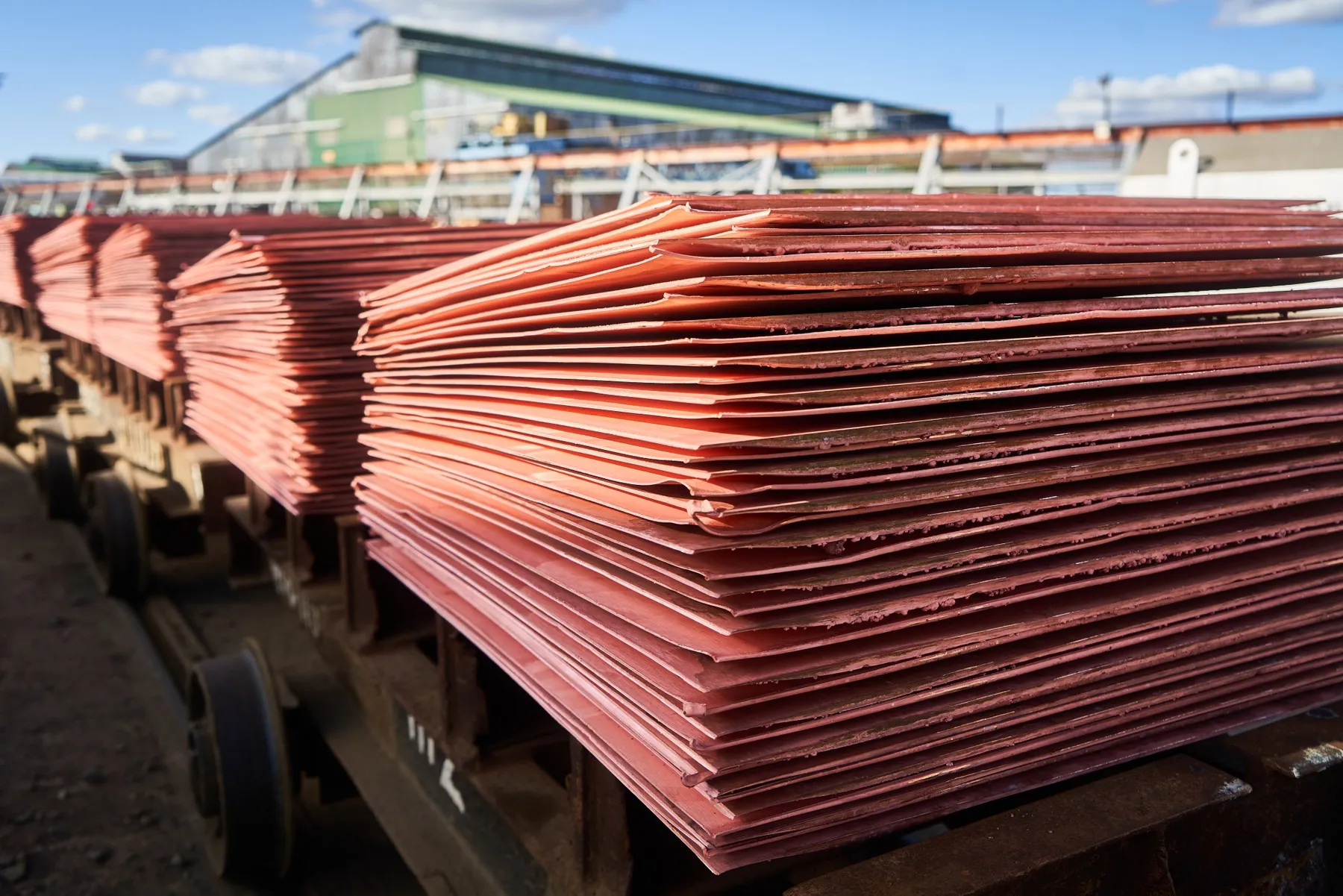
KINSHASA, July 8 – Ivanhoe Mines expects copper production at its flagship Kamoa-Kakula Copper Complex in the Democratic Republic of Congo to accelerate during the second half of 2026 as mining activity increases and existing inventory is processed, reinforcing the mine’s role as one of the world’s fastest-growing sources of copper supply.
The Vancouver-based miner said the improvement will be driven by higher mining rates at the Kakula mine and the planned drawdown of up to 10,000 metric tonnes of copper inventory accumulated during the first half of the year.
Kamoa-Kakula produced 64,328 metric tonnes of copper in anode, blister and saleable concentrate during the second quarter, bringing total production for the first six months of 2026 to 135,745 metric tonnes.
Despite reducing its copper production outlook for 2026 and 2027 earlier this year following seismic disruptions at the Kakula underground mine, Ivanhoe reaffirmed its 2026 production guidance of between 290,000 and 330,000 metric tonnes.
Based on the midpoint of that guidance, production would need to increase by roughly 28% during the second half of the year to achieve the company’s target.
According to Ivanhoe, mining rates at Kakula are expected to increase by approximately 30% in the second half of 2026 as operations continue to recover from the earlier disruptions.
The company also highlighted strong market conditions for sulphuric acid, a key by-product of copper processing. It said July sales contracts were priced at approximately $840 per tonne, the highest level on record.
Ivanhoe added that its on-site smelter produced 112,307 tonnes of sulphuric acid during the second quarter, providing an additional revenue stream alongside copper production.
Elsewhere in the Democratic Republic of Congo, the company’s Kipushi zinc mine achieved a quarterly production record, producing 70,177 tonnes of zinc concentrate, an 8% increase compared with the previous quarter.
The production outlook comes as analysts forecast a tighter global copper market in 2026, with Kamoa-Kakula expected to remain one of the mining industry’s most important contributors to future copper supply growth amid rising demand linked to electrification, renewable energy and electric vehicle manufacturing.
