
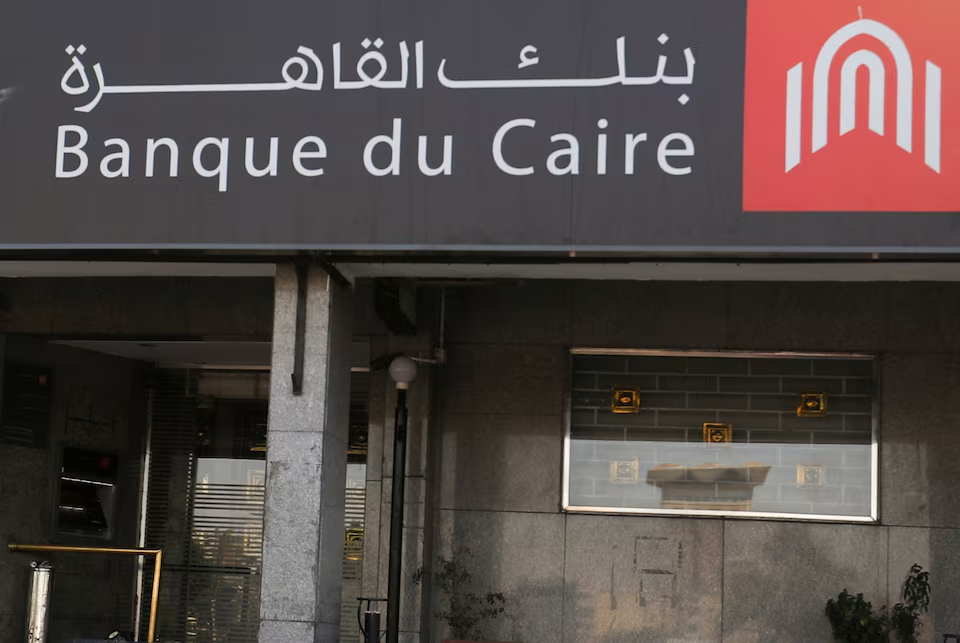
CAIRO, Oct 19 – Egypt’s state-owned Banque du Caire is targeting proceeds of up to EGP 24.25 billion ($454 million) from the sale of a 30% stake, in what could become the country’s largest initial public offering in years.
The Financial Regulatory Authority (FRA) approved the offering prospectus on Sunday, clearing the way for the sale of existing shares on the Egyptian Exchange (EGX). The offering could be increased to 45%, depending on investor demand and in accordance with the approved rules.
Hashem El-Sayed, assistant to the prime minister and head of the State-Owned Companies Unit, said the prospectus covers up to 4.575 billion shares, representing 30% of Banque du Caire’s capital. The shares are currently held by state-owned Banque Misr.
The transaction is a secondary offering, meaning the shares are being sold by an existing shareholder rather than issued as new shares by the bank. Proceeds from the sale would therefore accrue to the selling shareholder, rather than directly to Banque du Caire.
The indicative price range is EGP 4.82 to EGP 5.30 per share, valuing the offered stake at approximately EGP 24.25 billion at the top of the range.
Subscription timetable and offering structure
Under the approved prospectus, 95% of the offering will be allocated to a private placement for qualified investors, while the remaining 5% will be available through a public offering for retail investors.
Purchase orders are scheduled to be received from 19 to 23 October 2026. The final offer price is expected to be announced no later than 26 October, based on the bookbuilding process and investor demand.
The potential increase in the stake offered from 30% to 45% gives the transaction flexibility to accommodate demand, subject to the applicable rules.
Banque du Caire announced its intention to list on the EGX earlier this month, with trading expected to begin in November. CI Capital Investment Banking is acting as lead global coordinator and joint bookrunner, alongside EFG Hermes Promoting & Underwriting as joint global coordinator and joint bookrunner.
The bank reported net profit after tax of EGP 8.94 billion in the first half of 2026.
Part of Egypt’s state divestment programme
The prospectus approval advances Egypt’s government offerings programme, which aims to broaden private-sector participation in state-owned companies, expand investment opportunities and deepen the country’s capital market.
The approval comes nearly nine years after Banque du Caire’s shares were temporarily listed on the exchange on 8 February 2017. The current process moves the bank towards the actual share offering and completion of its listing procedures.
El-Sayed said the State-Owned Companies Unit was coordinating with relevant authorities on financial studies, valuations, listing readiness and the resolution of technical, regulatory and legal issues required to move companies from temporary listing to completed offerings.
He added that the wider programme seeks to maximise the value of state-owned assets while improving corporate governance and management efficiency, in line with the State Ownership Policy Document and Law No. 170 of 2025.
The government offerings programme has seen approximately 28 state-owned companies temporarily listed on the EGX as authorities work towards completing offerings and final listings for eligible businesses.
Investor demand and Egypt’s IPO market
The Banque du Caire transaction follows the successful initial public offering of Egyptian fintech company MNT-Halan earlier in October, when both its private and public subscription tranches were oversubscribed, according to the source report.
The bank’s offering will provide investors with an opportunity to acquire an ownership stake in one of Egypt’s established banking institutions while allowing the state to reduce its direct ownership through Banque Misr.
The potential to increase the offering to 45% also places investor demand at the centre of the transaction’s final size and valuation.
The final offer price, the proportion ultimately sold and the response from institutional and retail investors will determine the transaction’s outcome. The planned November trading start remains subject to completion of the offering and listing procedures.
For Egypt, the IPO represents a further step in efforts to mobilise private capital through the stock market and expand public ownership of state-held businesses. Its broader significance will depend on execution of the transaction and progress on other planned offerings under the government’s programme.
