
– Business, Finance, Markets & Economic News
  • Home
  • Economy
  • Business
  • Markets
  • Finance
  • Credit Ratings
  • Policy
  • Tech
– Business, Finance, Markets & Economic News
  • Home
  • Economy
  • Business
  • Markets
  • Finance
  • Credit Ratings
  • Policy
  • Tech
Top News
Kenya’s Economy Grows 5.1% in Second Quarter as Transport and Services Expand
Africa50 CEO Calls for Domestic Capital and Local Processing to Scale Investment Across Africa
South Africa Inflation Forecast at 4.4% in 2026, Target Return Delayed Until 2028
Africa Finance Corporation Targets Iron Ore and Uranium Investments in Africa
World Bank Targets $19 Billion in Critical Minerals Financing by 2030
Senegal Raises $582 Million in Second Regional Bond Sale of 2026
Eni Targets 2028 Start for Mozambique’s LNG Project as Drilling Begins in November
Egyptian Exchange Explores Listing Dangote Group Shares Through Depositary Receipts
Morocco Plans $13.5 Billion Railway Investment by 2030 to Expand High-Speed Rail
Ethiopia’s Central bank Joins Pan-African Payments System to Expand Local-Currency Trade
Nigeria’s Inflation Rate Falls to 14.63% in September as Monthly Price Growth Slows
Uganda Projected as Sub-Saharan Africa’s Fastest-Growing Economy in 2027 as Oil Production Nears
Angola Targets Three-Month Oil Licensing Process Under New 25-Year Strategy
Nigeria’s State Oil Firm Advances IPO Preparations as Listing Plans Take Shape
Kenya Raises Petrol and Diesel Prices as Middle East Conflict Drives Up Import Costs
SUBSCRIBE
– Business, Finance, Markets & Economic News
Subscribe
– Business, Finance, Markets & Economic News
  • Home
  • Economy
  • Business
  • Markets
  • Finance
  • Credit Ratings
  • Policy
  • Tech
Copyright 2026 - All Right Reserved
Home » Economy » South Africa Inflation Forecast at 4.4% in 2026, Target Return Delayed Until 2028
Economy

South Africa Inflation Forecast at 4.4% in 2026, Target Return Delayed Until 2028

by Emmanuel Ebube October 16, 2026
written by Emmanuel Ebube October 16, 2026
South Africa
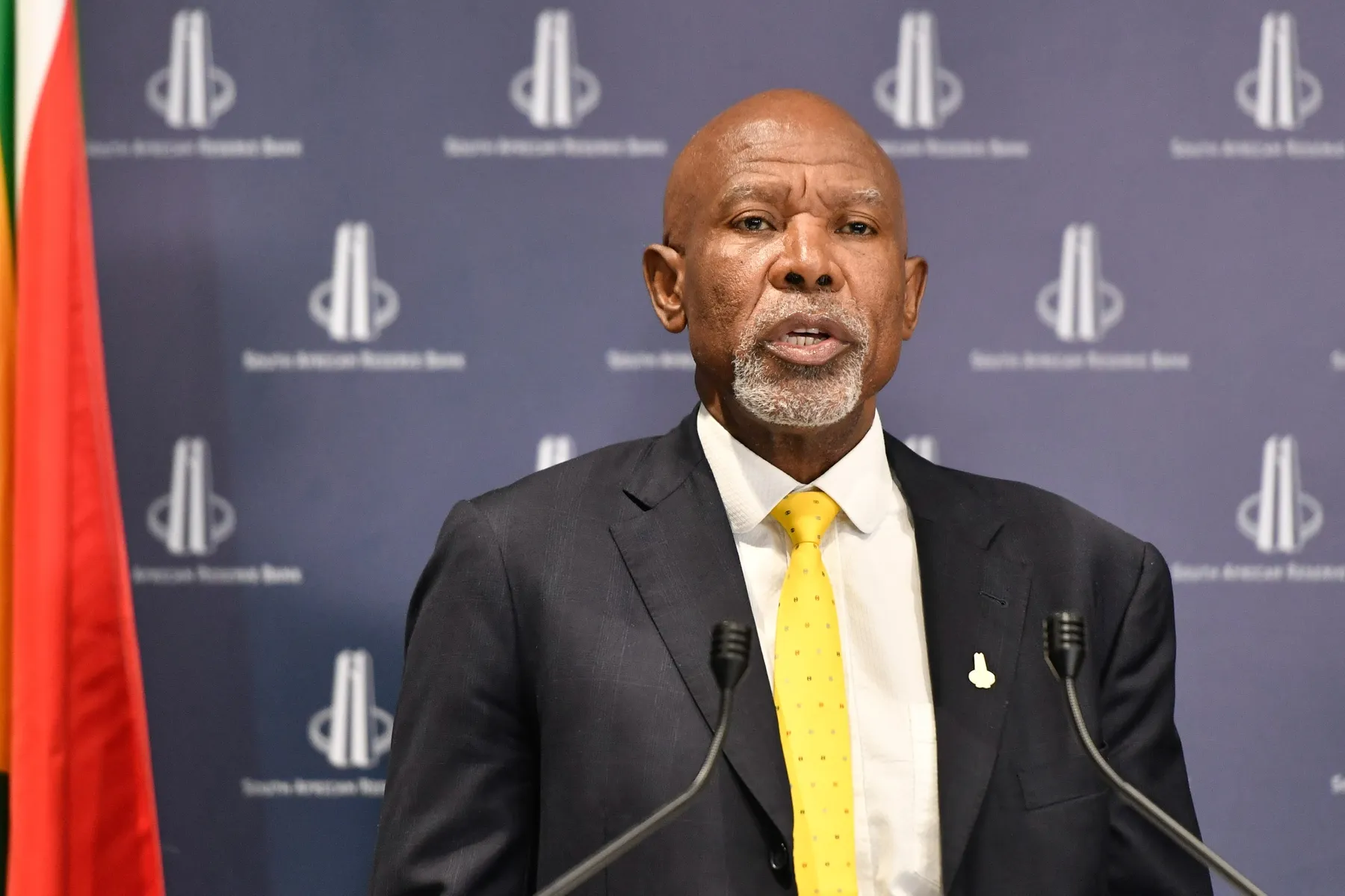
South African central bank Governor Lesetja KganyagoPhotographer: Waldo Swiegers/Bloomberg
FacebookTwitterLinkedinEmail
5

JOHANNESBURG, Oct 16 – South Africa’s inflation outlook remains exposed to rising global energy and food prices, with consumer price growth expected to return to the South African Reserve Bank’s 3% target only in 2028, Governor Lesetja Kganyago said.

Speaking to Reuters on the sidelines of the International Monetary Fund and World Bank annual meetings in Bangkok, Kganyago said inflation was forecast to average 4.4% in 2026, before easing into the central bank’s tolerance band in 2027 and returning to the target two years from now.

The outlook suggests monetary policy could remain restrictive as the central bank seeks to contain price pressures. In September, the bank raised its benchmark interest rate by 25 basis points to 7.25%, following a pause in July.

Energy and Food Prices Pose Inflation Risks

The central bank governor identified geopolitical uncertainty, oil prices, fertiliser costs and potential disruptions to agricultural supply chains as key risks to the inflation outlook.

You Might Be Interested In
  • Nigeria’s Foreign Exchange Reserves Rise to $50.45 Billion, Highest Since 2013

“The risks to the outlook, of course, they have to do with the geopolitical uncertainty, which feeds into the oil price, what’s happening with fertiliser prices and what that could mean for the food outlook, there’s the risk of El Niño and there is risk to the grain supply chain through the Black Sea,” he said.

These pressures could complicate efforts to bring inflation back to target. Higher oil prices can increase transport and production costs, while more expensive fertilisers can raise agricultural input costs and feed into food prices.

Weather-related disruptions, including the risk of El Niño, could also affect agricultural output. Meanwhile, interruptions to grain shipments through the Black Sea could add pressure to international food markets and domestic prices.

“So far, the measures of underlying inflation point to an upturn in inflation, and that is a concern.”

The governor’s comments indicate that the central bank remains concerned about underlying price pressures, even as the inflation outlook anticipates a gradual moderation over the coming years.

Inflation Rises as Central Bank Maintains Tight Policy

South Africa’s headline inflation rate increased slightly to 4.4% year-on-year in August, according to the latest data cited in the report. Housing and utilities, transport, and insurance and financial services were the main contributors to the increase.

The Reserve Bank’s September rate increase was unanimous, following its decision to hold rates in July. The next monetary policy decision is scheduled for November.

Kganyago described the current policy rate as “moderately restrictive” but did not indicate whether the bank would raise rates again.

Future decisions would be taken “meeting by meeting”, he said, suggesting that the policy path would depend on incoming inflation data and the evolution of risks to the outlook.

For businesses and households, the combination of elevated borrowing costs and persistent price pressures could continue to influence credit demand, consumption and investment decisions. The central bank faces the challenge of restraining inflation without imposing unnecessary pressure on economic activity.

Rand Stability Provides Some Relief

A relatively stable rand has helped offset some imported inflationary pressures, according to Kganyago. The currency had changed little so far in 2026 despite a stronger US dollar.

The exchange rate matters for South Africa because imported energy and other commodities can become more expensive in rand terms when the currency weakens. A stable currency can therefore limit the domestic impact of increases in international prices.

“In the past, when you had the oil price rise, we would have had a depreciation of the currency as well. It has been fairly stable (this year), but still that is no case for us to be complacent,” he added.

Kganyago attributed the currency’s resilience in part to fiscal consolidation and an appropriate monetary policy stance.

However, exchange-rate stability does not eliminate the risk that higher global commodity prices will feed into domestic inflation. The outlook remains sensitive to developments in energy markets, agricultural input costs, geopolitical tensions and international supply chains.

With inflation expected to return to the 3% target only in 2028, the Reserve Bank’s approach in the coming months will remain important for borrowing costs, currency stability and the broader economic outlook.

Read Next

  • South Africa Court Clears Way for Rand Rigging Case Against Six Banks

    July 1, 2026
  • IFC and Standard Chartered Launch $300 Million Trade Finance Facility for Africa

    April 29, 2026
  • Zimbabwe Grants Lithium Export Quotas to Chinese Miners Following Export Ban

    April 14, 2026
  • Egypt Raises Industrial Gas Prices Amid IMF Reforms, Rising Energy Costs

    May 3, 2026
  • Nigeria’s Central Bank Holds Interest Rate at 26.50% as Global Risks Persist

    July 21, 2026

Newsletter

Subscribe to our newsletter for trusted insights on Africa’s economies, markets, and business.

African Economy Inc. Logo

About Us

We are a business and economic intelligence platform delivering in-depth reporting, analysis, and insights on markets, companies and economic developments across Africa.

Our Company

  • AEI Intelligence
  • About
  • Editorial Standard
  • Partnerships
  • Advertise With Us
  • Careers
  • Ownership

News

  • Economy
  • Business
  • Markets
  • Finance
  • Credit Ratings
  • Policy
  • Tech

Useful Links

  • Privacy Policy
  • Terms of Use
  • Closed Captioning Policy
  • Accessibility Statement
  • Personal Information
  • Data Tracking
  • Register New Account

Subscribe Newsletter

Subscribe to our newsletter for trusted insights on Africa’s economies, markets, and business.

©2026 Majons Media Inc. All Rights Reserved.

Facebook Twitter Instagram Linkedin
Manage Consent
To provide the best experiences, we use technologies like cookies to store and/or access device information. Consenting to these technologies will allow us to process data such as browsing behavior or unique IDs on this site. Not consenting or withdrawing consent, may adversely affect certain features and functions.
Functional Always active
The technical storage or access is strictly necessary for the legitimate purpose of enabling the use of a specific service explicitly requested by the subscriber or user, or for the sole purpose of carrying out the transmission of a communication over an electronic communications network.
Preferences
The technical storage or access is necessary for the legitimate purpose of storing preferences that are not requested by the subscriber or user.
Statistics
The technical storage or access that is used exclusively for statistical purposes. The technical storage or access that is used exclusively for anonymous statistical purposes. Without a subpoena, voluntary compliance on the part of your Internet Service Provider, or additional records from a third party, information stored or retrieved for this purpose alone cannot usually be used to identify you.
Marketing
The technical storage or access is required to create user profiles to send advertising, or to track the user on a website or across several websites for similar marketing purposes.
  • Manage options
  • Manage services
  • Manage {vendor_count} vendors
  • Read more about these purposes
View preferences
  • {title}
  • {title}
  • {title}
– Business, Finance, Markets & Economic News
  • Economy
  • Business
  • Markets
  • Banking & Finance
  • Energy
  • Tech
  • Policy
  • African Economy Inc.