
– Business, Finance, Markets & Economic News
  • Home
  • Economy
  • Business
  • Markets
  • Finance
  • Credit Ratings
  • Policy
  • Tech
– Business, Finance, Markets & Economic News
  • Home
  • Economy
  • Business
  • Markets
  • Finance
  • Credit Ratings
  • Policy
  • Tech
Top News
Zambia-Tanzania $1.2 Billion Power Interconnector Expected to Start Operations in 2029
Developing Countries’ External Debt Hits Record $9.4 Trillion in 2025, World Bank Warns
AngloGold Ashanti to Invest $900 Million in Gold Mine Expansions Across Africa and Brazil
AfDB Arranges $1.2 Billion Financing for Tanzania’s Tabora–Kigoma Standard Gauge Railway
Caledonia Mining Secures $150 Million Bridge Facility for Zimbabwe’s Bilboes Gold Project
AfDB President Calls for New African Financial Architecture to Accelerate Private-Sector Growth
US and Egypt Sign $125 Million Agreement to Expand Private-Sector Opportunities
Ethiopia Becomes Africa’s Fifth-Largest Economy After GDP Rebasing to $210.7 Billion
CANEX WKND 2026: Afreximbank Pushes Financing and Market Access for Africa’s Creative Industries
World Bank’s IFC Says Africa Needs Deeper Financial Markets to Mobilize Private Capital at Scale
Dangote Explores Cross-Border Share Trading as Refinery IPO Attracts $4.77 Billion in Orders
OPay Suspends $304 Million US IPO Following Chinese Regulatory Inquiry
Egypt Raises $500 Million Through International Bond Market Reopening
Ramaphosa Sees Opportunity to Reset South Africa-US Relations After Midterm Elections
Ghana Inflation Rises for Third Consecutive Month to 5.5% in October 2026
SUBSCRIBE
– Business, Finance, Markets & Economic News
Subscribe
– Business, Finance, Markets & Economic News
  • Home
  • Economy
  • Business
  • Markets
  • Finance
  • Credit Ratings
  • Policy
  • Tech
Copyright 2026 - All Right Reserved
Home » Logistics » Morocco Plans $13.5 Billion Railway Investment by 2030 to Expand High-Speed Rail
Logistics

Morocco Plans $13.5 Billion Railway Investment by 2030 to Expand High-Speed Rail

by Emmanuel Ebube October 15, 2026
written by Emmanuel Ebube October 15, 2026
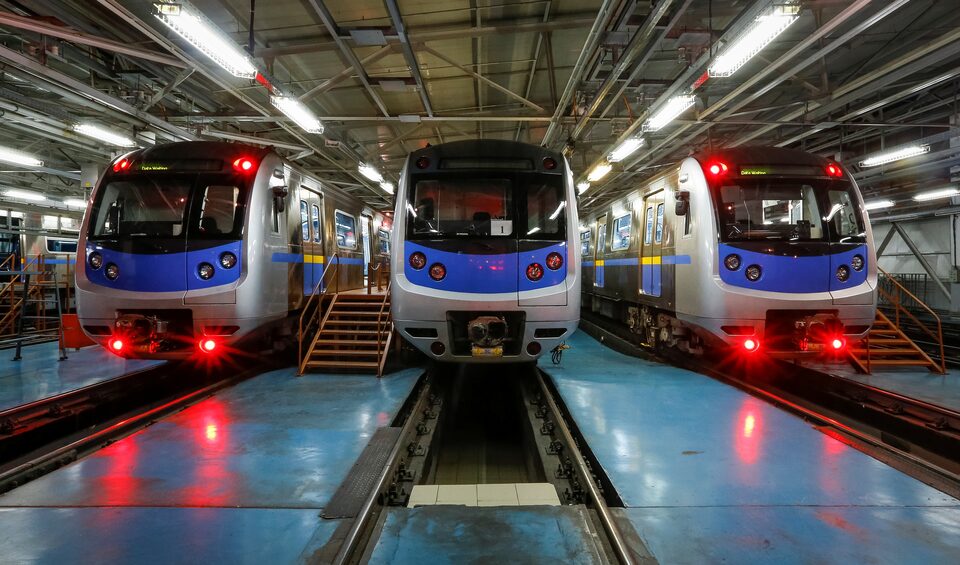
Hyundai Rotem trains are seen parked inside an Almaty Metro depot in Almaty, Kazakhstan, June 2, 2016. REUTERS
FacebookTwitterLinkedinEmail
31

RABAT, Oct 15 – Morocco plans to invest approximately $13.53 billion in railway infrastructure by 2030, extending its high-speed rail network and modernizing conventional lines as the country positions rail transport as a central component of its long-term development strategy.

Transport Minister Abdessamad Kayouh outlined the investment programme at the Forum on Financing Railway Projects in Africa in Rabat, identifying the extension of the high-speed railway from Kenitra to Marrakech as a major component of the expansion.

Rabie Khlie, director general of Morocco’s National Railway Office (ONCF) and president of the International Union of Railways (UIC) Africa Region, highlighted the country’s railway reforms, including Al Boraq, Africa’s first high-speed train.

He said modernization of the conventional railway network had helped Morocco’s rail system serve more than 55 million passengers annually. Khlie also pointed to an investment programme exceeding €10 billion through 2030, underscoring the scale of the country’s railway development ambitions.

You Might Be Interested In
  • Zimbabwe Secures Funding for $66.8 Million Chirundu Border Upgrade

Morocco’s Railway Model

Morocco’s railway expansion has attracted attention from African infrastructure policymakers seeking ways to finance large-scale transport projects and improve connectivity.

Asmae Boureddaya, regional coordinator of the African Union Development Agency-NEPAD (AUDA-NEPAD), said Morocco’s experience offered lessons in mobilizing capital around a clearly defined national development strategy.

She highlighted ONCF’s 2022 green bond issuance, which brought together Moroccan investors, the European Bank for Reconstruction and Development, CDG Capital and Tamwilcom.

According to Boureddaya, the financing initiative helped align funding with the long operating life of railway infrastructure. AUDA-NEPAD hopes to share these lessons through South-South cooperation, enabling other African countries to explore similar approaches to infrastructure financing.

Boureddaya also identified Morocco as one of the African countries making progress toward the African Union’s Agenda 2063 development objectives.

Africa’s Railway Financing Gap

Despite Morocco’s progress, financing remains a major obstacle to railway development across the continent.

Khlie said Africa’s expanding population, youthful demographics, rapid urbanization and natural-resource potential strengthen the case for modern transport networks capable of moving people and freight more efficiently.

However, insufficient investment has constrained network expansion, maintenance and the adoption of modern railway technologies.

A report cited by Railway Pro, drawing on analysis from the Africa Finance Corporation, estimates that Africa needs to invest between $65 billion and $105 billion annually to address its railway infrastructure requirements.

The funding gap has contributed to limited progress on railway expansion projects under the African Union’s Programme for Infrastructure Development in Africa (PIDA). Other challenges include inadequate maintenance, underutilized rail services and technological disparities between networks.

These constraints limit the capacity of railways to support regional trade, connect production centres to markets and reduce the cost of transporting commodities across African economies.

Morocco’s investment programme therefore comes against a wider continental challenge: mobilizing long-term capital for infrastructure that requires substantial upfront expenditure but can deliver economic benefits over decades.

The experience highlighted at the Rabat forum suggests that financing structures, including green bonds and partnerships between domestic investors and development finance institutions, could form part of the response. However, scaling railway investment across Africa will require sustained funding, effective project implementation and stronger coordination between national and regional transport systems.

Read Next

  • Ethiopia Says It Does Not Need Permission to Develop Abay River Resources

    August 21, 2026
  • Standard Bank Arranges $250 Million Financing for Nigeria’s Aradel Energy

    January 29, 2026
  • Morocco January Inflation Mixed as Monthly Prices Rise, Annual Rate Falls

    February 23, 2026
  • Morocco’s Tanger Med Port Eyes Traffic Surge as Shipping Reroutes Around Africa

    March 31, 2026
  • Meta Adds Conversation Focus and Spotify Features to AI Smart Glasses

    December 17, 2025

Newsletter

Subscribe to our newsletter for trusted insights on Africa’s economies, markets, and business.

African Economy Inc. Logo

About Us

We are a business and economic intelligence platform delivering in-depth reporting, analysis, and insights on markets, companies and economic developments across Africa.

Our Company

  • AEI Intelligence
  • About
  • Editorial Standard
  • Partnerships
  • Advertise With Us
  • Careers
  • Ownership

News

  • Economy
  • Business
  • Markets
  • Finance
  • Credit Ratings
  • Policy
  • Tech

Useful Links

  • Privacy Policy
  • Terms of Use
  • Closed Captioning Policy
  • Accessibility Statement
  • Personal Information
  • Data Tracking
  • Register New Account

Subscribe Newsletter

Subscribe to our newsletter for trusted insights on Africa’s economies, markets, and business.

©2026 Majons Media Inc. All Rights Reserved.

Facebook Twitter Instagram Linkedin
Manage Consent
To provide the best experiences, we use technologies like cookies to store and/or access device information. Consenting to these technologies will allow us to process data such as browsing behavior or unique IDs on this site. Not consenting or withdrawing consent, may adversely affect certain features and functions.
Functional Always active
The technical storage or access is strictly necessary for the legitimate purpose of enabling the use of a specific service explicitly requested by the subscriber or user, or for the sole purpose of carrying out the transmission of a communication over an electronic communications network.
Preferences
The technical storage or access is necessary for the legitimate purpose of storing preferences that are not requested by the subscriber or user.
Statistics
The technical storage or access that is used exclusively for statistical purposes. The technical storage or access that is used exclusively for anonymous statistical purposes. Without a subpoena, voluntary compliance on the part of your Internet Service Provider, or additional records from a third party, information stored or retrieved for this purpose alone cannot usually be used to identify you.
Marketing
The technical storage or access is required to create user profiles to send advertising, or to track the user on a website or across several websites for similar marketing purposes.
  • Manage options
  • Manage services
  • Manage {vendor_count} vendors
  • Read more about these purposes
View preferences
  • {title}
  • {title}
  • {title}
– Business, Finance, Markets & Economic News
  • Economy
  • Business
  • Markets
  • Banking & Finance
  • Energy
  • Tech
  • Policy
  • African Economy Inc.