
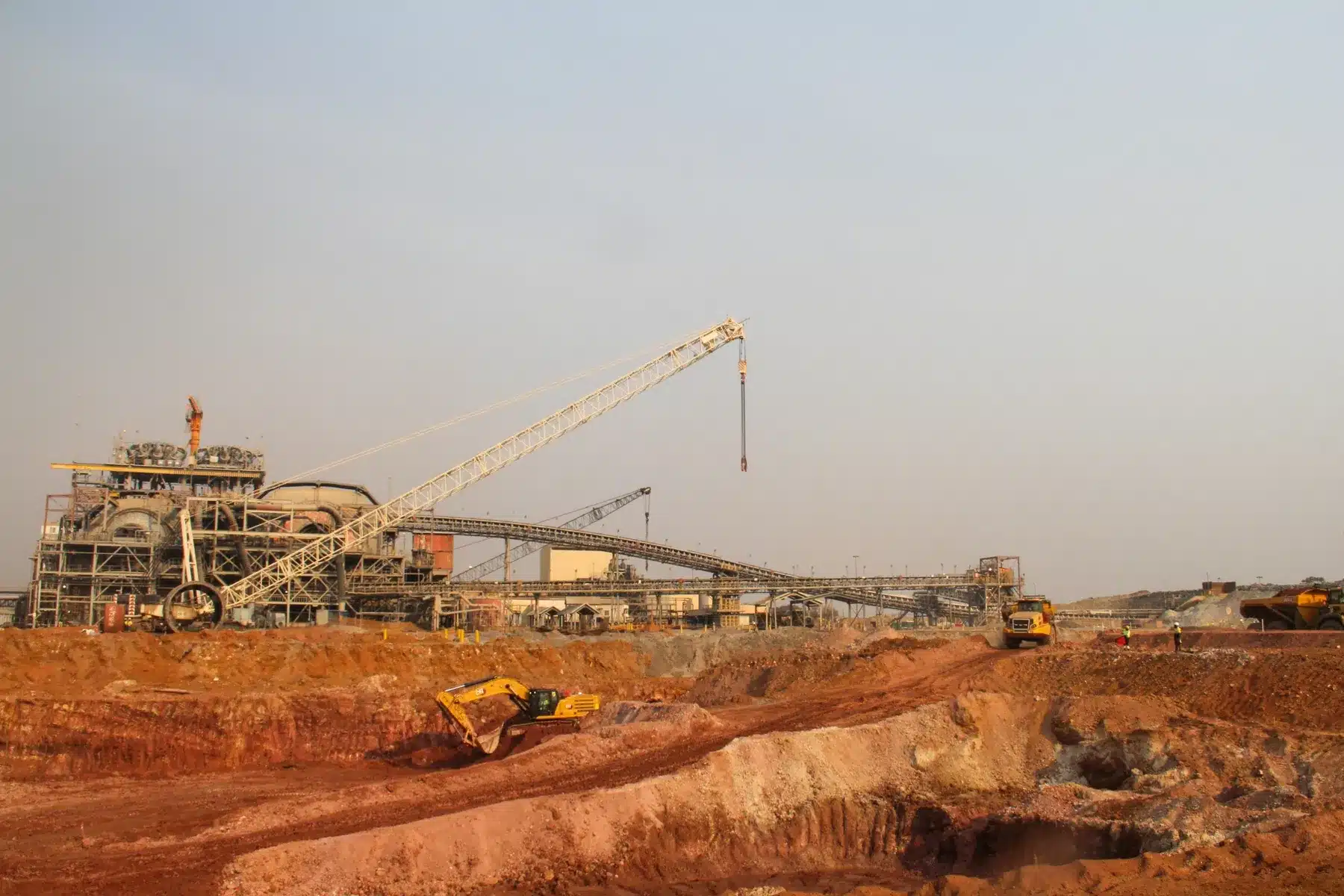
LUSAKA, Oct 16 – The World Bank Group plans to quintuple its critical minerals business over five years, targeting $19 billion in financing between fiscal 2026 and 2030 as it expands support for mineral-producing countries seeking to attract investment, develop local industries and retain more economic value domestically.
World Bank President Ajay Banga announced the ambition in prepared remarks at a plenary session during the International Monetary Fund and World Bank annual meetings in Bangkok.
“In critical minerals, we plan to quintuple our business in five years,” Banga said. “This week, we launched our first country compacts with MDB partners—to build local industries and keep more jobs and value at home.”
The bank’s Metals and Minerals implementation plan envisages increasing critical minerals financing to $19 billion in fiscal 2026-2030, from $3.6 billion during the preceding five-year period. The strategy reflects growing interest in securing mineral supplies while helping producing countries capture more of the economic benefits through processing, infrastructure and domestic industrial development.
Critical minerals have become an increasingly important area of engagement for the World Bank, particularly as the United States, its largest shareholder, calls for greater financing to expand mining and processing capacity.
US Treasury Secretary Scott Bessent said earlier in the week that the bank should do more to support critical minerals projects through financing, investment and measures to reduce project risks, including infrastructure needed to make developments commercially viable. His priorities also included deep-sea mining.
Banga did not specifically address deep-sea mining in his remarks. The bank’s metals plan instead calls for a “precautionary approach” to the emerging sector, with any involvement or investment required to comply with applicable institutional policies.
Eight Countries Launch Critical Minerals Compacts
Eight governments, including Egypt, Malawi, Mauritania and Zambia, announced country partnerships designed to promote responsible mineral development, attract investment, create jobs and strengthen domestic economies.
The other participating countries are Argentina, Bolivia, India and Kazakhstan.
The compacts establish country-specific priorities, reforms and measurable targets intended to improve the investment environment and increase the economic contribution of mineral resources. Proposed measures include modernising mineral licensing systems, improving geological data, strengthening environmental and social safeguards, expanding energy and transport infrastructure, and developing local workforces and suppliers.
The approach seeks to connect mineral extraction with broader economic development, allowing producing countries to build stronger domestic supply chains rather than relying predominantly on the export of unprocessed resources.
Egypt Targets Higher Mineral Exports and Industrial Value
Egypt’s compact aims to raise the minerals sector’s contribution to 6% of GDP by 2030 and increase metals and minerals-related exports to $9.8 billion by 2040.
The plan prioritises legal and fiscal reforms, better geological information, digital systems and the development of processing hubs to improve the sector’s competitiveness and attract investment.
The World Bank Group and the European Bank for Reconstruction and Development will support governance improvements, institutional capacity and investment readiness, with the objective of encouraging industrial development and job creation.
For Egypt, the targets place greater emphasis on developing the capabilities needed to turn mineral resources into higher-value products and strengthen the country’s position in regional and international supply chains.
Zambia Links Copper Expansion to Domestic Value Addition
Zambia’s compact focuses on expanding copper production while increasing the amount of economic value generated within the country. Priorities include stronger sector governance, improved geological data and licensing, additional energy and transport infrastructure, skills development and stronger links between mining companies and local businesses.
The programme aligns with Zambia’s ambition to raise annual copper production to 3 million metric tons by 2031, while developing supporting industries that can create employment and broaden the benefits of the mining sector.
Zambia’s Minister of Finance and National Planning, Situmbeko Musokotwane, said the partnership would help align policy reforms, infrastructure and investment with the country’s production ambitions.
“Under our Grow Zambia Agenda, we are targeting annual copper production of three million metric tonnes by 2031. We are going to complement our copper production with value adding supporting industries that create quality jobs and improve livelihoods across Zambia. This Compact with the World Bank Group will help us bring together the reforms, infrastructure, and investment needed to turn our mineral wealth into lasting economic opportunities for our people,” Musokotwane said.
The country’s challenge extends beyond increasing mine output. Sustained expansion will also require reliable electricity, transport capacity, skilled workers and competitive domestic suppliers capable of serving the wider copper value chain.
Wider Push to Mobilise Private Capital
Banga also highlighted the World Bank Group’s broader financing performance in fiscal 2026, which ended on June 30. The institution mobilised $112 billion in private capital, more than three times the amount recorded in fiscal 2022, before he assumed the presidency.
Combined with financing from the World Bank Group’s own balance sheet, total financing reached $230 billion during fiscal 2026, according to Banga.
The critical minerals initiative forms part of a wider effort to use development finance to attract private investment into sectors where infrastructure gaps, regulatory uncertainty and project risks can constrain capital deployment.
For African producers such as Zambia and Malawi, the potential economic gains will depend on whether new investment translates into domestic processing, stronger supplier networks, employment and a larger share of mineral export value retained locally.
The new compacts provide a framework for coordinating reforms and financing. Their impact will ultimately depend on implementation, the availability of infrastructure and the ability to convert mineral demand into commercially viable industrial activity.