
– Business, Finance, Markets & Economic News
  • Home
  • Economy
  • Business
  • Markets
  • Finance
  • Credit Ratings
  • Policy
  • Tech
– Business, Finance, Markets & Economic News
  • Home
  • Economy
  • Business
  • Markets
  • Finance
  • Credit Ratings
  • Policy
  • Tech
Top News
Ethiopia’s New Gold Refinery Seeks Regional Gold Supplies From East African Markets
Angola’s Fuel Subsidy Bill Could Nearly Double to $4.16 Billion as Oil Prices Rise
MDBs Launch Critical Minerals Framework to Boost Local Processing and Investment
Transnet Signs $400 Million Wabtec Deal to Improve Freight Locomotive Reliability
Dangote Plans to List at Least 10% of Ethiopian Fertilizer Business on Local Exchange
World Bank Group Targets $5.79 Billion in Private Financing for Nigeria in 2026
Pickalbatros Secures $250 Million IFC-Backed Financing for Morocco Hotel Expansion
Kenya’s Economy Grows 5.1% in Second Quarter as Transport and Services Expand
Africa50 CEO Calls for Domestic Capital and Local Processing to Scale Investment Across Africa
South Africa Inflation Forecast at 4.4% in 2026, Target Return Delayed Until 2028
Africa Finance Corporation Targets Iron Ore and Uranium Investments in Africa
World Bank Targets $19 Billion in Critical Minerals Financing by 2030
Senegal Raises $582 Million in Second Regional Bond Sale of 2026
Eni Targets 2028 Start for Mozambique’s LNG Project as Drilling Begins in November
Egyptian Exchange Explores Listing Dangote Group Shares Through Depositary Receipts
SUBSCRIBE
– Business, Finance, Markets & Economic News
Subscribe
– Business, Finance, Markets & Economic News
  • Home
  • Economy
  • Business
  • Markets
  • Finance
  • Credit Ratings
  • Policy
  • Tech
Copyright 2026 - All Right Reserved
Home » Mining » MDBs Launch Critical Minerals Framework to Boost Local Processing and Investment
Mining

MDBs Launch Critical Minerals Framework to Boost Local Processing and Investment

by Oluebube Elechi October 17, 2026
written by Oluebube Elechi October 17, 2026
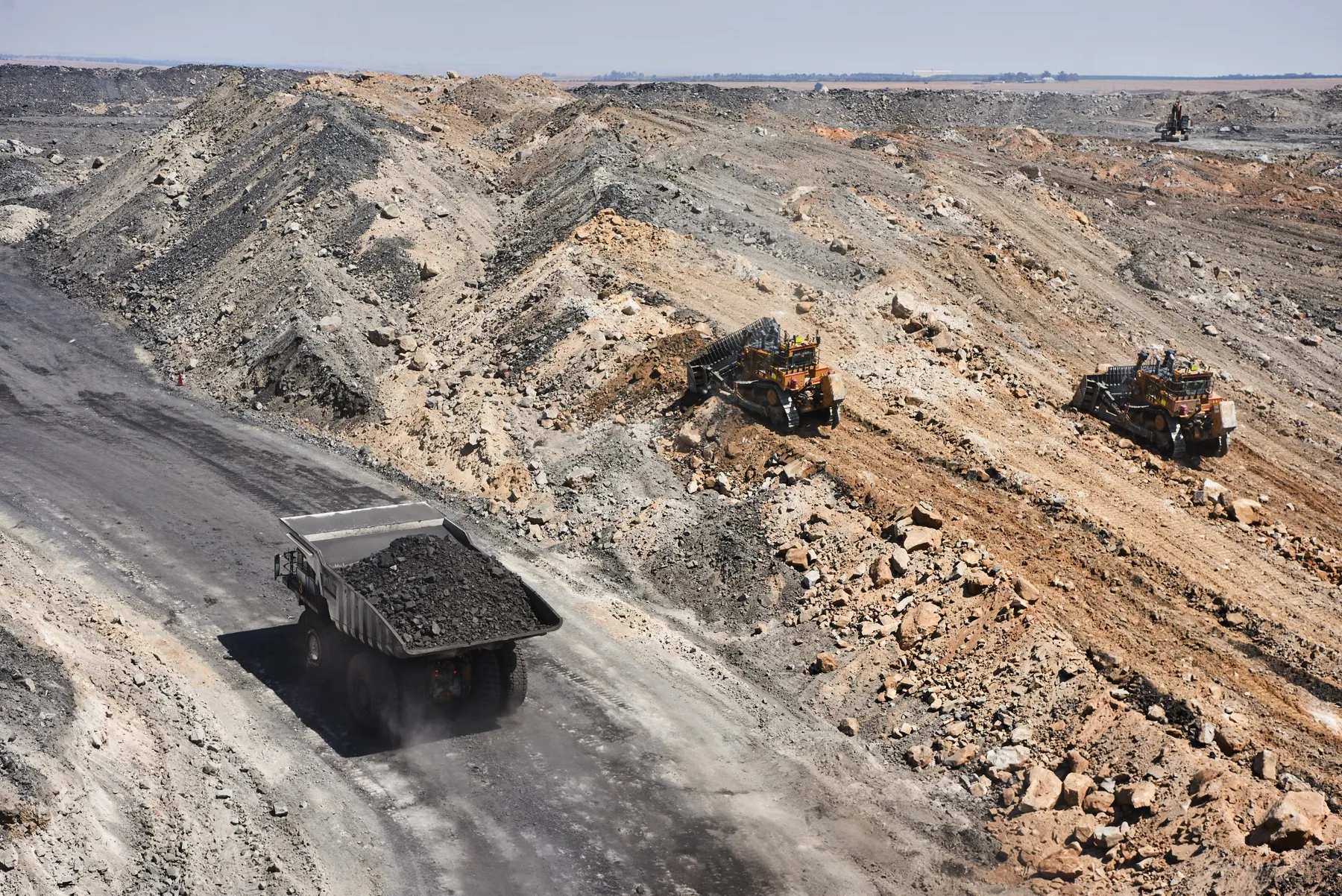
A dump truck transports excavated rock along an access road at a mine in Mpumalanga, South Africa.Photographer: Waldo Swiegers/Bloomberg
FacebookTwitterLinkedinEmail
4

LONDON, Oct 17 – Six multilateral development banks (MDBs) are strengthening cooperation to help mineral-rich developing economies capture more economic value from critical minerals by expanding local processing, refining and manufacturing beyond extraction.

An outline of the collaboration framework, published on Saturday, sets out a coordinated approach to financing, infrastructure development and policy support across critical mineral supply chains. The initiative aims to create jobs, increase domestic value addition, attract private investment and support the transition to lower-carbon economies.

The participating institutions are the World Bank, African Development Bank, Asian Development Bank, European Bank for Reconstruction and Development, European Investment Bank and Inter-American Development Bank.

The framework, dated October, reflects a coordinated effort to connect mineral development with wider economic and industrial development rather than treating mining projects as standalone investments.

You Might Be Interested In
  • Appian Capital Acquires Namibia Copper Project in $400 Million Expansion Push

Infrastructure and mineral corridors

A central component of the framework is support for mineral corridors that integrate mining and processing activities with essential infrastructure, including power, transport, logistics, water and digital connectivity.

These investments are intended to address infrastructure constraints that can limit the development of mineral supply chains and make it more difficult for resource-rich countries to establish downstream industries.

The banks also plan to strengthen project preparation and coordinate financing through co-financing arrangements, guarantees and other financial instruments designed to mobilise capital and accelerate private-sector investment.

Improved project preparation could help bring more mineral-related infrastructure and industrial projects to investment readiness, while coordinated financing is intended to support projects that may require substantial capital across multiple stages of the supply chain.

From extraction to domestic value addition

The framework places domestic value addition at the centre of efforts to strengthen the economic benefits of critical mineral resources.

Moving into processing, refining and manufacturing can allow developing economies to retain more activity within their borders, support industrial employment and build local capabilities around mineral production.

The MDBs intend to better connect mining projects with infrastructure investment and industrial development, linking resource extraction to the wider requirements of domestic production.

The approach also seeks to attract private capital into critical mineral supply chains, with development bank financing and risk-sharing instruments expected to support investment alongside public-sector infrastructure and policy measures.

The framework does not specify individual country allocations, project commitments or financing targets in the outline provided.

Coordinating standards and implementation

The participating banks will seek closer alignment on environmental and social standards while coordinating their support to governments developing critical mineral industries.

Greater alignment is intended to improve cooperation across institutions and help governments address the infrastructure, policy and investment requirements associated with expanding mineral supply chains.

An MDB working group will coordinate implementation of the framework’s objectives and report annually to the Heads of MDBs Group on progress.

The annual reporting process will provide a mechanism for tracking implementation across the participating institutions. The framework’s practical impact will depend on how the banks translate the commitments into financing, infrastructure projects and industrial investment.

For resource-rich developing economies, the initiative creates a platform for closer coordination between mineral development, infrastructure provision and domestic industrialisation. Its significance will ultimately depend on whether that cooperation helps convert mineral resources into sustained local economic activity, rather than extraction-led growth alone.

Read Next

  • Zambia Sees $1.8 Billion Gold Opportunity as State Investor Targets Informal Mining

    September 2, 2026
  • IMF Explores New Financing Arrangement for Mozambique as Debt Pressure Persist

    June 12, 2026
  • Standard Chartered Projects Morocco’s Economy to Expand 4.5% in 2026

    July 4, 2026
  • Türkiye, Nigeria Set $5 Billion Trade Goal as Tinubu Visits Ankara

    January 28, 2026
  • Morocco Targets $10 Billion AI Boost to GDP by 2030

    January 13, 2026

Newsletter

Subscribe to our newsletter for trusted insights on Africa’s economies, markets, and business.

African Economy Inc. Logo

About Us

We are a business and economic intelligence platform delivering in-depth reporting, analysis, and insights on markets, companies and economic developments across Africa.

Our Company

  • AEI Intelligence
  • About
  • Editorial Standard
  • Partnerships
  • Advertise With Us
  • Careers
  • Ownership

News

  • Economy
  • Business
  • Markets
  • Finance
  • Credit Ratings
  • Policy
  • Tech

Useful Links

  • Privacy Policy
  • Terms of Use
  • Closed Captioning Policy
  • Accessibility Statement
  • Personal Information
  • Data Tracking
  • Register New Account

Subscribe Newsletter

Subscribe to our newsletter for trusted insights on Africa’s economies, markets, and business.

©2026 Majons Media Inc. All Rights Reserved.

Facebook Twitter Instagram Linkedin
Manage Consent
To provide the best experiences, we use technologies like cookies to store and/or access device information. Consenting to these technologies will allow us to process data such as browsing behavior or unique IDs on this site. Not consenting or withdrawing consent, may adversely affect certain features and functions.
Functional Always active
The technical storage or access is strictly necessary for the legitimate purpose of enabling the use of a specific service explicitly requested by the subscriber or user, or for the sole purpose of carrying out the transmission of a communication over an electronic communications network.
Preferences
The technical storage or access is necessary for the legitimate purpose of storing preferences that are not requested by the subscriber or user.
Statistics
The technical storage or access that is used exclusively for statistical purposes. The technical storage or access that is used exclusively for anonymous statistical purposes. Without a subpoena, voluntary compliance on the part of your Internet Service Provider, or additional records from a third party, information stored or retrieved for this purpose alone cannot usually be used to identify you.
Marketing
The technical storage or access is required to create user profiles to send advertising, or to track the user on a website or across several websites for similar marketing purposes.
  • Manage options
  • Manage services
  • Manage {vendor_count} vendors
  • Read more about these purposes
View preferences
  • {title}
  • {title}
  • {title}
– Business, Finance, Markets & Economic News
  • Economy
  • Business
  • Markets
  • Banking & Finance
  • Energy
  • Tech
  • Policy
  • African Economy Inc.