
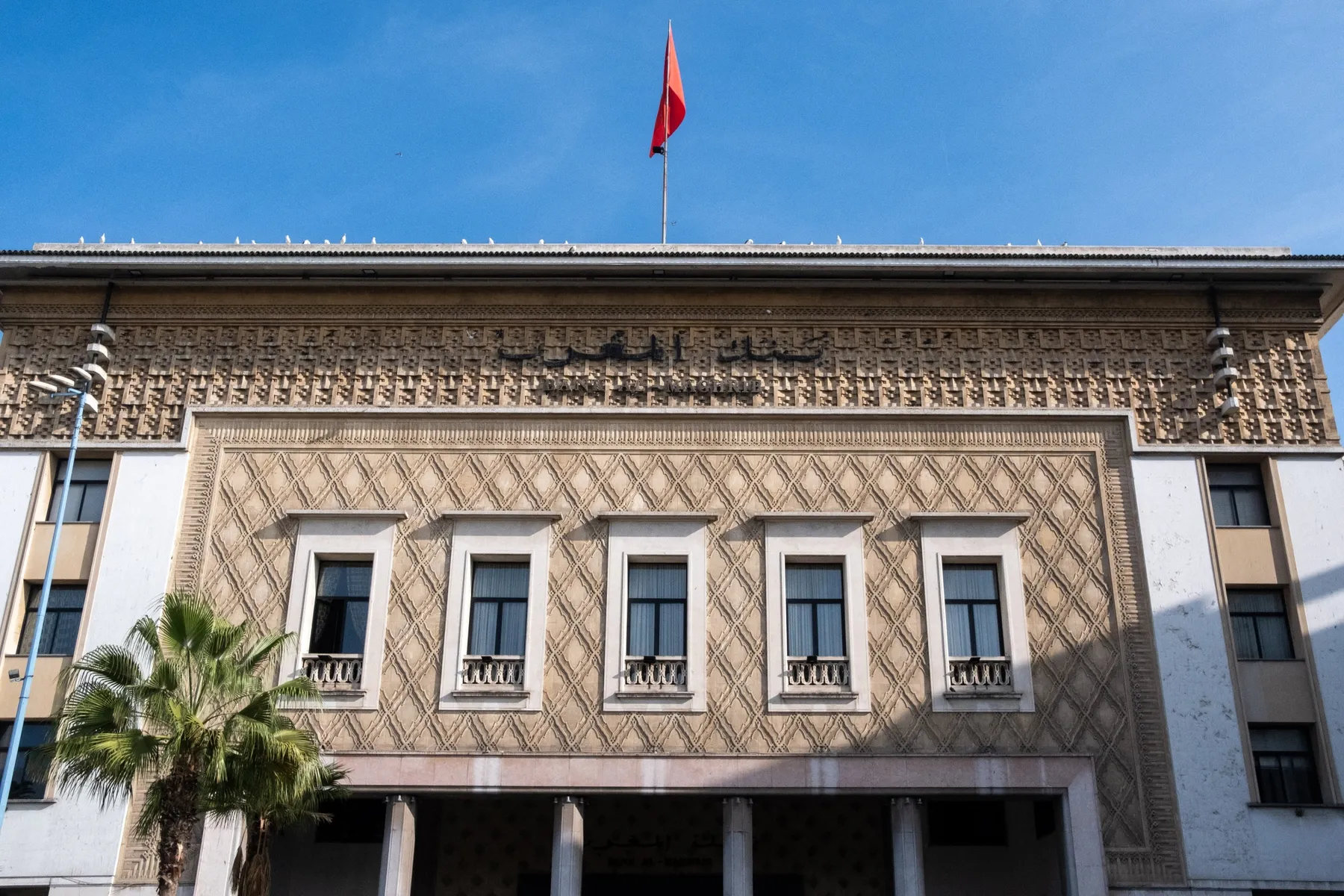
RABAT, June 23 – Bank Al-Maghrib has kept its benchmark interest rate unchanged at 2.25%, maintaining the level first set in March 2025 as policymakers seek to support economic growth while keeping inflation under control.
The decision follows the central bank’s latest quarterly monetary policy meeting and comes as Morocco continues to benefit from strong infrastructure investment linked to preparations for upcoming international sporting events, including the 2030 FIFA World Cup.
The central bank expects inflation to remain relatively moderate over the medium term despite continued uncertainty surrounding global energy markets.
According to its latest projections, inflation is forecast to average 1.5% in 2026 before rising to 2.1% in 2027.
Bank Al-Maghrib said higher fuel costs, rising global energy prices and imported inflation are expected to place upward pressure on domestic prices, although overall inflation is projected to remain within manageable levels.
Underlying inflation, which excludes more volatile food and energy prices, is expected to remain exceptionally low at 0.2% during 2026, reflecting lower food prices.
However, core inflation is projected to accelerate to 2.9% in 2027 as food-related deflation eases and imported price pressures gradually increase.
The central bank’s quarterly survey of financial market experts also indicated a modest rise in inflation expectations.
Respondents expect inflation to average approximately 2.2% over both the eight-quarter and twelve-quarter outlook periods.
Morocco’s inflation has eased considerably from the elevated levels experienced during recent global supply chain disruptions and higher international energy prices.
Nevertheless, policymakers continue to monitor external risks closely, particularly developments in global oil markets, given Morocco’s dependence on imported energy.
The decision to maintain interest rates reflects Bank Al-Maghrib’s broader strategy of supporting economic expansion while preserving price stability.
By keeping borrowing costs unchanged, the central bank aims to sustain investment and credit growth as Morocco continues large-scale infrastructure projects, while remaining prepared to respond should inflationary pressures intensify.
Economists note that Morocco’s inflation outlook remains closely tied to global commodity prices and international market developments, making imported inflation and energy costs among the country’s key macroeconomic risks over the coming years.
