
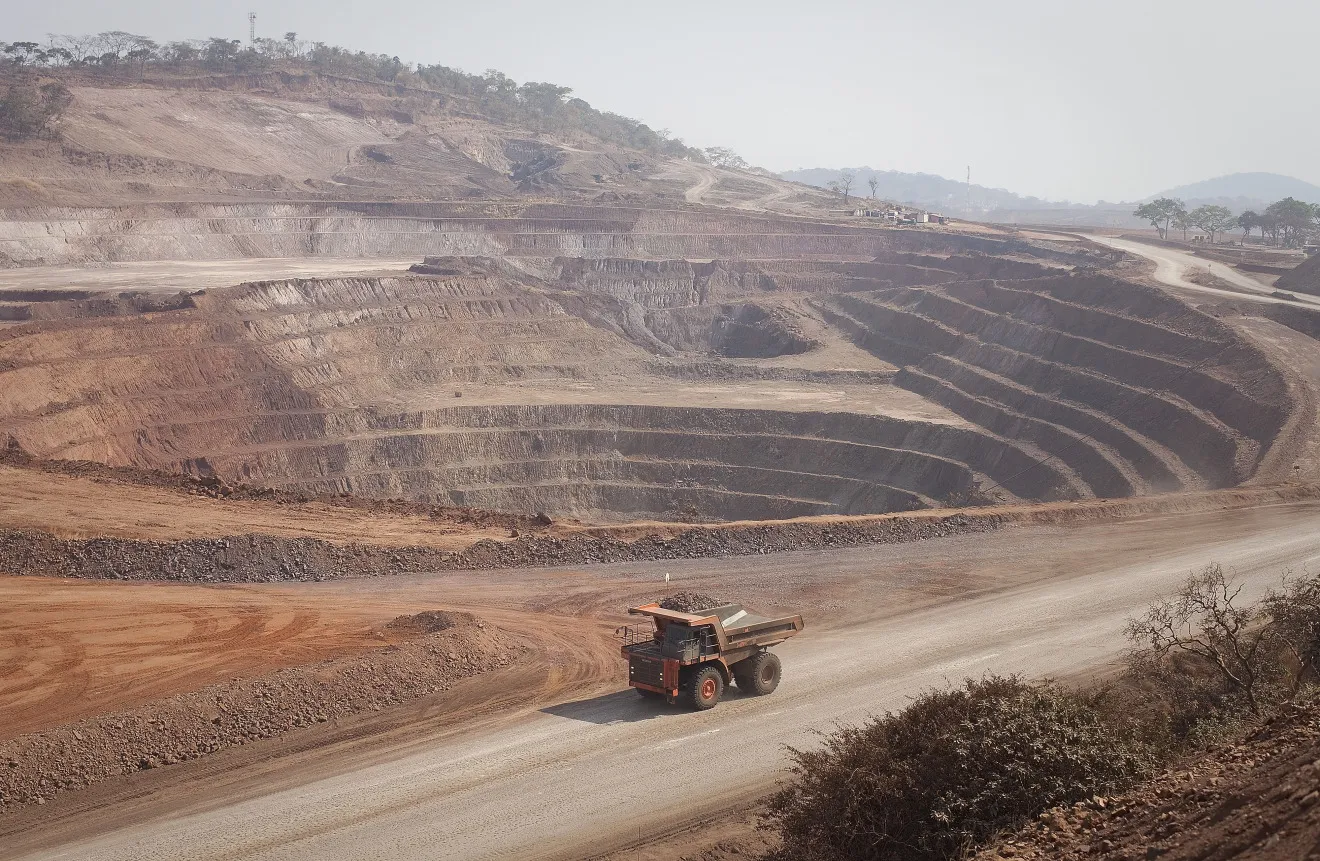
KINSHASA, Aug 6 – The Democratic Republic of Congo (DRC) has banned the export of copper concentrates and cobalt concentrates, intensifying efforts to promote domestic mineral processing and retain a greater share of the value generated from the country’s vast mining resources.
According to a Reuters report, the measure is contained in a June 29 government order and signed by Mines Minister Louis Kabamba Watum, Foreign Trade Minister Julien Paluku Kahongya, and Economy Minister Daniel Mukoko Samba.
According to the order, “the export of copper and cobalt concentrates is prohibited,” with the ban taking immediate effect.
In addition to the export restriction, the government has introduced a new tax regime covering economically significant mining by-products as part of broader reforms designed to increase public revenue from the country’s mining sector.
While the export ban is already in force, authorities have provided a three-month transition period for the implementation of the new by-product tax framework.
The order also gives the Minister of Mines the authority to grant one-year export waivers under what it describes as “strategic” circumstances, providing limited flexibility where deemed necessary.
The DRC is the world’s largest producer of cobalt and the second-largest supplier of copper, making the policy a potentially significant development for global mineral supply chains. Both metals are critical inputs for electric vehicle batteries, renewable energy technologies and other clean energy applications.
The latest measures form part of the Congolese government’s broader strategy to encourage local beneficiation, expand domestic industrial capacity and capture more value from its mineral wealth rather than exporting largely unprocessed raw materials.
Several of the world’s largest mining companies operate in the DRC, including CMOC, the world’s largest cobalt producer, Glencore, Huayou Cobalt, Zijin Mining, Ivanhoe Mines, and Eurasian Resources Group.
The export restrictions are expected to have significant implications for mining companies operating in the country, potentially accelerating investment in local processing facilities while reshaping global supply chains for copper and cobalt concentrates.
