
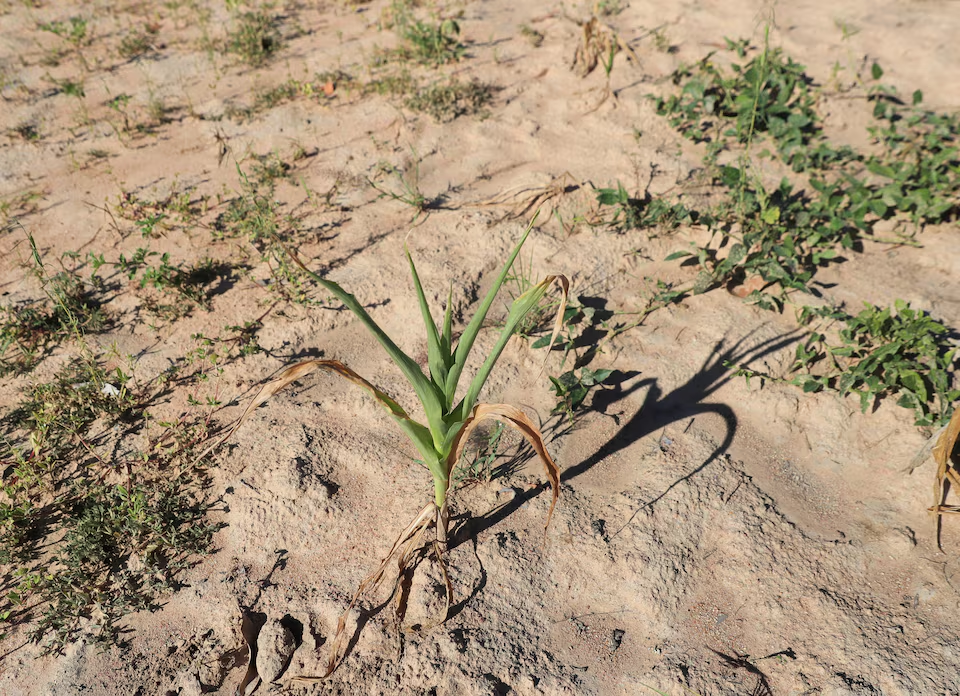
LONDON, Aug 6 – A powerful El Niño weather event could push nearly 49 million additional people into acute food insecurity by the end of next year, according to a new assessment by the United Nations World Food Programme (WFP), which warns that some of the world’s most vulnerable regions face heightened risks from worsening climate conditions.
In its latest report, the WFP said there is an 81% probability of a very strong El Niño developing, with Pacific Ocean sea surface temperatures reaching their highest levels since at least 1982, potentially making it the most intense event recorded since 1950.
El Niño, a naturally occurring warming of surface waters in the Pacific Ocean, disrupts global weather patterns and is typically associated with drought across Southern Africa, delayed monsoon rains in parts of Asia and erratic rainfall in several other regions.
The WFP estimates that across 45 countries identified as highly vulnerable to El Niño, the number of people facing acute food insecurity could increase by almost 49 million, bringing the total to approximately 274 million people. That would represent a 22% increase compared with the baseline population already experiencing crisis-level hunger or worse.
Speaking to reporters, Jean-Martin Bauer, Director of the WFP’s Food Security and Nutrition Analysis Service, warned that similar climate events have historically triggered widespread food crises.
According to Bauer, “These are events that in the past have triggered large-scale hunger.”
The report identifies Central America and Southern Africa as the regions likely to experience the sharpest deterioration in food security. The number of people facing acute hunger is projected to rise by 83% in Central America and by nearly 75% in Southern Africa.
Southern Africa, together with South America and the Caribbean, could each see more than 12 million additional people fall into acute food insecurity if the severe weather event unfolds as projected.
Bauer noted that global food markets entered the current El Niño period from a relatively stronger position following favourable harvests in 2025. However, he cautioned that ongoing conflict in the Middle East, combined with potential weather-related crop losses, could place additional upward pressure on global food prices.
He added that while previous El Niño events have not generally triggered sharp increases in global food prices, regional shortages and higher local prices could significantly reduce food access for vulnerable households.
The WFP also warned that funding cuts from major donors in the United States and Europe are undermining efforts to monitor the evolving crisis.
According to Bauer, “At a time when you have a risk like an El Niño, it is important to have high-frequency data collection,” warning that reduced monitoring could make it more difficult to detect emerging food crises before they worsen.
The agency said it conducted approximately 1.1 million household surveys in 2024, compared with about 800,000 in 2025, with data collection declining further this year because of funding constraints.
The report underscores the growing intersection between climate change, conflict and food security, highlighting the need for early intervention and sustained humanitarian support to reduce the impact of extreme weather on vulnerable populations.
