
LAGOS, Sept 22 – The presidents of South Africa, Egypt and Nigeria, Africa’s three largest economies by nominal gross domestic product, are not personally attending the high-level week of the 81st United Nations General Assembly in New York. Instead, senior government officials are leading their respective delegations as countries engage in diplomatic, economic and multilateral discussions.
The International Monetary Fund’s 2026 projections place South Africa, Egypt and Nigeria among Africa’s largest economies, with nominal GDP estimates of roughly $474 billion, $430 billion and $377 billion respectively.
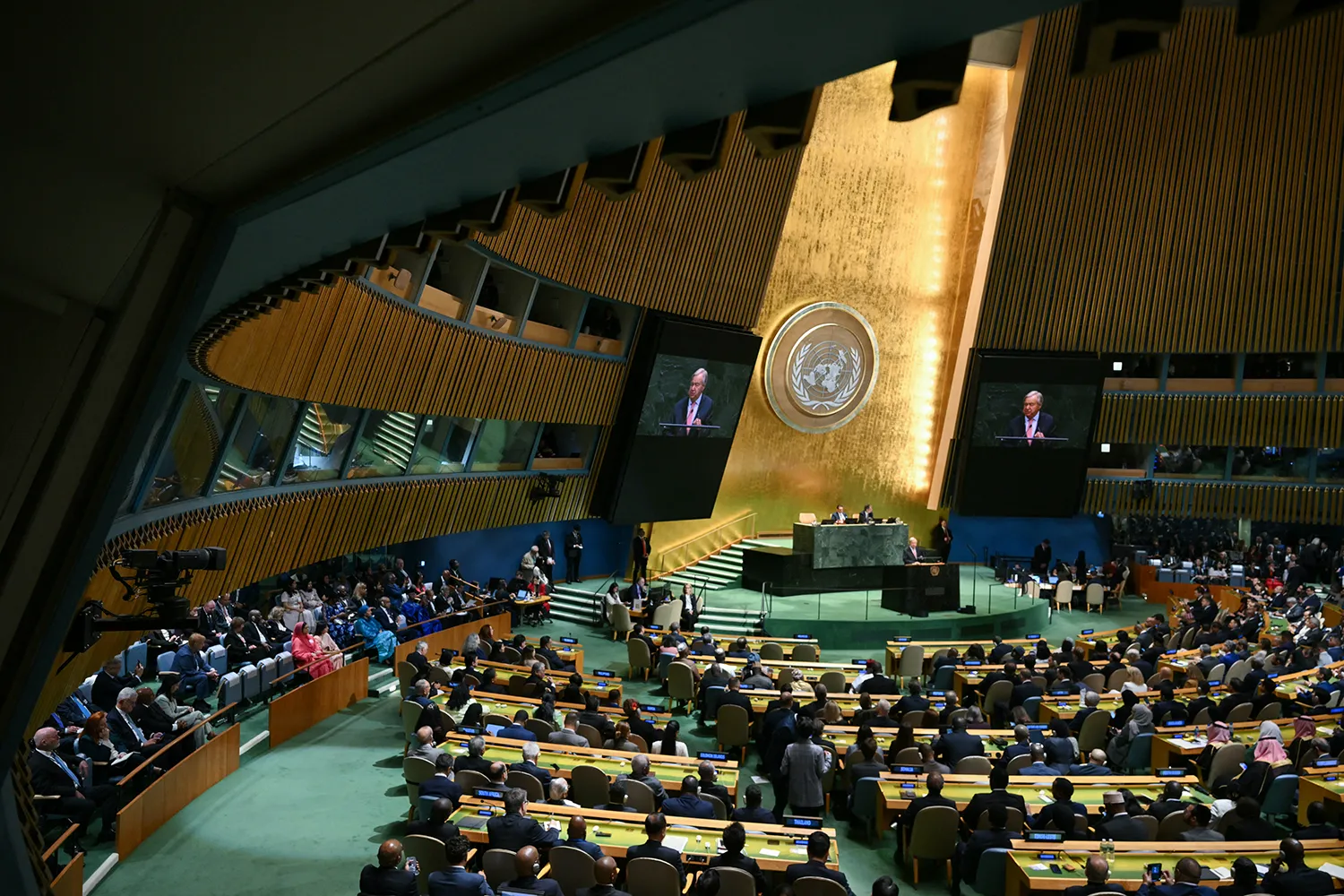
The UN General Debate opened on September 22 and runs through September 28. The 81st session is being held under the theme, “Restoring trust, managing transformation: A United Nations that delivers for all.”
The high-level programme brings governments together for discussions covering global governance, peace and security, development, climate, financing and international cooperation. For the continent’s three largest economies, however, representation at the gathering is being handled by senior officials rather than the heads of state.
President Cyril Ramaphosa is not attending UNGA 81 after being temporarily withdrawn from public engagements on medical advice. The South African Presidency said on September 16 that Ramaphosa had been booked off from public engagements due to ill health and had been advised by his medical team to rest and recover. The Presidency did not provide further details.
International Relations and Cooperation Minister Ronald Lamola is representing South Africa at the General Assembly. South Africa’s foreign policy priorities for the UN session include strengthening multilateralism and advancing reforms that would give Africa greater representation in global institutions. Lamola had previously said South Africa’s participation in the high-level week would begin on September 22.
The country’s delegation is also participating in discussions on development financing and infrastructure. South African ministers have represented Ramaphosa at several engagements during his absence.
Egypt is being represented by Prime Minister Mostafa Madbouly, who travelled to New York on September 21 to lead the country’s delegation under the direction of President Abdel Fattah El-Sisi.
El-Sisi is not personally attending the General Assembly. Madbouly is scheduled to deliver statements at several events during the 81st session and hold meetings with international organisations, government officials and executives from major global companies. Egypt’s participation therefore extends beyond the General Debate to bilateral and economic discussions taking place on the sidelines of the UN gathering.
President Bola Ahmed Tinubu is also absent from UNGA 81, with Vice President Kashim Shettima leading Nigeria’s delegation in New York.
Nigeria’s State House said on September 21 that Tinubu had extended his working vacation in Europe by several days and would return to Nigeria at the weekend. Shettima departed Abuja on September 20 to represent the president at the General Assembly and is scheduled to deliver Nigeria’s national statement.
Nigeria’s delegation is expected to use the gathering to advance the country’s positions on reform of the multilateral system, including its longstanding advocacy for stronger African representation in global institutions.
Ahead of the General Debate, Shettima received briefings on Nigeria’s priorities from Foreign Affairs Minister Bianca Odumegwu-Ojukwu and Nigeria’s Permanent Representative to the United Nations, Jimoh Ibrahim.
The absence of the three presidents does not mean that South Africa, Egypt or Nigeria is absent from UNGA 81. All three countries have sent senior representatives who are participating in the General Assembly’s high-level programme, bilateral meetings and wider diplomatic engagements.
The development nevertheless places attention on the role of Africa’s three largest economies at a UN gathering where African governments continue to pursue greater representation in global institutions alongside discussions on development finance, trade, climate policy, infrastructure and international cooperation.
With Ramaphosa, El-Sisi and Tinubu outside the General Assembly’s high-level proceedings, their governments are relying on ministers, the Egyptian prime minister and Nigeria’s vice president to present national positions and advance their respective diplomatic and economic priorities during the week.
