
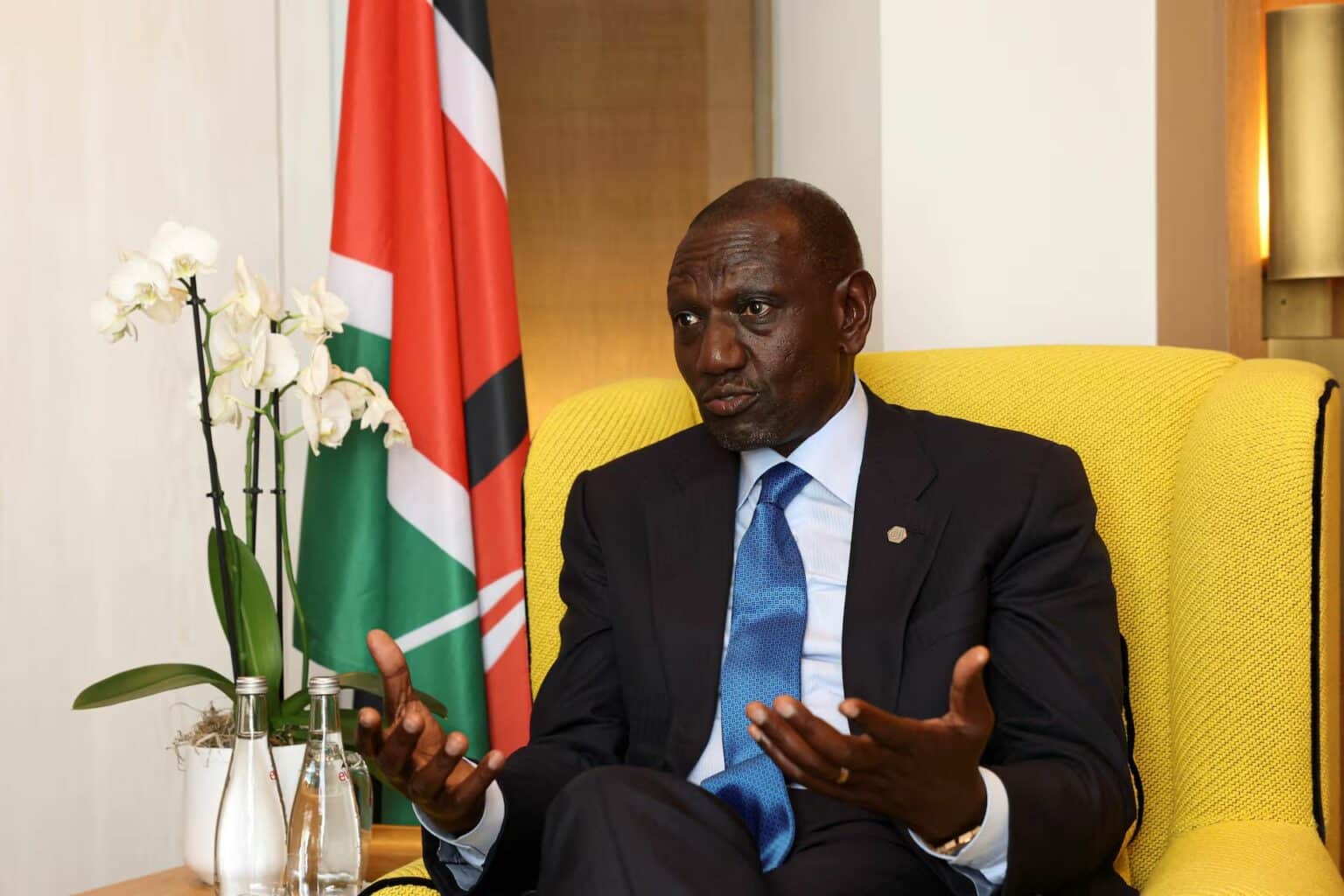
NEW YORK, Sept 23 – Kenyan President William Ruto has called for a broad overhaul of the United Nations and global financial architecture, arguing that institutions established roughly eight decades ago have not kept pace with changes in the global economy and international system.
Ruto made the remarks in New York while co-hosting the Partners for Multilateralism Summit with European Council President António Costa and Canadian Prime Minister Mark Carney on the sidelines of the 81st United Nations General Assembly. The initiative was launched during the UN’s high-level week as a platform for countries seeking to strengthen multilateral cooperation.
The Kenyan president said reform was necessary to strengthen confidence in international cooperation and make global institutions more representative and responsive to developing countries.
“This is why Kenya continues to advocate reform of the UN Security Council to make it more representative and inclusive, particularly for Africa,” Ruto said.
Push for greater African representation
Ruto’s call centres in particular on reform of the UN Security Council, where Africa currently has no permanent seat.
Kenya has consistently supported the African position under the Ezulwini Consensus and Sirte Declaration, which calls for permanent and non-permanent African representation on the Security Council with the rights attached to those positions.
The issue has also received support from UN Secretary-General António Guterres, who has argued that the Council’s composition should better reflect contemporary global realities. The African Union’s position calls for two permanent African seats alongside additional non-permanent representation.
Ruto has previously linked Security Council reform to the broader need for international institutions to adapt to a changing global balance of economic and political influence. Kenya’s position is also consistent with its wider advocacy for a stronger voice for developing economies in multilateral institutions.
Reforming the global financial architecture
Ruto also called for changes to the international financial system, particularly the way developing-country risk is assessed and financed.
“It should price risk more accurately and enable developing countries to mobilise more of their own capital for development,” he said.
The Kenyan president argued that Africa already has substantial pools of domestic savings and institutional capital but that much of it is not being channelled efficiently into infrastructure and other productive investments.
His proposed approach would give multilateral and development finance institutions a greater role as catalysts for private and domestic capital, using guarantees, credit enhancement and risk-sharing mechanisms rather than relying primarily on conventional lending.
Kenya has previously argued that Africa’s development financing challenge is not simply a shortage of capital but also the structure through which risk is allocated and projects are financed. In a recent address, Ruto pointed to more than $4 trillion in long-term domestic savings across Africa, including pension, insurance and central bank assets, while calling for stronger mechanisms to deploy those resources into development.
Financing pressures intensify
The push for financial reform comes as African governments face elevated borrowing costs, debt-service pressures and growing financing requirements for infrastructure, climate investment and economic development.
Ruto has argued that the existing financial architecture can make external borrowing disproportionately expensive for African economies, limiting the amount of capital available for productive investment.
His latest intervention therefore links two strands of Kenya’s international agenda: greater African representation in global decision-making and reforms that could expand access to development finance.
Kenya is also seeking to strengthen its position as a hub for multilateral institutions. Nairobi hosts the UN Office at Nairobi, and the government has outlined plans to expand facilities in the Gigiri area to accommodate additional UN missions and activities.
The Partners for Multilateralism initiative provides another platform for Kenya to advance these priorities alongside European and other international partners as discussions over the future of global governance and development finance continue.
