
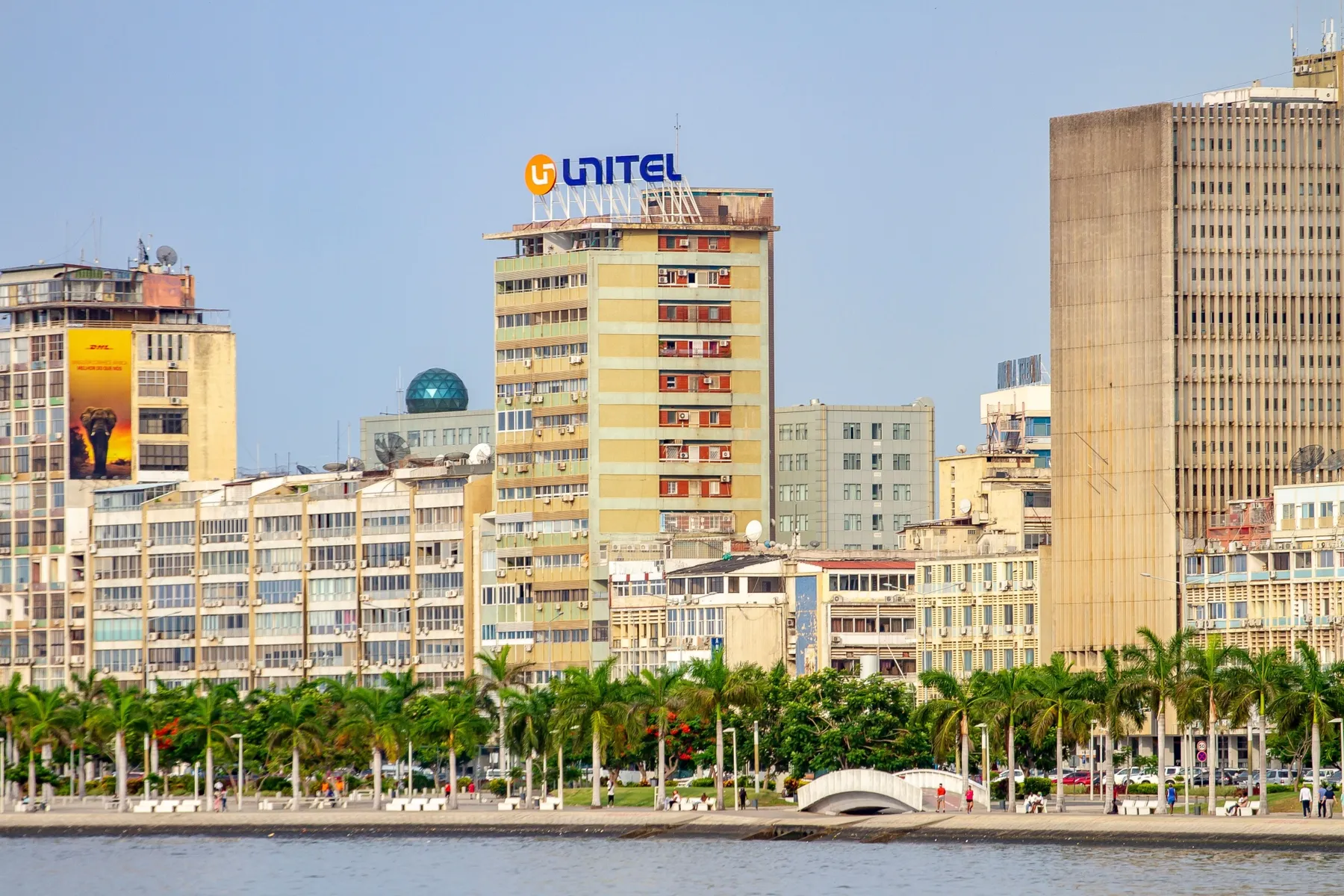
LUANDA, July 28 – Angola has raised 300.3 billion kwanzas ($327 million) after successfully selling a 15% stake in Unitel, the country’s largest telecommunications operator, as investor demand exceeded the shares available by more than 20%.
According to the final results of the offering, the government sold 7.5 million Unitel shares at 40,040 kwanzas per share, the upper end of the indicated price range. Total investor demand reached 362.1 billion kwanzas, resulting in a subscription rate of 120.72%.
The transaction forms part of Angola’s broader privatisation programme, which seeks to attract private investment and reduce the state’s role in key sectors of the economy.
Unitel, which serves more than 21 million customers, is one of Angola’s largest corporate assets, making the initial public offering one of the country’s most significant capital market transactions in recent years.
During the subscription period, which ran from 6 July to 24 July, a total of 18,571 orders were submitted, of which 17,549 were accepted.
Trading in Unitel shares is scheduled to begin on 29 July on the Bolsa de Dívida e Valores de Angola (BODIVA), Angola’s stock exchange.
The IPO adds to the gradual expansion of Angola’s capital market, with BODIVA recording a small but growing number of public listings since its first flotation in 2022.
Unitel was previously partly owned by businesswoman Isabel dos Santos, daughter of former President José Eduardo dos Santos, who led Angola for 38 years until leaving office in 2017.
Following his election, President João Lourenço launched reforms aimed at reducing the influence of figures associated with the former administration. As part of those efforts, the government nationalised Isabel dos Santos’ 25% stake in Unitel, bringing the shares under state control before proceeding with the public offering.
The successful IPO is expected to support Angola’s efforts to deepen its capital markets, attract domestic and international investors, and advance reforms designed to diversify an economy that has historically relied heavily on the oil sector.
