
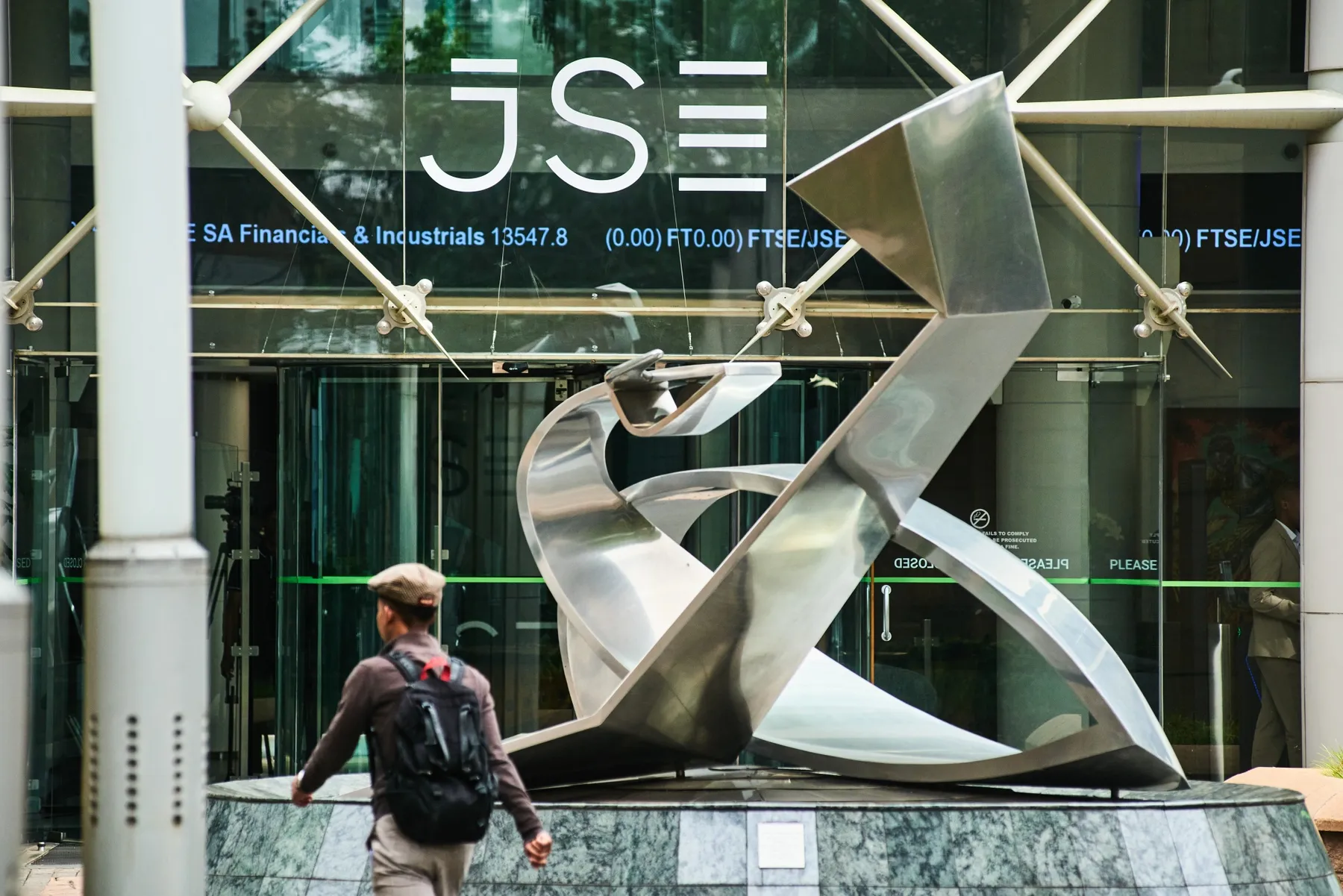
JOHANNESBURG, Aug 5 – The Johannesburg Stock Exchange (JSE) is seeking to secure a secondary listing of Dangote Refinery after the company’s planned initial public offering (IPO) on the Nigerian Exchange (NGX) later this year, as Africa’s largest bourse looks to attract more high-profile listings from across the continent.
Speaking to CNBC Africa, JSE Chief Executive Officer Valdene Reddy said the Aliko Dangote-owned refinery forms part of a robust pipeline of prospective listings expected in the second half of the year, spanning sectors including mining, fintech, property and construction.
According to Reddy, “They will go and list in Nigeria first but with a strong intent to hopefully bring that listing to South Africa shortly thereafter on the JSE. It would be a great opportunity for diversified play of high demand but of such a strong African corporate listing on the JSE.”
The refinery’s planned IPO, estimated to be valued at around $5 billion, is expected to become the largest public offering ever undertaken in Africa. The transaction has attracted interest from several stock exchanges across the continent, including those in Kenya, Egypt, Ghana and Rwanda, all seeking to participate in one of Africa’s most significant capital market transactions.
Since commencing operations in 2024, Dangote Refinery has become an increasingly influential player in global refined fuel markets. The 650,000-barrel-per-day facility has expanded exports of products including jet fuel to African and European markets, benefiting from disruptions in global energy supply chains. The company is seeking additional capital to support capacity expansion at its Lagos refinery and finance broader regional growth plans.
Beyond the Dangote transaction, Reddy said the JSE continues to see growing interest from companies seeking to raise capital despite a challenging global economic environment.
Mining companies remain a major source of potential listings, particularly if commodity prices remain favourable, while property developers and construction firms are increasingly exploring capital market financing. The exchange is also recording stronger demand for real estate investment trusts (REITs), infrastructure-related investment products and actively managed exchange-traded funds.
Reddy added that African fintech companies are increasingly considering Johannesburg as an alternative listing destination to international markets such as London and New York, where smaller emerging-market businesses often struggle to attract investor attention.
The expected listings come as the JSE prepares to conclude its current strategic plan and launch a new long-term growth framework known as Forge 2031. The strategy aims to modernise the exchange’s core operations while expanding new revenue streams beyond traditional trading activities.
According to Reddy, the exchange intends to increase the use of technology and artificial intelligence, enhance digital marketplaces, expand data products and technology services, and further commercialise its market infrastructure to build more diversified and resilient earnings.
Addressing concerns over company delistings from the South African market, Reddy said the trend has been concentrated mainly among smaller and mid-sized firms and has not materially reduced the exchange’s overall market capitalisation.
She noted that merger and acquisition activity has contributed to some delistings, often reflecting the underlying value of listed companies rather than weakness in the market.
According to Reddy, “We focus on the true numbers, which is the capital raise demand and the take-up of that demand, and that pipeline is looking strong and solid into the second half.”
The JSE is also pursuing regulatory reforms aimed at making listings more accessible, including expanding the range of jurisdictions from which companies can obtain primary or secondary listings on the exchange.
Despite the positive pipeline, Reddy cautioned that South Africa’s broader economic performance remains an important factor in attracting international capital, noting that economic growth below 2% continues to present challenges.
Reddy observed that the JSE records average daily trading volumes of between $1.5 billion and $2 billion, compared with approximately $10 million to $20 million on Nigeria’s stock market, highlighting the significant differences in liquidity across African exchanges.
She also identified geopolitical tensions, energy security, inflation, global interest-rate cycles and elevated valuations in US equity markets as key factors influencing investor sentiment. While several major global exchanges are exploring longer trading hours, Reddy said Johannesburg would adopt a measured approach.
According to her, “We will ensure that we stay a globally relevant marketplace, but you have to be selective about what new opportunities extending market hours will bring to your market.”
Looking beyond South Africa, she said the JSE intends to deepen its presence across Africa through technology, market infrastructure and data services rather than replicating traditional exchange models in smaller markets.
