
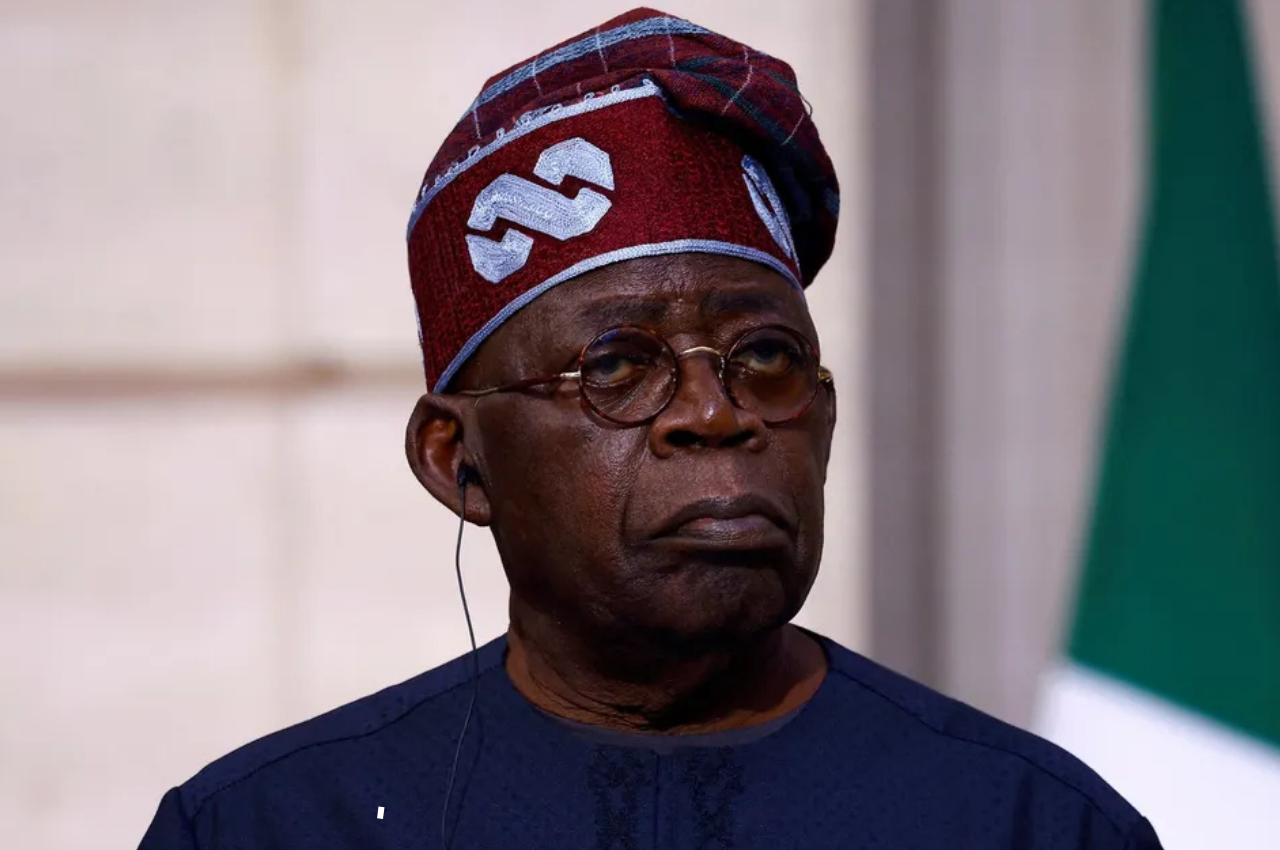
LAGOS, May 8 – Nigeria is emerging as one of the world’s strongest-performing frontier markets, with stocks, bonds and the naira rallying as investors grow increasingly confident in President Bola Tinubu’s economic reform agenda.
Nigeria’s benchmark stock index has gained 63% this year in dollar terms, making it the second-best performer among 92 global equity indexes tracked by Bloomberg, behind only South Korea’s KOSPI. Over the past 12 months, the market has advanced more than 200%.
Local-currency government bonds have also outperformed many emerging-market peers, while the naira has ranked among Africa’s strongest-performing currencies this year.
Investor sentiment has improved following Tinubu’s sweeping economic reforms, including the removal of fuel subsidies and the unification of Nigeria’s multiple exchange-rate systems, policies that were widely seen as distorting the economy and discouraging foreign investment.
According to the International Monetary Fund, Nigeria’s economy is projected to expand 4.1% this year, compared with 3.3% when Tinubu took office three years ago.
The reforms also helped Nigeria secure credit-rating upgrades from Moody’s Ratings and Fitch Ratings in 2025.
Higher crude oil prices following tensions in the Middle East have further strengthened the country’s fiscal outlook, with oil exports accounting for roughly one-third of government revenue.
Foreign investors increased purchases of Nigerian equities to 181.8 billion naira, equivalent to about $133 million, in March, compared with 72.3 billion naira in February, according to exchange data. The increase came despite broader volatility in global markets triggered by the conflict involving Iran.
“Nigeria is transitioning from a credibility discount to an execution story,” Romain Bordenave, an emerging-markets portfolio manager at Edmond de Rothschild Suisse, said in comments cited by Bloomberg.
Nigeria’s stock market capitalisation has now climbed to about $105 billion, placing it ahead of markets such as New Zealand and alongside countries including Portugal, Ireland and Morocco.
Among the market’s top performers this year are companies tied closely to domestic economic growth. BUA Cement has surged 140%, Zenith Bank has gained 104%, while MTN Nigeria has advanced 57%.
Energy firms have also rallied sharply, with Seplat Energy nearly doubling in value and Aradel Holdings climbing 172%.
Investor optimism has also been supported by FTSE Russell’s decision to reclassify Nigeria as a frontier market from September, a move expected to attract inflows from index-tracking global funds.
At the same time, plans by Aliko Dangote to list a stake in the Dangote Refinery are expected to deepen liquidity in Nigeria’s capital markets further. The refinery is estimated to be valued at between $25 billion and $45 billion.
“The FTSE reclassification is very positive for the Nigerian market,” Samuel Sule, chief executive of Renaissance Capital Africa, said in comments reported by Bloomberg. “The Dangote refinery IPO is expected to deepen the market further.”
