
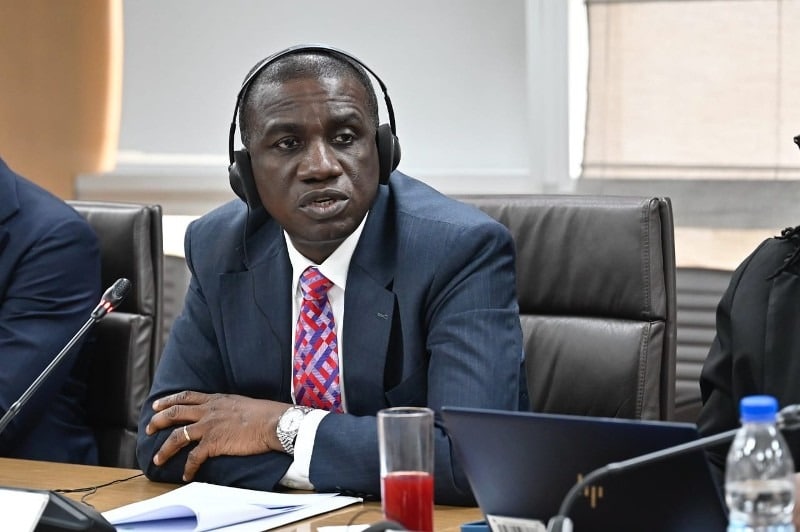
LAGOS, Nov 14 – The Development Bank of Nigeria (DBN) has launched a $275 million climate finance programme to help micro, small and medium-sized enterprises (MSMEs) adopt clean energy technologies, improve climate resilience and expand sustainable business operations.
DBN Managing Director and Chief Executive Officer, Tony Okpanachi, announced the initiative on the sidelines of the 31st United Nations Climate Change Conference (COP31) in Antalya, Türkiye.
Known as the DBN Enterprise Lending for Transition and Adaptation (DELTA), the programme is designed to address financing constraints facing Nigerian businesses seeking to invest in renewable energy, energy-efficient technologies and climate-resilient agriculture.
The facility is expected to include a $100 million contribution from the Green Climate Fund (GCF), reach approximately 1.3 million people and reduce greenhouse gas emissions by an estimated 4.5 million tonnes of carbon dioxide equivalent.
DELTA will combine lending, risk-sharing mechanisms and technical assistance to address barriers including high upfront investment costs, collateral requirements, limited access to credit and inadequate project preparation capacity.
Its financing is expected to support businesses replacing expensive diesel-powered generators with solar energy, adopting energy-efficient technologies, investing in improved irrigation systems and strengthening agricultural production against increasingly unpredictable rainfall.
Okpanachi said the initiative expands DBN’s mandate to address financing gaps affecting productive and underserved enterprises, with greater emphasis on climate-related investments.
He added that the bank would commit its own resources while working with the Green Climate Fund and other development partners to mobilise additional capital, technical expertise and risk-sharing instruments.
According to Okpanachi, the programme’s success would be measured by its impact on businesses, including lower energy costs, higher productivity, stronger climate resilience and sustainable economic growth, rather than the size of its financing facility alone.
Government seeks to expand access to climate finance
In his welcome address, Finance Minister and Coordinating Minister of the Economy, Taiwo Oyedele, described DELTA as an important step towards translating Nigeria’s climate commitments into practical financing solutions.
Represented by Abubakar Matazu, Deputy Director of IERD at the Ministry of Finance, Oyedele said climate change had become an economic, fiscal and development challenge for Nigeria, with implications for agricultural productivity, food security, energy access, infrastructure and livelihoods.
He said the $275 million programme, including the anticipated $100 million contribution from the Green Climate Fund, would expand access to affordable, long-term financing for MSMEs.
Oyedele also reaffirmed the Federal Government’s commitment to establishing an enabling fiscal, policy and institutional environment to mobilise climate finance and attract private-sector investment.
DBN builds on existing MSME financing programmes
The launch builds on previous financing initiatives by DBN and other development finance institutions to expand credit access for Nigerian businesses, particularly MSMEs operating in sectors linked to economic transformation and the energy transition.
In June 2026, the European Investment Bank, through its development arm EIB Global, partnered with DBN on a €200 million financing facility for Nigerian MSMEs and mid-sized businesses. The programme targets agriculture, renewable energy, digitalisation and innovation.
Also in June, DBN disclosed that it had disbursed more than ₦1 trillion (approximately $745 million) to over one million MSMEs since commencing operations, supporting the creation of more than 1.6 million jobs.
In May 2026, the African Development Bank approved a $61 million financing package for DBN to expand affordable credit for women-owned and women-led MSMEs. The package comprised a $50 million line of credit, an $8 million concessional facility for agricultural businesses and a $3 million grant.
DELTA adds a climate-focused financing channel to these interventions, targeting the capital and technical constraints that can prevent smaller businesses from investing in cleaner energy and adapting their operations to climate risks.
