
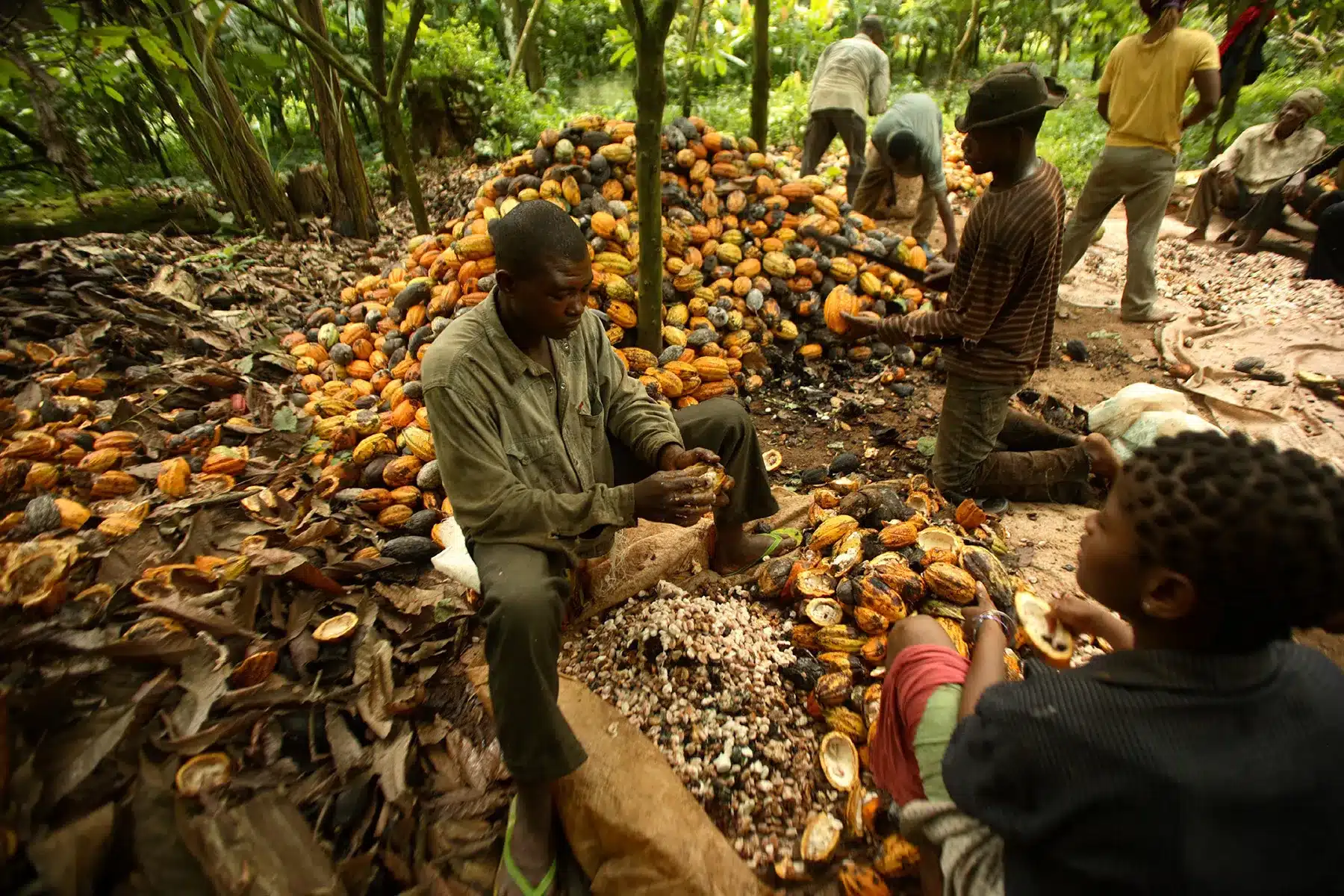
ACCRA, Nov 14 – Ghana plans to ban exports of raw cocoa beans by 2030 as part of a phased strategy to process the country’s entire cocoa output domestically and expand value addition across its agricultural and mineral sectors.
Finance Minister Cassiel Ato Forson announced the target on Thursday while presenting the 2027 budget to parliament, saying the government intends to increase local cocoa processing to at least 50% by 2028 before reaching full domestic processing by 2030.
Ghana, the world’s second-largest cocoa producer, currently processes between 30% and 40% of its cocoa beans locally. The country has installed processing capacity of 504,780 metric tonnes, but existing facilities have been operating below 50% utilisation because much of the crop continues to be exported.
The government’s plan is intended to address this gap by ensuring a greater share of domestic production is converted into higher-value products before reaching international markets.
Forson said the expansion would extend beyond primary cocoa grinding to include cocoa liquor, butter, cake, powder, chocolate, cosmetics and other finished products.
“The country that grows the bean must retain a far greater share of the industry built around it,” he said.
Ghana harvested 781,000 tonnes of cocoa in the 2025/26 season, although production is expected to decline by 16% in the current season. The anticipated reduction presents a challenge for the government’s processing ambitions, particularly as domestic processors already operate below installed capacity because of limited access to beans.
The cocoa policy forms part of a broader industrial strategy under President John Dramani Mahama to reduce the export of unprocessed commodities and strengthen domestic manufacturing.
On October 19, Mahama announced a 2030 target to end exports of raw minerals while addressing the Mining in Motion Summit in Accra. The proposed restrictions would cover bauxite, manganese, iron, lithium and other mineral resources, with the government seeking to develop local industries capable of processing them into higher-value products.
“I’ve set a clear goal that by 2030, raw minerals should no longer leave our shores,” Mahama said. “Our bauxite, manganese, iron, lithium and other minerals must support processing and industrial development here at home.”
He also said investors would be expected to meet domestic processing requirements as a condition of accessing the country’s mineral resources.
“Investors must understand the processing obligations associated with access to our resources,” Mahama said.
The parallel cocoa and minerals policies signal a broader shift towards retaining more economic value within Ghana through domestic processing, manufacturing and industrial development.
However, achieving the targets will depend on investment in processing facilities, reliable access to raw materials, energy supply, financing and the development of markets for locally manufactured products. For cocoa, the immediate challenge will be raising utilisation of existing capacity while expanding production into more sophisticated finished goods.
