
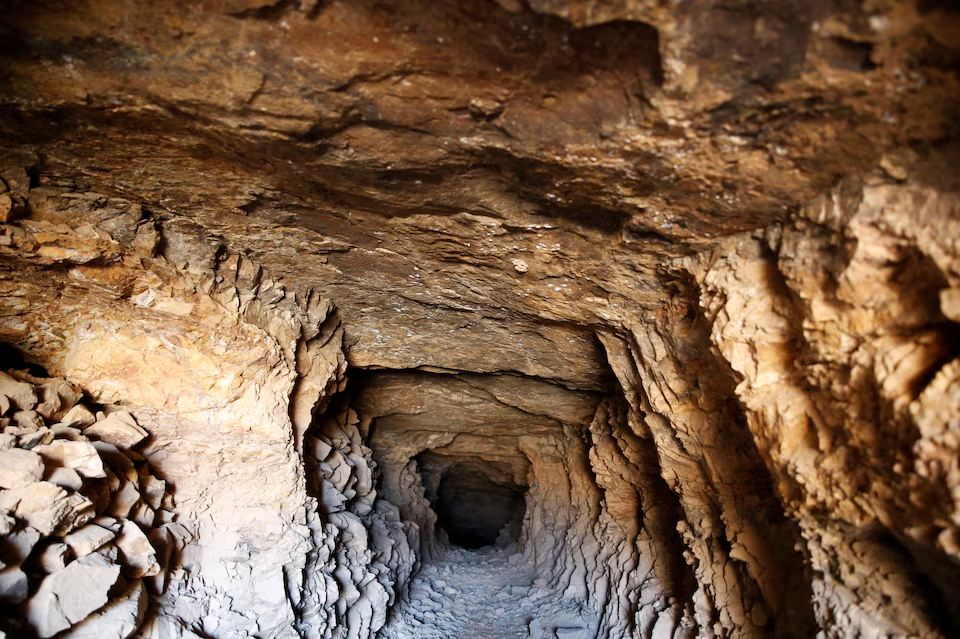
CAIRO, Nov 14 – Egypt plans to establish a company under the Future of Egypt Authority for Sustainable Development to license artisanal gold miners and facilitate the release of people detained for illegal prospecting, as the government seeks to formalise informal mining activities in the country’s southern regions.
The proposed initiative followed a meeting convened by Ibrahim al-Organi, head of the Union of Egyptian Tribes and Families, bringing together lawmakers, tribal representatives, security officials and representatives of the Future of Egypt Authority.
Mona Shaker, a National Front Party lawmaker representing Aswan, said in a Facebook video that individuals arrested while prospecting for gold would be released, excluding those implicated in killings or drug-related offences.
The scope of the proposed releases, including whether foreign nationals would be covered, remains unclear. Egypt’s military has said it detained 151 Egyptians and 540 foreigners in its crackdown on illegal mining since June.
The initiative is intended to establish a legal framework defining the rights and obligations of artisanal miners, locally known as “Dahhaba”, allowing them to operate under state supervision while preserving livelihoods in southern communities.
Participants at the meeting included representatives of tribes and families from Aswan, Halayeb, Shalateen and Marsa Alam, as well as members of Egypt’s House of Representatives and Senate.
Discussions focused on bringing informal prospecting activities into a regulated system, addressing the status of detained miners and ensuring that mineral extraction generates economic returns for the state while supporting employment in border regions.
The proposed framework would also give the Future of Egypt Authority a role in the gold sector. The institution reports directly to the presidency and originated within the military, reflecting the government’s broader effort to place strategic economic activities under closer state oversight.
Pro-government media reported that President Abdel Fattah al-Sisi directed the meeting, although no official government statement confirming the reported directives had been issued. The Future of Egypt Authority could not immediately be reached for comment.
The military has made enforcement against illegal mining a central part of its response to unlicensed prospecting. On November 5, it said two officers had been killed during the campaign.
Security concerns have also affected investment in Egypt’s mining sector. An industry executive told Reuters in September that illegal miners had at times violently blocked access to exploration concessions, creating obstacles for companies seeking to develop mining projects.
The crackdown has also drawn regional attention. In October, a rights monitor said at least 72 miners were killed in an airstrike in northern Sudan near the Egyptian border, blaming Egypt’s air force. The claim has not been independently established in the information provided.
The Union of Egyptian Tribes and Families said the initiative had received presidential support and thanked El-Sisi for backing efforts to address the challenges facing gold prospectors and workers.
Members of the Ababda and Rashaida tribes also welcomed the reported initiative, saying it could help formalise workers’ status, support employment and expand production within the legal framework.
For Egypt, the proposed arrangement seeks to reconcile the economic importance of artisanal mining to communities in the south with the government’s objectives of improving oversight, limiting smuggling and increasing state control over mineral resources. Its implementation will depend on the legal structure of the proposed licensing system and the treatment of those currently detained.
