
ACCRA, Nov 13 – Ghana plans to invest $10 billion over four years from 2027 in a domestically funded programme designed to accelerate economic growth, expand exports and create jobs, as the government targets an 8% expansion in gross domestic product by 2030.
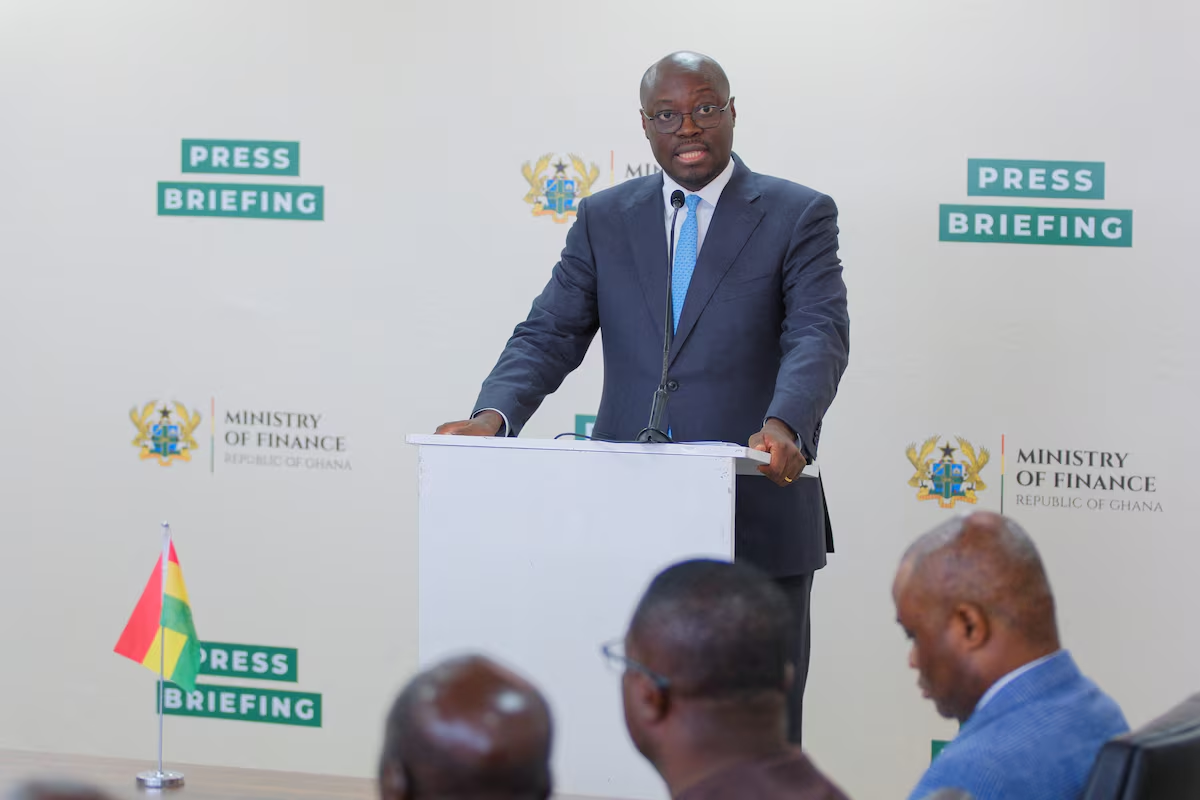
Finance Minister Cassiel Ato Forson announced the initiative during his presentation of the 2027 budget to Parliament late Thursday, describing it as a central component of the government’s strategy to strengthen productive capacity and support private enterprise.
The programme, named the “New Economy”, will direct investment towards commercial agriculture, energy infrastructure, technology, textiles and garments, and value addition in critical minerals, among other sectors.
“Government will preserve stability, provide strategic infrastructure, prepare bankable projects and create predictable conditions for enterprise,” Forson told lawmakers.
The government projects GDP growth of 5.2% in 2027, compared with 4.8% in 2026, before accelerating to 8% by 2030. The 2030 target would represent Ghana’s fastest annual growth rate since 2021. The earlier budget outlook also places growth at 5.7% for the current year and 5.2% in 2027.
The fiscal framework targets a cash-basis budget deficit of 3.6% of GDP in 2027, down from 4% in 2026. The government also plans to keep inflation within a target band of 8%, plus or minus two percentage points.
The budget marks the first since Ghana completed its $3 billion International Monetary Fund support programme, which helped stabilise an economy that had faced mounting debt-servicing costs, elevated inflation and external financing pressures.
Ghana sought IMF assistance in 2022 following years of fiscal overspending, the economic effects of the COVID-19 pandemic, Russia’s invasion of Ukraine and elevated global interest rates. Inflation, which reached 54.1% in December 2022, declined to 3.2% in March 2026 before edging higher.
Alongside the investment programme, the government announced plans to accelerate debt repayments. It will redeem GH¢29 billion (approximately $2.48 billion) in Domestic Debt Exchange Programme bonds due in February 2027, with the repayment taking effect immediately.
Forson also said the government intends to repay by December 31 the second Eurobond restructured in 2024, which is scheduled to mature in January 2027. Together, the early repayments are expected to retire more than GH¢36 billion in debt ahead of schedule.
The measures come as Ghana continues to work with the IMF under a three-year Policy Coordination Instrument. Unlike a financing programme, the arrangement does not provide funding but involves regular reviews of economic policy and reforms, helping signal the government’s commitment to fiscal discipline and provide reassurance to investors.
The $10 billion programme will test the government’s ability to sustain macroeconomic stability while mobilising domestic resources for investment in productive sectors. Its implementation will depend on the preparation of bankable projects, the availability of financing and the capacity to translate infrastructure and industrial investment into higher output, exports and employment.
