
African Economy Inc.
  • Home
  • Economy
  • Business
  • Markets
  • Finance
  • Credit Ratings
  • Policy
  • Tech
African Economy Inc.
  • Home
  • Economy
  • Business
  • Markets
  • Finance
  • Credit Ratings
  • Policy
  • Tech
Sunday, August 16, 2026
Top News
Fitch Upgrades Republic of Congo’s Local-Currency Rating to CCC+ on Lower Debt Risks
Nigeria’s Exports to China Surge 80% to $2.3 Billion in First Half of 2026
Resolute Mining and Guinea’s Nimba Mining Gold Form Joint Venture for Gold Exploration
Uganda Central Bank Holds Rate at 9.75% as Inflation Remains Contained
Nigeria Oil Production Falls 4% in July to 1.505 Million Barrels Per Day
India and SACU Launch Preferential Trade Talks to Expand Africa-India Commerce
Egypt Opens 2026 Oil and Gas Bid Round for 14 Exploration Blocks
Morocco Sets September 1 Deadline for Several 2026 Tax Payments
Standard Bank Half-Year Earnings Rise 10% to $1.62 Billion as Credit Costs Fall
Vodacom Appoints Former Airtel Africa CEO Segun Ogunsanya to Its Board
SEC Sets Time for Daily Trade Settlement Deadline for Nigeria’s Equities and Commodities Market
Central African Republic Inaugurates 50-MW Solar Plant to Expand Electricity Supply
Namibia Central Bank Holds Repo Rate at 6.75% as Growth Forecast Is Cut
Jumia Raises $50 Million From IFC and Axian to Expand E-Commerce Across Africa
Nigeria Considers Crude Pricing and Supply Changes to Support Local Refineries
SUBSCRIBE
African Economy Inc.
Subscribe
African Economy Inc.
  • Home
  • Economy
  • Business
  • Markets
  • Finance
  • Credit Ratings
  • Policy
  • Tech
Copyright 2026 - All Right Reserved
Home » Nigeria Inflation Hits Five-Month High as Iran War Fuels Energy Price Pressures
Economy

Nigeria Inflation Hits Five-Month High as Iran War Fuels Energy Price Pressures

by Emmanuel Ebube May 15, 2026
written by Emmanuel Ebube May 15, 2026
FacebookTwitterLinkedinEmail
77

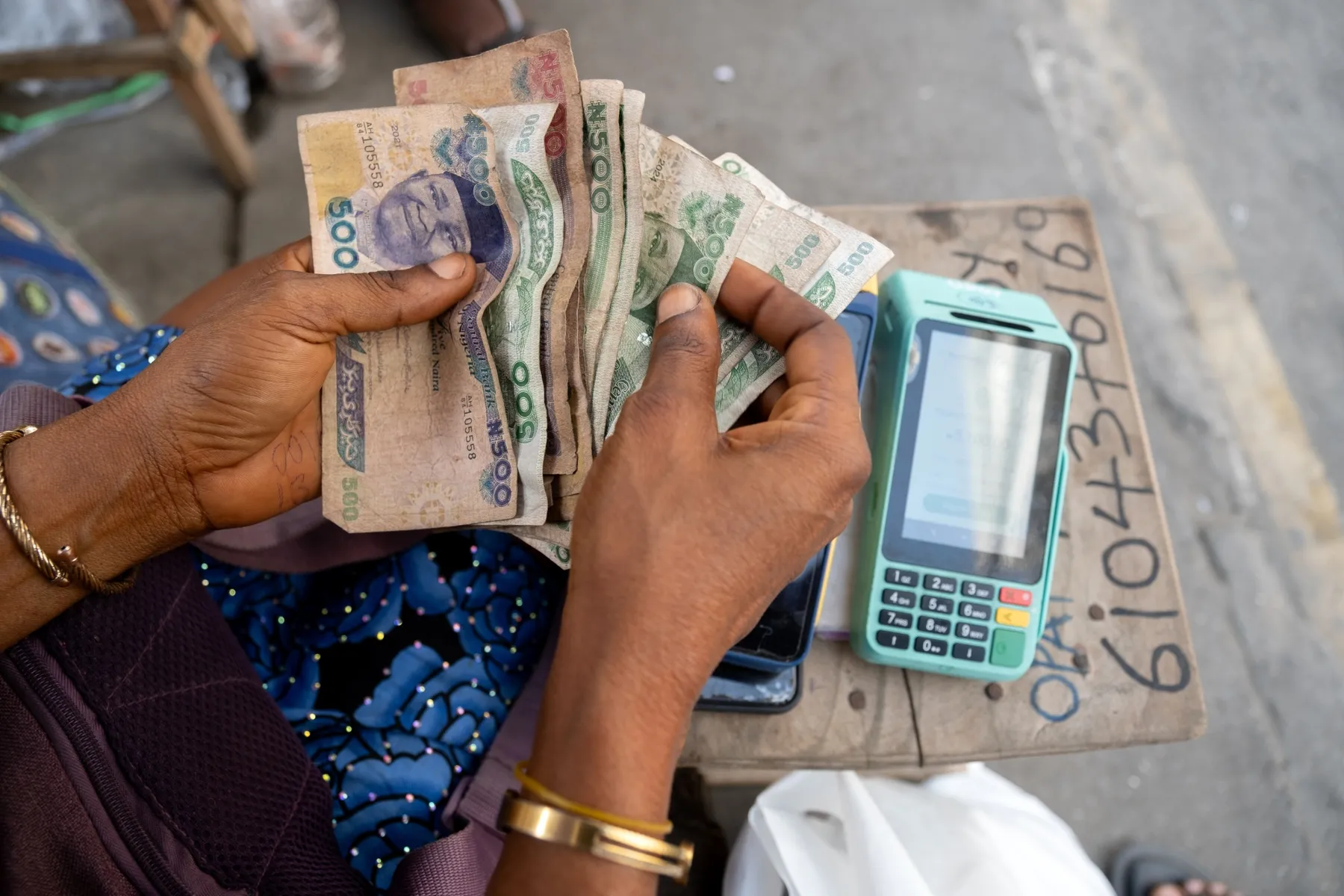
LAGOS, May 15 – Nigeria’s inflation rate accelerated to a five-month high in April as rising energy and food prices linked to the Iran war added pressure on households and complicated the outlook for monetary policy.

Consumer prices rose 15.7% year-on-year in April, up from 15.4% in March, according to data released Friday by the National Bureau of Statistics. On a monthly basis, prices increased 2.1%.

The latest figures matched the median estimate of economists surveyed and come ahead of the next policy meeting of the Central Bank of Nigeria scheduled for May 20.

The escalation in tensions surrounding the Iran war has intensified concerns over global energy supply disruptions, particularly around the Strait of Hormuz, a critical route for oil, liquefied natural gas and fertilizer shipments. The resulting increase in fuel, fertilizer and transportation costs has added new inflationary risks for import-dependent economies including Nigeria.

You Might Be Interested In
  • Afreximbank Approves $10 Billion Gulf Crisis Response Programme to Support Africa

Food inflation accelerated to 16% in April from 14% in March, while energy prices rose nearly 5% from a year earlier. Core inflation, which excludes volatile agricultural produce and energy costs, eased slightly to 15.9% from 16.2%.

David Omojomolo, Africa economist at Capital Economics, said inflationary pressures could keep interest rate cuts off the table for the rest of the year.

“The rise in inflation alongside the central bank’s concerns about its credibility suggests that monetary easing will remain off the agenda until at least the end of the year,” Omojomolo said in a note.

He added that rising petrol and diesel prices could push inflation closer to 17% year-on-year in the third quarter.

Nigeria’s central bank reduced its benchmark interest rate by 50 basis points to 26.5% in February, marking its first rate cut after an aggressive tightening cycle aimed at stabilizing prices and the naira.

The government has attempted to cushion the impact of rising living costs through temporary trade levy reductions on selected food imports and pharmaceuticals. However, the latest inflation data may increase pressure on policymakers to introduce additional relief measures.

Finance Minister Taiwo Oyedele has previously ruled out a return to fuel subsidies scrapped in 2023 as part of broader economic reforms under President Bola Tinubu.

Read Next

  • South Africa Economy Grows 1.1% in 2025, Fastest Pace Since 2022

    March 10, 2026
  • WTO Talks End Without Deal on E-Commerce Tariff Ban Extension

    March 30, 2026
  • Africa’s $1.3 Trillion Problem Has a $1.43 Trillion Answer. The Hard Part Is Believing It.

    June 1, 2026
  • Ghana Cuts Fuel Taxes to Ease Rising Petrol Prices Amid Oil Shock

    April 10, 2026
  • Tanger Med Receives Investment-Grade Ratings from S&P and Moody’s Amid Expansion Plans

    July 24, 2026

Newsletter

Subscribe to our newsletter for trusted insights on Africa’s economies, markets, and business.

African Economy Inc. Logo

About Us

We are a business and economic intelligence platform delivering in-depth reporting, analysis, and insights on markets, companies and economic developments across Africa.

Our Company

  • AEI Intelligence
  • About
  • Editorial Standard
  • Partnerships
  • Advertise With Us
  • Careers
  • Ownership

News

  • Economy
  • Business
  • Markets
  • Finance
  • Credit Ratings
  • Policy
  • Tech

Useful Links

  • Privacy Policy
  • Terms of Use
  • Closed Captioning Policy
  • Accessibility Statement
  • Personal Information
  • Data Tracking
  • Register New Account

Subscribe Newsletter

Subscribe to our newsletter for trusted insights on Africa’s economies, markets, and business.

©2026 Majons Media Inc. All Rights Reserved.

Facebook Twitter Instagram Linkedin
African Economy Inc.
  • Economy
  • Business
  • Markets
  • Banking & Finance
  • Energy
  • Tech
  • Policy