
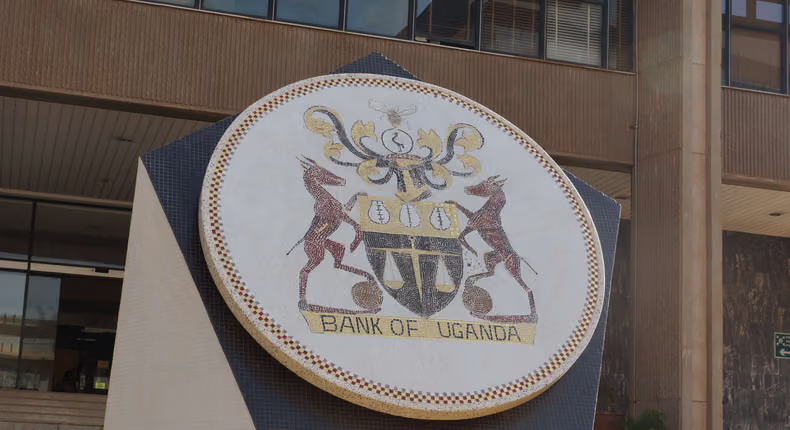
KAMPALA, Aug 13 – Uganda’s central bank has maintained its benchmark lending rate at 9.75%, extending its unchanged policy stance for an eighth consecutive meeting as policymakers assess the impact of higher oil prices on inflation.
The Bank of Uganda said current price data do not indicate that the increase in energy costs has triggered broader inflationary pressures across the economy. Headline inflation rose to 4.0% year-on-year in July from 3.7% in June, remaining below the central bank’s medium-term target of 5% for core inflation.
Governor Michael Atingi-Ego said the latest data provided limited evidence of a wider pass-through from higher oil prices. “The current inflation data does not show a broader price pressure spreading through the economy as a result of the increase in the oil prices,” Atingi-Ego told a press conference.
The decision to leave the policy rate unchanged reflects the central bank’s assessment that inflation remains sufficiently contained despite the recent increase in headline price growth. Policymakers will continue to monitor energy costs and their potential effects on transport, production and consumer prices.
Uganda’s economic outlook also remains relatively strong. Atingi-Ego said economic growth is expected to reach between 7% and 7.5% in the fiscal year that began in July, compared with an estimated 6.4% expansion in the previous fiscal year.
The projected acceleration would provide additional support for domestic demand and economic activity as Uganda continues to invest in infrastructure, energy and other productive sectors. At the same time, stronger growth could create additional demand-side pressure if supply conditions fail to keep pace.
For now, the central bank’s decision suggests that policymakers see no immediate need to tighten monetary conditions further. The path of oil prices and the extent to which they feed into underlying inflation will remain key factors for Uganda’s interest-rate outlook in the coming months.
