
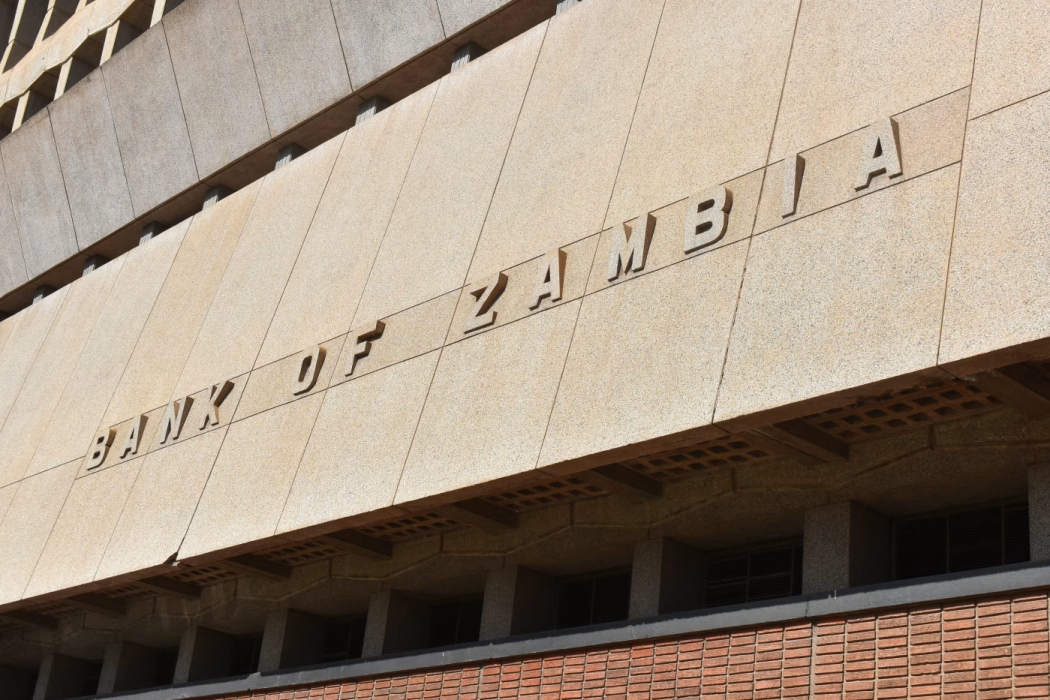
LUSAKA, Oct 1 – The Bank of Zambia cut its monetary policy rate by 250 basis points to 10.75%, delivering a larger-than-expected reduction as policymakers cited contained inflation and an outlook for price growth to remain near the lower end of the central bank’s target range.
The decision marks the fourth consecutive meeting at which Zambia’s central bank has reduced borrowing costs, although the latest cut is significantly larger than the previous reductions. Economists surveyed by Reuters had expected a reduction of only 25 basis points.
Annual inflation eased to 6.1% in September, from 6.2% in August. The latest reading is the lowest since 2018 and places inflation close to the bottom of the central bank’s 6% to 8% target range.
The central bank also marginally lowered its inflation forecasts. It now expects inflation to average 6.7% in 2026, compared with its previous forecast of 6.8%, and 6.0% in 2027, down from 6.1%.
Governor Denny Kalyalya said the decision was influenced by the need to align monetary policy with the evolving inflation outlook.
The latest reduction signals a further shift toward supporting economic activity as price pressures moderate, while the central bank continues to monitor inflation risks and broader economic conditions.
IMF Talks and Growth Outlook
The rate decision comes as Zambia begins discussions with a visiting International Monetary Fund mission over a potential new support programme.
The talks follow the conclusion of Zambia’s previous $1.7 billion IMF arrangement in January, with the government now engaging the Fund on the framework for a new programme.
Despite the monetary easing, the central bank expects economic growth to remain robust. It projects the economy will expand by 5.3% in 2026 and accelerate to 6.0% in 2027.
The combination of moderating inflation and stronger growth expectations provides the central bank with greater scope to reduce its policy rate while maintaining its focus on price stability.
