
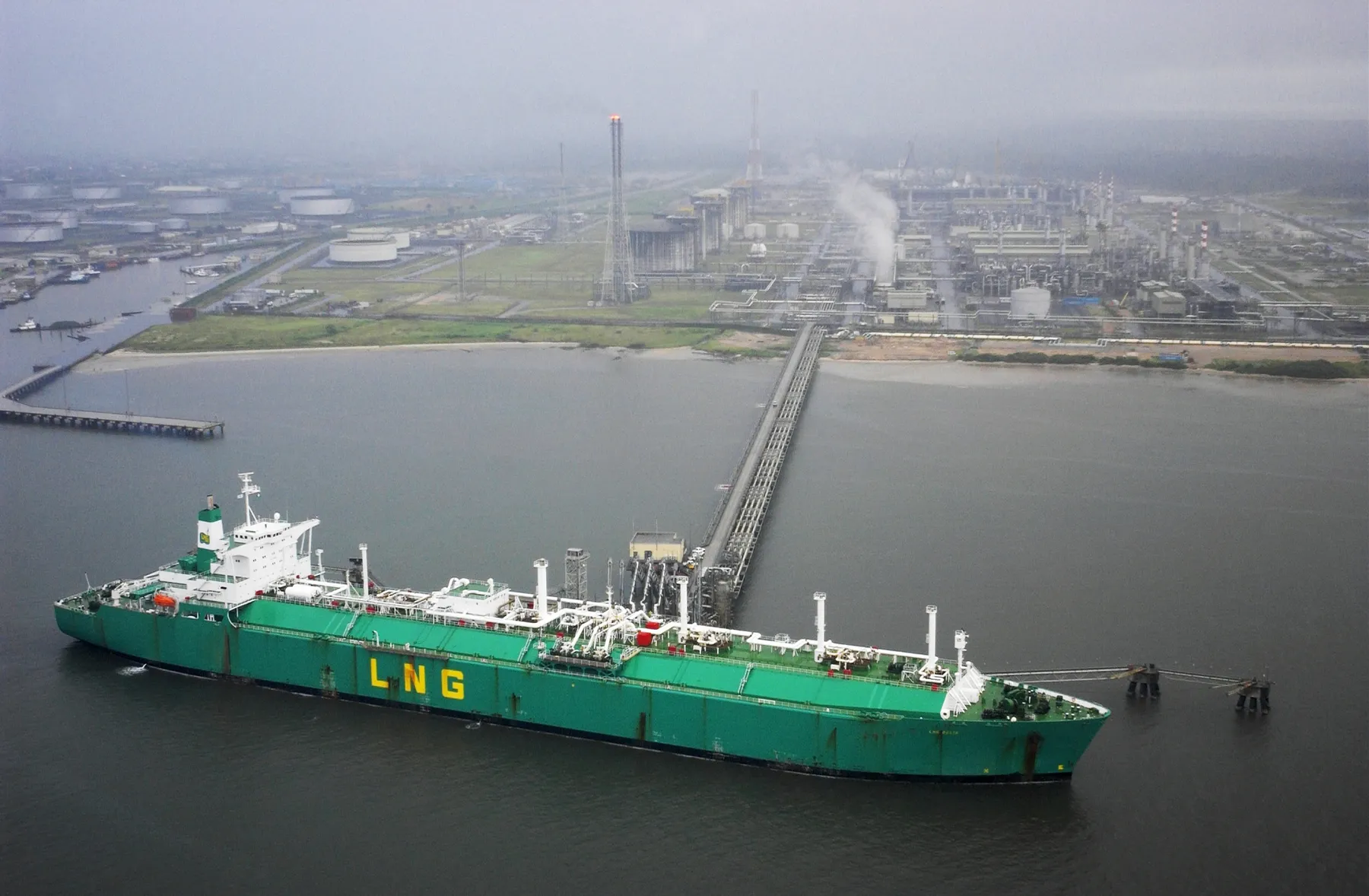
LAGOS, Oct 3 – Nigeria’s domestic gas supply has surpassed 2 billion cubic feet per day (Bcf/d) as the government accelerates investment in gas infrastructure to support power generation, industrial activity and economic growth.
Minister of State for Petroleum Resources (Gas) Ekperikpe Ekpo said gas production had increased to approximately 7.5 Bcf/d, from about 6.8 Bcf/d in 2023. Proven gas reserves have also risen to 215.19 trillion cubic feet (Tcf), compared with 208.83 Tcf previously.
Nigeria is targeting production of 10 Bcf/d by 2027 and 12 Bcf/d by 2030, as demand expands across power generation, manufacturing, fertiliser production, petrochemicals, LNG, transportation and export markets.
Pipeline Infrastructure Expands Domestic Supply
The Obiafu-Obrikom-Oben (OB3) gas pipeline has reached full completion and is being prepared for first gas, according to Ekpo. With a capacity of approximately 2 Bcf/d, the pipeline is expected to unlock more than 500 million standard cubic feet per day (MMscf/d) of additional gas for Nigeria’s domestic market.
The Ajaokuta-Kaduna-Kano (AKK) gas pipeline is also approximately 95% complete, according to the minister. The project is intended to strengthen gas distribution infrastructure toward northern Nigeria and support additional industrial and power demand.
The expansion of the domestic gas network is central to efforts to address supply constraints that have limited electricity generation and industrial activity, while also creating infrastructure capable of supporting additional gas-based investments.
Public Funding Attracts Private Capital
Ekpo said the government has deployed ₦671 billion ($434 million) through the Midstream and Downstream Gas Infrastructure Fund, helping attract approximately ₦1.6 trillion in private investment across 31 projects and 205 infrastructure assets.
Once fully operational, the projects are expected to contribute approximately 475 MMscf/d of additional gas supply to the domestic market.
Nigeria is targeting approximately $30 billion in investment in the gas sector by 2030, as it seeks to expand the role of natural gas in electricity generation, industrial production and export markets.
The combination of rising production, additional pipeline capacity and private investment is intended to increase the availability of gas within Nigeria while supporting the development of downstream industries and strengthening the country’s position in global gas markets.
