
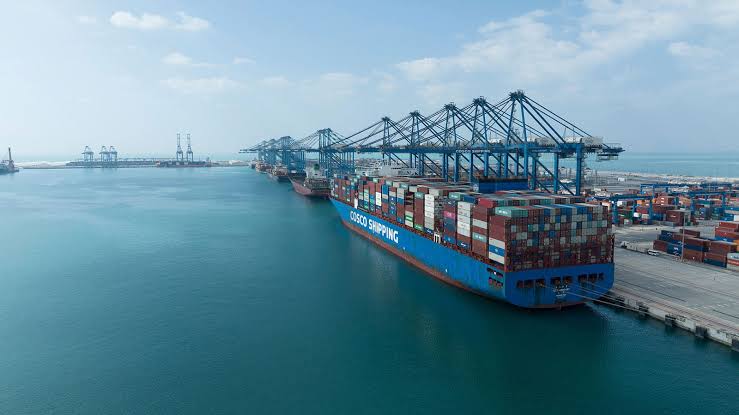
LAGOS, Aug 15 – Nigeria’s exports to China surged 80% to $2.3 billion in the first half of 2026, as expanded zero-tariff access and stronger Chinese demand for Nigerian commodities boosted trade between the two countries.
The increase was disclosed by China’s Ambassador to Nigeria, Yu Dunhai, at an international seminar on China’s zero-tariff measures and Africa’s economic structural transformation organised by the Centre for China Studies in Abuja.
Yu said the increase reflected the deepening commercial relationship between Nigeria and China, with bilateral trade reaching $18 billion during the first six months of 2026. That represented a 35% increase from the same period a year earlier.
Despite the stronger export performance, Nigeria continued to record a trade deficit with China, as imports from the Asian economy remained substantially higher than Nigerian shipments.
The acceleration in Nigerian exports followed the implementation of China’s expanded zero-tariff policy, which took effect on May 1. The measure has provided greater tariff-free access for eligible products from African countries to the Chinese market, potentially improving the competitiveness of African exporters.
According to Yu, the effect was particularly visible in Nigeria’s trade figures after the policy took effect. “Chinese imports from Nigeria surged 80% to $2.3 billion, with monthly growth exceeding 40% in both May and June,” he said.
The stronger export performance comes as Nigeria seeks to increase its participation in global value chains and capture more value from its commodity exports. Greater access to the Chinese market could provide opportunities for Nigerian producers, particularly if exporters can meet China’s product, quality and regulatory requirements.
The two countries are also expanding cooperation beyond merchandise trade. According to the Chinese ambassador, discussions are focused on trade facilitation, investment protection, local processing and industrial development.
For Nigeria, the challenge will be to convert improved market access into sustained export growth while reducing the economy’s reliance on raw commodity shipments. Encouraging domestic processing and value addition could allow Nigerian producers to capture a larger share of the value generated from exports to China.
The first-half figures therefore point to stronger momentum in Nigeria-China trade, but the widening scale of bilateral commerce also highlights the imbalance that Nigeria continues to face. Sustaining export growth while developing domestic production capacity will be central to determining whether expanded Chinese market access translates into a more balanced trading relationship.
