
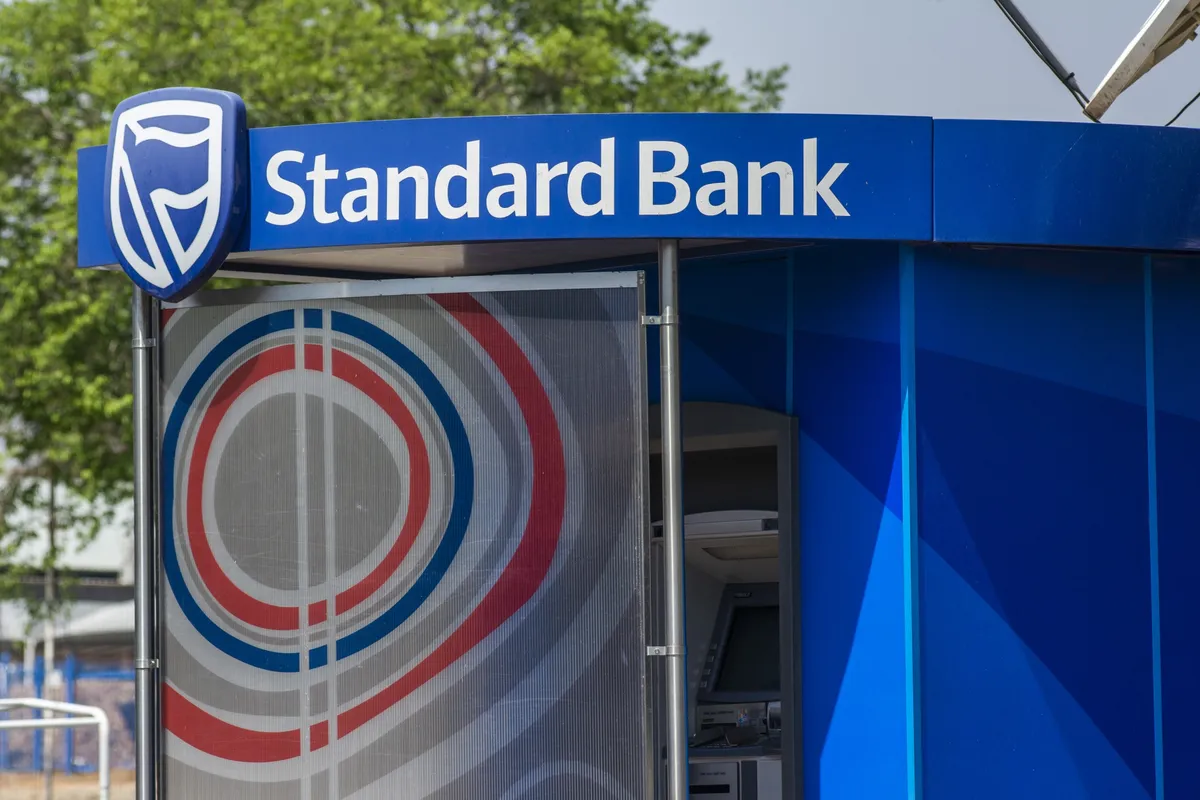
JOHANNESBURG, Sept 9 – Rising savings, stronger electronic payments and increased cross-border transactions are providing fresh evidence of growing economic participation across Africa, according to data from Standard Bank.
The bank reported that deposits increased 12% to R2.5 trillion (about $156.30 billion), while the value of domestic electronic payments rose 11% and cross-border payment values climbed 7%. The figures cover Standard Bank’s operations serving 19.5 million active clients across 21 African countries.
Lungisa Fuzile, Standard Bank’s Chief Executive for Africa Regions, said the trends point to strengthening economic activity and confidence across several African markets.
“What we are seeing across many markets is clear evidence of economic momentum. As more people participate in the formal financial system, as businesses trade across borders and as savings pools deepen, the foundations for sustainable growth become stronger.”
Standard Bank’s footprint spans markets representing more than two-thirds of Africa’s GDP, giving the lender a broad view of changes in consumer activity, business formation, trade and investment flows.
Payment Flows Reflect Deeper Integration
The increase in electronic payments provides another indication of rising commercial activity, domestic electronic payment values processed through Standard Bank increased 11%, while cross-border payment values rose 7%. The bank currently accounts for approximately 19% of cross-border payment activity across its African markets, giving it visibility into movements of goods, services and capital between economies.
Fuzile said the growing payment flows indicate that the effects of the African Continental Free Trade Area (AfCFTA) are increasingly becoming visible through actual commercial transactions.
“The African Continental Free Trade Area is often discussed in policy terms, but its impact is increasingly visible in commercial activity. Every payment reflects a transaction. Every transaction reflects business activity. And every new trade corridor creates opportunities for growth, investment and job creation.”
The expansion of digital connectivity is reinforcing this trend, making it easier for businesses and consumers to participate in formal financial systems and conduct transactions across borders.
Deposits Outpace Loan Growth
The increase in savings is another notable feature of the data. Standard Bank’s deposits rose to R2.5 trillion, exceeding the 7% growth in loans. The widening deposit base potentially provides African financial institutions with deeper pools of domestic capital that can be channeled into lending, investment and economic development.
Fuzile said greater participation by households, entrepreneurs and businesses is strengthening the foundations of African economies.
“When households save, when entrepreneurs build businesses and when companies invest for growth, they create the foundations for stronger economies. Across many African markets we are seeing increasing evidence of exactly this kind of participation.”
The trend comes as African economies contend with rapid population growth and urbanisation, alongside substantial requirements for infrastructure, housing, energy, logistics and digital services.
Infrastructure Remains Critical
Financial participation alone will not be sufficient to unlock the continent’s longer-term growth potential. Infrastructure investment remains central to expanding productive capacity and connecting businesses to regional and global markets.
Standard Bank said it has mobilised R328 billion in sustainable finance since 2022, including R50.6 billion during the first six months of 2026.
The financing has supported projects spanning renewable energy, water, agriculture, transport and economic inclusion, areas that can help address some of the structural constraints limiting productivity and regional trade.
Fuzile said infrastructure development and broader participation in the formal economy will be important drivers of Africa’s next phase of growth.
“Africa’s next growth phase will be driven by improved infrastructure networks coupled with increasing economic participation by larger numbers of Africans, both men and women.”
He added that significant unmet demand exists not only for financial services but also for trade, housing, energy, logistics, digital connectivity and entrepreneurship.
As barriers to commerce decline and African economies become more connected, the combination of deeper savings pools, expanding payment networks and infrastructure investment could provide a stronger foundation for regional economic integration.
The data therefore point to an important shift in the continent’s financial landscape: Africa’s growth opportunity is increasingly being reflected not only in headline GDP figures, but also in where households save, how businesses transact and how quickly money moves across borders.
