
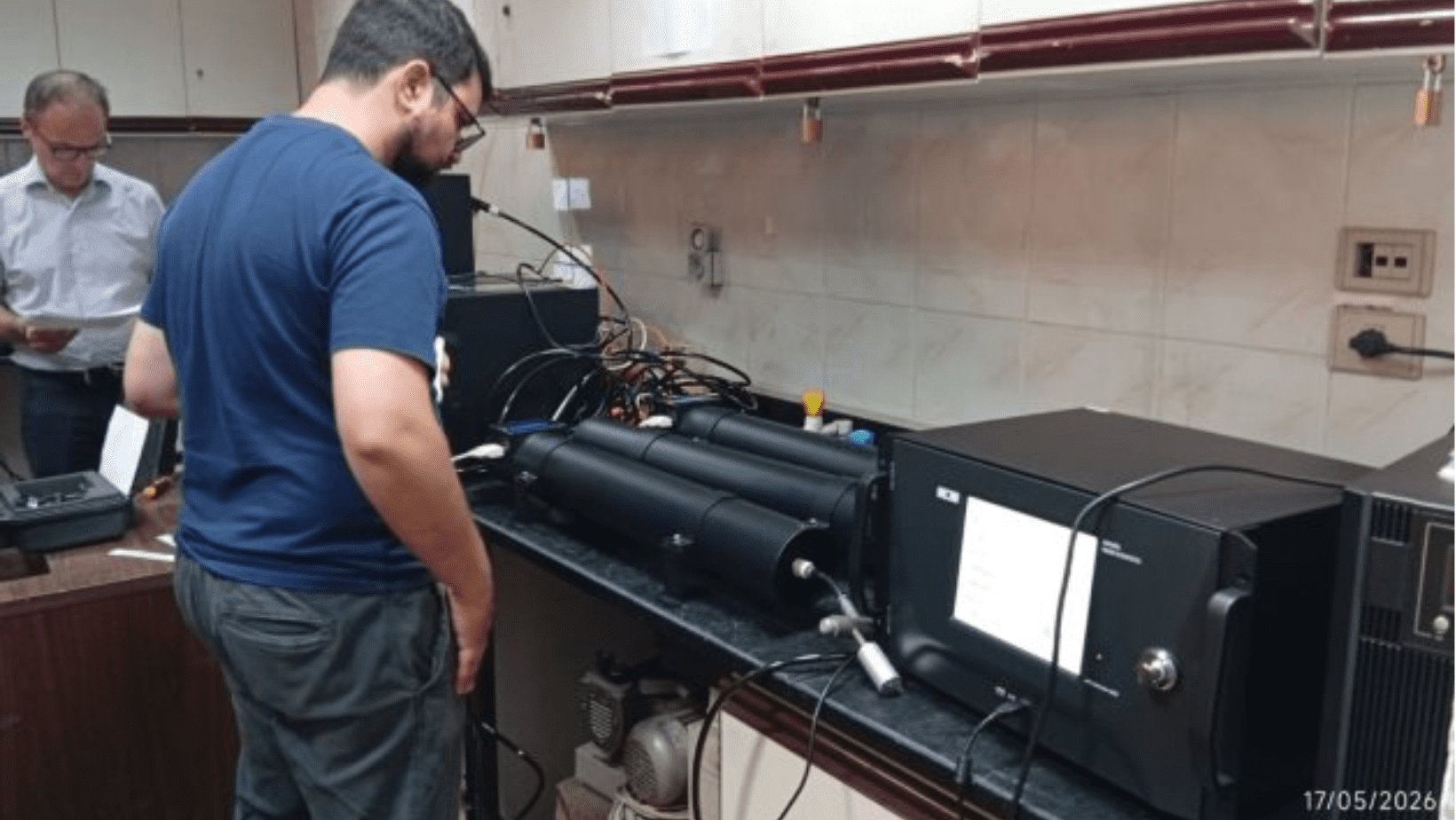
CAIRO, June 19 – The Egyptian government has started installing advanced monitoring devices to track black carbon, methane (CH₄) and ultra fine air particles as part of a new effort to improve air quality and climate monitoring across the country.
The announcement was made by Minister of Environment and Local Development, Manal Awad, who said the equipment is being rolled out across 12 monitoring stations under the Air Pollution and Climate Change Management in Greater Cairo project. The stations are managed by the Egyptian Environmental Affairs Agency (EEAA) and stretch from the northern edge of Cairo near the Delta down to southern Helwan.
For the first time in Egypt, the system will also measure PM1 particles, which are extremely fine airborne particles smaller than 1 micron. It will also continue tracking PM2.5 and PM10 particles, giving a more detailed picture of air pollution levels and their health effects.
The project is being implemented by the Ministry of Environment and Local Development with funding support from the World Bank, alongside international and local experts in air quality and climate science. However, the government did not disclose the specific types of devices being installed.
Black carbon, which comes mainly from incomplete burning of fossil fuels, biofuels and biomass, is a major component of PM2.5. According to the World Health Organization (WHO), exposure to black carbon is linked to cardiovascular diseases and early death, making monitoring important for public health.
Methane is also part of the focus. The United Nations notes that methane is responsible for nearly one third of current global warming and traps far more heat than carbon dioxide over a 20 year period. It remains in the atmosphere for about 12 years, but still contributes to climate change and health risks, including premature deaths.
The new system is expected to strengthen Egypt’s ability to track pollution levels more accurately and support future action on air quality and climate risks.
