
African Economy Inc.
  • Home
  • Economy
  • Business
  • Markets
  • Finance
  • Credit Ratings
  • Policy
  • Tech
African Economy Inc.
  • Home
  • Economy
  • Business
  • Markets
  • Finance
  • Credit Ratings
  • Policy
  • Tech
Monday, August 10, 2026
Top News
Egypt Inflation Rises to 14.9% in July as Annual Price Pressures Persist
Morocco Port Traffic Rises 14.4% to 148.6 Million Tons in First Half of 2026
Tanzania Seeks More Dangote Investments in Fertiliser and Energy
Morocco Apex Bank Says Industrial Sector Was Steady Despite Rise in Production Costs
Nigeria Says 147 Structures May Be Affected by Lagos-Calabar Coastal Highway
Eight Companies Faces Uncertainty as Nigerian Insurance Regulator Recapitalisation Review Draws Closer to an End
ATIDI Plans to Double Capital to $2 Billion to Support African Infrastructure Investment
Goldman Sachs Executives Visits Dangote Refinery as Group Targets $100 Billion Revenue by 2030
Tanzania, Uganda and Vitol Partner to Develop $20 Billion Tanga Energy Hub
Tanzania Allows All Foreign Investors to Buy Treasury Bills and Government Bonds
AIIB Approves $500 Million Loan to Upgrade Urban Infrastructure in South Africa
Dangote Refinery Becomes Europe’s Largest Imported Jet Fuel Supplier for Second Straight Month
UK-Morocco Trade Reaches £5.3 Billion in Q1 2026, Up 16.7% Year-on-Year
Kenya Introduces Crypto Appeal Process Under New Digital Asset Rules
Egypt Plans to Award Seven Oil and Gas Blocks to Boost Energy Investment
SUBSCRIBE
African Economy Inc.
Subscribe
African Economy Inc.
  • Home
  • Economy
  • Business
  • Markets
  • Finance
  • Credit Ratings
  • Policy
  • Tech
Copyright 2026 - All Right Reserved
Home » Morocco Port Traffic Rises 14.4% to 148.6 Million Tons in First Half of 2026
Economy

Morocco Port Traffic Rises 14.4% to 148.6 Million Tons in First Half of 2026

by Emmanuel Ebube August 10, 2026
written by Emmanuel Ebube August 10, 2026
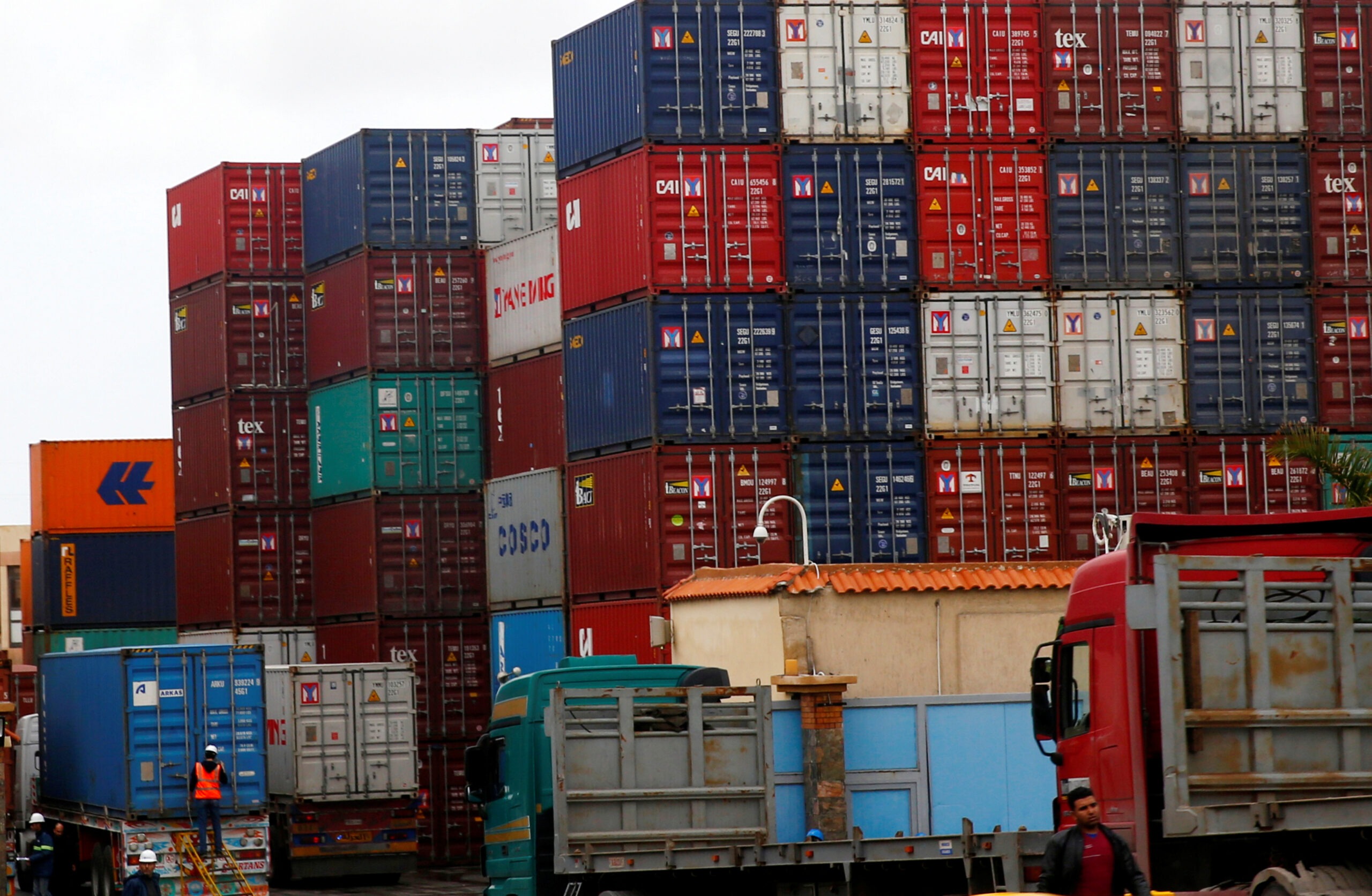
Container trucks stand in line on the road due to bad weather in the Mediterranean city, March 30, 2019. REUTERS/Amr Abdallah Dalsh
FacebookTwitterLinkedinEmail
4

LAGOS, Aug 10 – In the first half of 2026, Morocco’s ports processed 148.6 million tons of trade traffic, marking a 14.4% rise compared to about 130 million tons during the same period the previous year, driven by a significant increase in transshipment activity that boosted total volumes.

Transshipment traffic, involving cargo transferred between vessels before reaching its final destination, reached 82.6 million tons during the period, up 28.6% from the first half of 2025. It accounted for 55.6% of total port activity, reinforcing Morocco’s role as a major maritime hub connecting trade routes between Europe, Africa and other international markets.

National traffic, by contrast, was broadly unchanged. Volumes rose just 0.6% year on year to 66 million tons. Imports accounted for 27.4% of overall traffic, exports for 13.9%, cabotage for 2.6% and bunkering for 0.6%.

Import activity provided additional support to port volumes. Moroccan ports processed 40.7 million tons of imports during the first half, an increase of 3.6% from the same period in 2025. Exports moved in the opposite direction, falling 1.6% to 20.6 million tons, while cabotage traffic declined 14.6% to 3.9 million tons.

You Might Be Interested In
  • IMF Approves Zimbabwe Program as Africa Faces Growth Pressures

Hydrocarbon bunkering, which includes fuel supplied to vessels operating through Morocco’s maritime routes, also weakened. Volumes fell 4.1% to 868,000 tons during the period, despite the country’s strategic position along shipping routes around the Strait of Gibraltar.

Performance across major categories was mixed. Cereal traffic increased 13.8% to 5.8 million tons, while imports of hydrocarbons rose 7.7% to 7.1 million tons. Container traffic expanded 1.7% to 6.3 million twenty-foot equivalent units, or TEUs, while traffic involving new vehicles increased 12.9% to 357,634 units.

Other segments recorded declines. Traffic involving phosphates and related products fell 11.2% to 14.6 million tons, while coal volumes decreased 2.9% to 5.2 million tons. International road transport through the port system also declined, falling 3.2% to 301,191 units.

Passenger activity was relatively stable during the period. Moroccan ports handled about 1.6 million passengers through the end of June, a marginal 0.3% decline from a year earlier. Cruise traffic performed better, with passenger numbers increasing 2.4% to 174,366.

Fishing activity also weakened. Landings from coastal and artisanal fishing operations fell 6.3% year on year to 367,184 tons during the first half of 2026.

The divergence between transshipment and national traffic highlights the growing importance of Morocco’s position as a regional logistics and maritime hub. The strong expansion in cargo transferred between vessels provided the main impetus for overall port growth, while underlying domestic trade volumes remained comparatively subdued.

The performance also reflects the strategic importance of Morocco’s port infrastructure to international supply chains. The country’s location at the intersection of major European, African and Atlantic shipping routes gives its ports a significant role in connecting global cargo flows with markets across the continent.

For Morocco, sustaining this momentum will depend not only on continued growth in transshipment but also on the performance of domestic imports, exports, industrial cargo and logistics activity. The first-half figures suggest that while the country’s maritime infrastructure continues to attract substantial international cargo, the strength of national port activity remains more uneven across sectors.

Read Next

  • Cocoa Prices Climb Nearly 40% as Weather Threatens West African Production

    July 10, 2026
  • Nigeria Moves to Set Up Grid Asset Company to Tackle Power Transmission Gaps

    March 9, 2026
  • Vodafone Partners With Amazon Satellites to Link Remote Masts Across Europe and Africa

    March 2, 2026
  • Standard Chartered Deepens AI Shift as Workforce Falls Below 1,000 in Kenya

    June 5, 2026
  • Senegal Eyes $7.5 Billion Yakaar-Teranga Gas Development to Cut Energy Subsidies

    May 13, 2026

Newsletter

Subscribe to our newsletter for trusted insights on Africa’s economies, markets, and business.

African Economy Inc. Logo

About Us

We are a business and economic intelligence platform delivering in-depth reporting, analysis, and insights on markets, companies and economic developments across Africa.

Our Company

  • AEI Intelligence
  • About
  • Editorial Standard
  • Partnerships
  • Advertise With Us
  • Careers
  • Ownership

News

  • Economy
  • Business
  • Markets
  • Finance
  • Credit Ratings
  • Policy
  • Tech

Useful Links

  • Privacy Policy
  • Terms of Use
  • Closed Captioning Policy
  • Accessibility Statement
  • Personal Information
  • Data Tracking
  • Register New Account

Subscribe Newsletter

Subscribe to our newsletter for trusted insights on Africa’s economies, markets, and business.

©2026 Majons Media Inc. All Rights Reserved.

Facebook Twitter Instagram Linkedin
Manage Consent
To provide the best experiences, we use technologies like cookies to store and/or access device information. Consenting to these technologies will allow us to process data such as browsing behavior or unique IDs on this site. Not consenting or withdrawing consent, may adversely affect certain features and functions.
Functional Always active
The technical storage or access is strictly necessary for the legitimate purpose of enabling the use of a specific service explicitly requested by the subscriber or user, or for the sole purpose of carrying out the transmission of a communication over an electronic communications network.
Preferences
The technical storage or access is necessary for the legitimate purpose of storing preferences that are not requested by the subscriber or user.
Statistics
The technical storage or access that is used exclusively for statistical purposes. The technical storage or access that is used exclusively for anonymous statistical purposes. Without a subpoena, voluntary compliance on the part of your Internet Service Provider, or additional records from a third party, information stored or retrieved for this purpose alone cannot usually be used to identify you.
Marketing
The technical storage or access is required to create user profiles to send advertising, or to track the user on a website or across several websites for similar marketing purposes.
  • Manage options
  • Manage services
  • Manage {vendor_count} vendors
  • Read more about these purposes
View preferences
  • {title}
  • {title}
  • {title}
African Economy Inc.
  • Economy
  • Business
  • Markets
  • Banking & Finance
  • Energy
  • Tech
  • Policy