
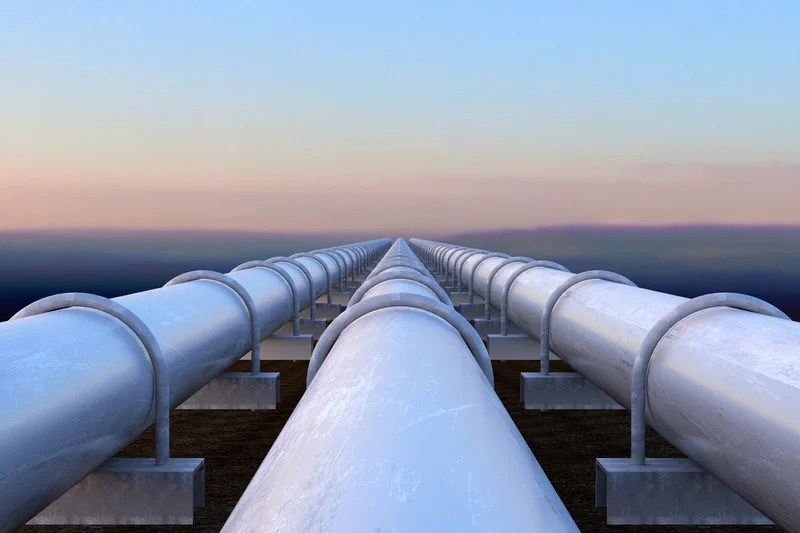
RABAT, April 13 – A $25 billion intergovernmental agreement for the planned African Atlantic Gas Pipeline is expected to be signed this year, marking a major step forward for one of Africa’s most ambitious energy projects.
The pipeline, spanning about 6,900 kilometres along a hybrid offshore and onshore route, will connect gas reserves in Nigeria to Morocco, with a projected capacity of up to 30 billion cubic metres annually. Around half of that volume is expected to supply Morocco, with the remainder supporting exports to Europe.
Backed by Economic Community of West African States, the նախագիծ has completed feasibility and front-end engineering design stages, positioning it for execution.
Following the agreement, a joint governance structure will be established, including a high-level authority in Nigeria bringing together representatives from the 13 participating countries to oversee regulatory and political coordination.
A dedicated project company will also be formed in Morocco as a joint venture between Office National des Hydrocarbures et des Mines and Nigerian National Petroleum Company to drive financing, construction and implementation.
The project is designed as a phased development, allowing individual segments to be executed independently. Early phases are expected to link Morocco with gas fields in Mauritania and Senegal, as well as connect Ghana to Côte d’Ivoire, before extending to Nigeria’s gas network.
First gas from initial segments is targeted for 2031. While no final funding commitments have been secured, the project is expected to be financed through a mix of equity and debt raised by the project company.
Beyond energy supply, the pipeline is expected to strengthen regional integration, support electricity generation, and unlock industrial and mining development across West Africa. It also positions Morocco as a strategic energy bridge between Africa and Europe.
