
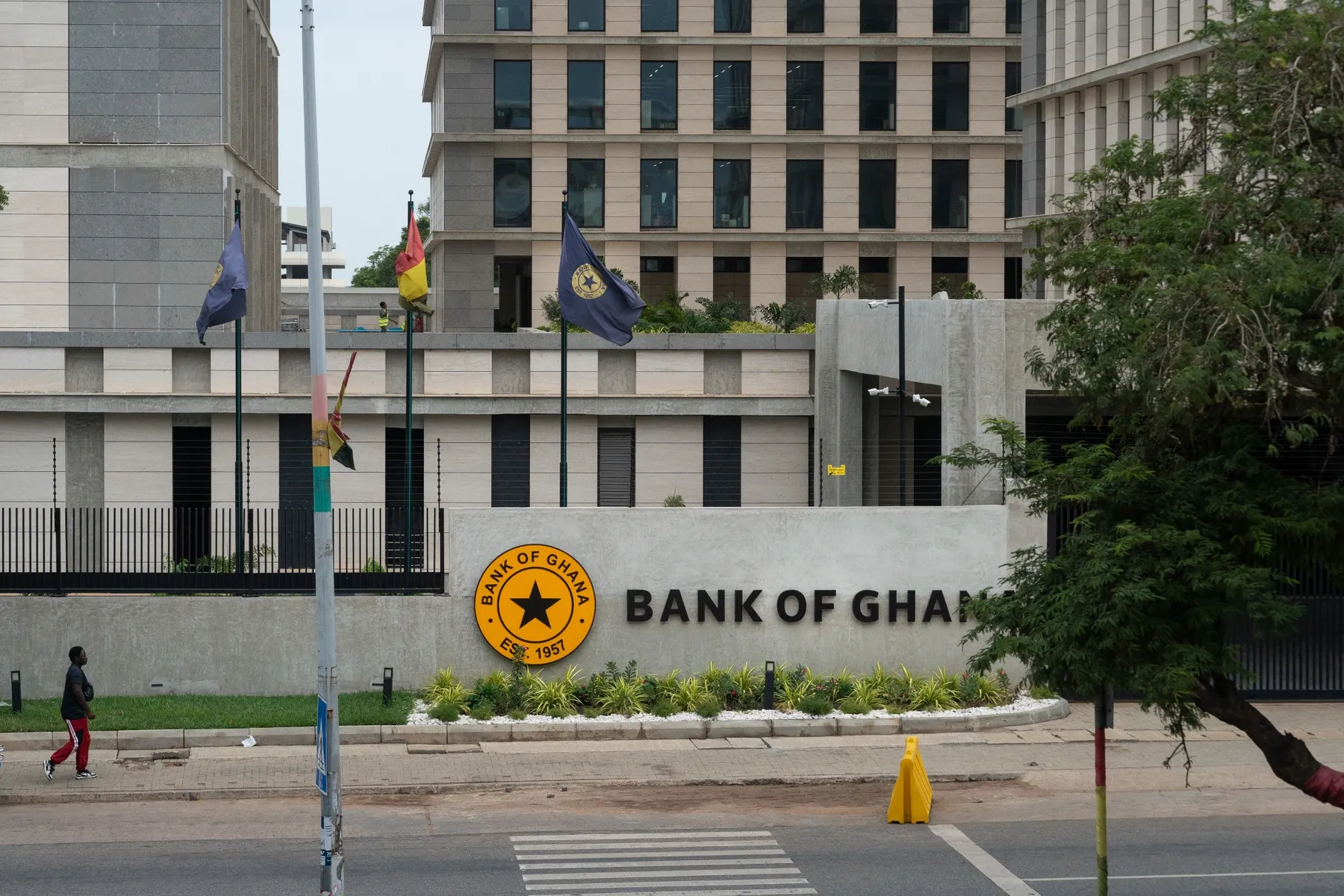
ACCRA, Sept 24 – Ghana’s central bank will make rebuilding foreign exchange reserves a key priority in the coming months as it faces a weaker current account, declining reserves and a pause in gold exports by state gold buyer GoldBod, Governor Johnson Asiama said on Wednesday.
Speaking at the start of the Monetary Policy Committee meeting, Asiama said policymakers would need to balance relatively favourable domestic economic conditions against a more uncertain global environment, including geopolitical tensions in the Middle East and rising oil prices.
“The weaker current account, the decline in reserves, and the pause in gold exports by GoldBod since August… call for a careful look at our buffers ahead of the usual rise in forex demand in the fourth quarter,” Asiama said.
Ghana’s gold reserves declined to 24.4 metric tons in June 2026, from 33 tons a year earlier. The reduction reflected gold sales during 2025 and purchases from large-scale mining companies falling short of targets.
GoldBod plays a central role in Ghana’s domestic gold purchase programme, aggregating locally produced gold for export and reserve accumulation. A portion of the bullion is transferred to the central bank, helping strengthen international reserves and support the cedi.
In May, Ghana increased the proportion of annual gold production that large-scale miners are required to sell to the central bank to 30% from 20%, as authorities sought to strengthen the country’s reserve position.
“Rebuilding reserves will be a key priority for the bank in the coming months indeed,” Asiama said.
The focus on reserves comes as Ghana approaches the final quarter of the year, when foreign-exchange demand typically increases. A weaker current account and higher global energy costs could add pressure to the country’s external position if import costs rise.
Despite the external challenges, Ghana’s economy continues to expand. The economy grew 6.0% year-on-year in the second quarter of 2026, according to the Ghana Statistical Service, although growth was below the revised 6.6% recorded in the same period a year earlier.
The central bank’s reserve strategy will therefore remain closely linked to developments in gold exports, external trade, currency conditions and global commodity prices as policymakers assess Ghana’s monetary and financial stability.
