
RABAT, Nov 21 – The African Development Bank (AfDB) and Morocco have mobilized more than €2 billion for transport infrastructure since their partnership expanded into the sector in 1987, supporting the development of roads, railways, ports and airports across the North African kingdom.
In a statement on Friday, the AfDB said the early infrastructure projects, which took shape from the 1980s, were designed to open up remote areas, connect communities and establish networks capable of supporting economic development.
“Next-generation infrastructure is reshaping Morocco: it is bringing regions closer together, easing traffic and enhancing the country’s logistics performance,” said Achraf Tarsim, the Bank’s Country Manager for Morocco.
The report highlighted the role of the partnership in connecting regions, improving logistics and supporting Morocco’s economic competitiveness. It also quoted Tarsim as saying that each investment contributes to building a “more integrated, competitive and globally open economy, driven by a strategic partnership with the kingdom”.
AfDB’s partnership with Morocco dates back to 1978
The AfDB’s first investment in Morocco dates back to 1978, when cooperation initially focused on water, agriculture, education and health.
The partnership expanded into transport in 1987, a sector that the report said would profoundly transform the kingdom. Infrastructure projects undertaken from the 1980s onwards were designed to open up remote areas, connect communities and develop networks capable of supporting economic activity.
Roads expand regional connectivity
Road infrastructure has been a central component of the partnership, with investments aimed at improving access to rural communities, reducing journey times and strengthening connections between economic centres.
The AfDB provided €90 million across both phases of Morocco’s National Rural Roads Programme. The programme built more than 26,000 kilometres of roads and helped improve access to over 80% of rural areas.
The bank also provided €118 million in financing for the Marrakech-Agadir motorway, reducing journey times between the two cities by around two hours. The project has supported trade, agriculture and tourism, while also including the replanting of approximately 221,000 argan trees across 920 hectares.
Further east, the AfDB has mobilised €229 million for the Guercif-Nador motorway. The road will connect the Oriental region to the national motorway network and the Nador West Med port complex, improving the movement of people and goods while supporting industrial and commercial activity.
Nador West Med strengthens maritime trade links
The AfDB’s infrastructure support also extends to Morocco’s port network, particularly the development of Nador West Med.
Since 2015, the bank has committed nearly €290 million towards developing the port into a maritime and industrial hub. Together with the planned Bétoya industrial zone, the complex is expected to strengthen economic connections between North and West Africa and support implementation of the African Continental Free Trade Area.
The port is also linked to the wider transport investment programme through the Guercif-Nador motorway, creating a connection between the Oriental region, the national road network and maritime trade infrastructure.
Railway investment expands passenger and freight capacity
Morocco’s railway network has also received substantial support under the AfDB partnership.
The bank has mobilised around €300 million for the National Railways Office (ONCF) to strengthen the Tangier-Marrakech line. The programme includes new tracks, the doubling and tripling of strategic sections, modernised signalling systems and major infrastructure works, including at Casa Port station.
The upgrades have increased network capacity and passenger and freight traffic, while doubling the number of daily freight train services.
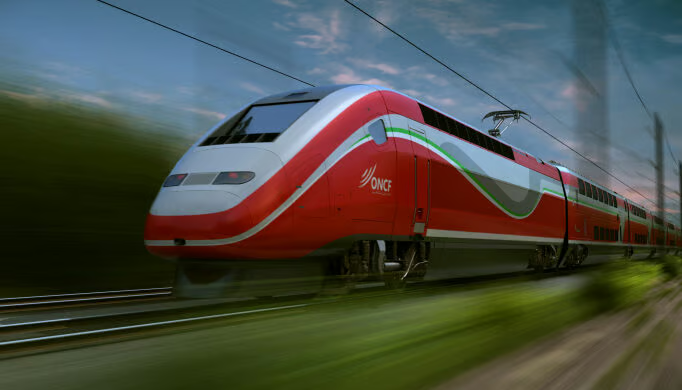
Morocco has also developed Africa’s first high-speed rail line, linking Tangier and Casablanca in just over two hours.
In July 2026, the AfDB approved a €205 million loan for the Railway Infrastructure Development Support Project. The financing is intended to extend the high-speed rail line towards Marrakech and upgrade the Kenitra-Marrakech corridor.
Airport modernization increases passenger capacity
The partnership has supported the modernization of Morocco’s aviation infrastructure through an initial €240 million airport programme.
At Marrakech Airport, passenger capacity has increased from 6 million to 9 million annually. At Fez Airport, capacity has risen fivefold to nearly 2.5 million passengers a year, strengthening both cities’ international connectivity and tourism appeal.
In Agadir, modernised air traffic control systems can handle up to 2,000 flights daily during peak periods, approximately 30% more than previously. The project has also introduced new flight routes that avoid an estimated 27,000 tonnes of CO₂ emissions annually and could save up to 176,000 tonnes of kerosene.
In Rabat, the AfDB has provided more than €109 million to expand and modernise the airport. The project is expected to quadruple passenger and cargo capacity, improve the attractiveness of the Rabat-Salé region and generate hundreds of direct jobs.
The bank approved a further €270 million in December 2025 to modernise the airports of Marrakesh, Agadir, Tangier and Fez. The programme will support the digitalisation of operations, improved security and upgraded navigation systems.
Building an integrated transport network
The AfDB’s partnership with Morocco has evolved from its initial investments in social and agricultural sectors into a broad infrastructure programme spanning rural roads, motorways, maritime facilities, railways and aviation.
By connecting regions to national transport networks and linking the country to international trade corridors, the investments are intended to improve logistics performance, expand economic opportunities and strengthen Morocco’s integration with African and global markets.
