
– Business, Finance, Markets & Economic News
  • Home
  • Economy
  • Business
  • Markets
  • Finance
  • Credit Ratings
  • Policy
  • Tech
– Business, Finance, Markets & Economic News
  • Home
  • Economy
  • Business
  • Markets
  • Finance
  • Credit Ratings
  • Policy
  • Tech
Top News
Gabon Seeks IMF Programme Deal in December 2026 as Eurobonds Rally
African Pension Funds Grow as OECD Highlights Investment Gaps Across Markets
Durban Gateway Terminal Faces License Threat as Shipping Delays Disrupt South African Trade
South Africa Holds Interest Rate at 7.25% as Policymakers Weigh Inflation Risks
Bank of Ghana Cuts Policy Rate by 300 Basis Points to 11% in Monetary Policy Realignment
Senegal President to Implement Revised 2026 Budget by Decree Amid IMF Programme Standoff
Kenya Awards Mrima Hill Critical Minerals Project to US-Backed Frontier Minerals Consortium
Nigeria’s Bank of Industry Earmarks 10% of Financing for Climate Projects
IMF Agrees to Unlock $2.3 Billion for Egypt as Loan Programme Nears Completion
Nigeria’s Central Bank and NNPC Sign Agreement on Oil Revenue Management and Energy Financing
Vitol Selected to Develop New Tanzania-Zambia Fuel Pipeline and Upgrade TAZAMA
DP World Raises Maputo Port Investment to $200 Million, Targets 650,000 TEUs by 2027
South Africa Inflation Accelerates to 5.2% in October, Highest Since May 2024
Uganda Targets January 2027 Financial Close for $2.97 Billion Standard Gauge Railway
Green Climate Fund Approves $140 Million for Green Hydrogen Projects in Southern Africa
SUBSCRIBE
– Business, Finance, Markets & Economic News
Subscribe
– Business, Finance, Markets & Economic News
  • Home
  • Economy
  • Business
  • Markets
  • Finance
  • Credit Ratings
  • Policy
  • Tech
Copyright 2026 - All Right Reserved
Finance

African Pension Funds Grow as OECD Highlights Investment Gaps Across Markets

by Gift Egbeiyon November 20, 2026
written by Gift Egbeiyon November 20, 2026
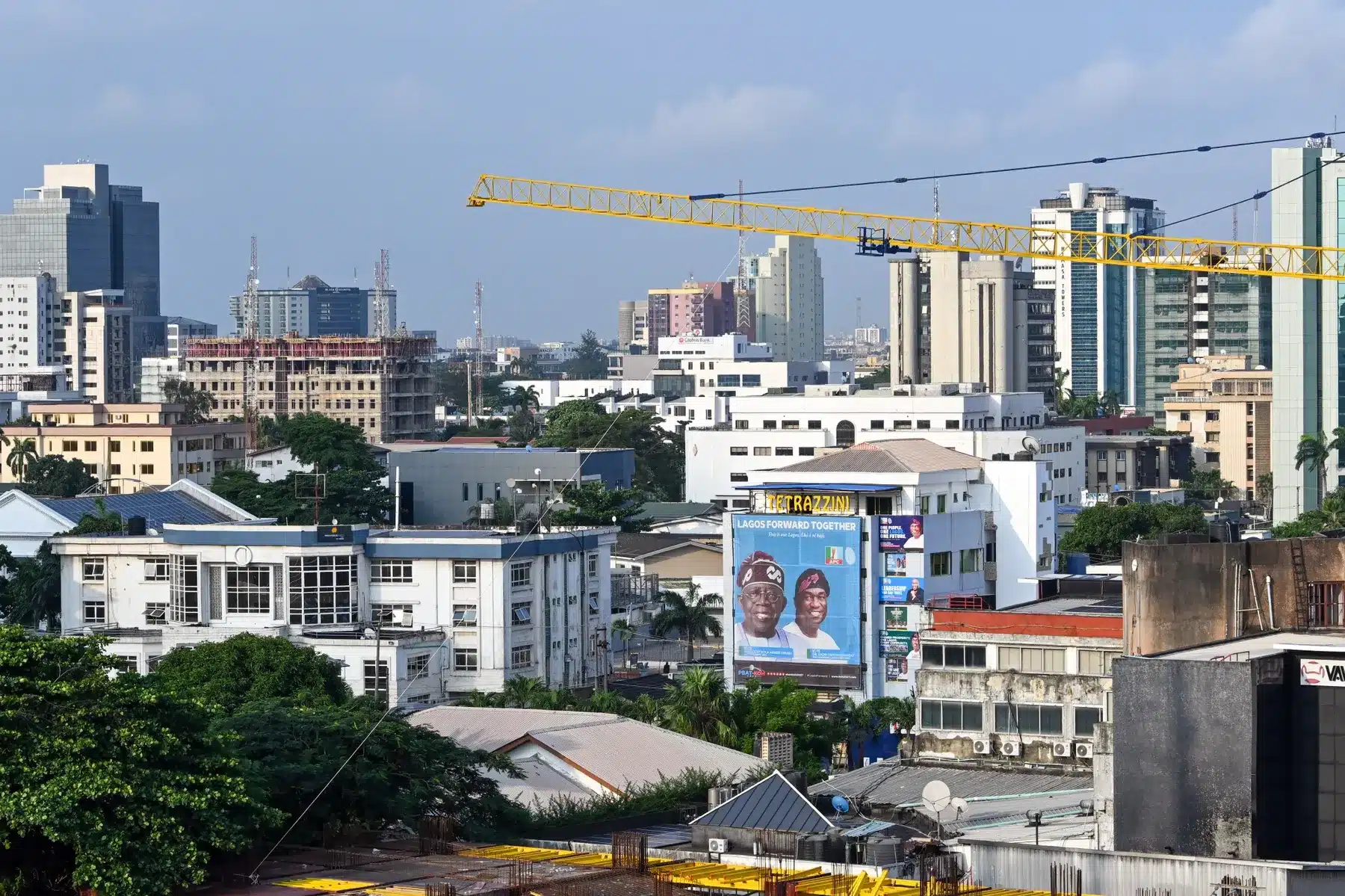
Buildings in downtown Lagos, Nigeria. Photographer: Soeren Stache/picture alliance/Getty Images
FacebookTwitterLinkedinEmail
3

LAGOS, Nov 20 – African pension funds are expanding, but their size and investment allocations remain sharply uneven across the continent, limiting their contribution to business financing and infrastructure development, according to preliminary data from the Organisation for Economic Co-operation and Development (OECD).

The figures for 2025 show substantial differences in pension assets relative to national economic output. Namibia recorded the continent’s highest pension asset-to-GDP ratio at 113.7%, while Angola’s stood at just 0.9%.

Kenya’s pension assets grew by approximately 24.6% year-on-year to about $21.8 billion, equivalent to 15.9% of GDP. Zambia also recorded double-digit growth of approximately 27% to 28%.

Other markets reported different levels of pension fund development. Lesotho’s pension assets amounted to 41.1% of GDP, following growth of 6.6%, while Morocco recorded a ratio of 5.8%, with assets increasing by 11.8%. Eswatini’s pension assets stood at approximately 66% of GDP, representing annual growth of 15.5%.

You Might Be Interested In
  • Nigeria’s Collateral-Backed Debt Could Complicate Future Restructuring, Malpass Says

The disparities reflect the fragmented nature of institutional savings across African markets. As the OECD notes, pension provider assets are limited, fragmented and unevenly accessible across the continent.

Pension portfolios remain concentrated in government securities

Beyond differences in the size of national pension systems, the allocation of assets presents another constraint on their contribution to private-sector investment.

Many African pension schemes maintain substantial exposure to government debt. Nigerian pension funds, for example, hold approximately 70% of their assets in government bills and bonds, directing a significant share of retirement savings towards sovereign financing rather than corporate securities or infrastructure projects.

Other markets have different portfolio structures. Eswatini’s pension funds, for instance, allocate around two-thirds of their portfolios to equities, illustrating the variation in investment strategies across the continent.

The wider institutional capital landscape is similarly uneven. South Africa’s pension assets amount to approximately 84% of GDP, compared with about 6% in Nigeria.

The OECD estimates that Africa’s broader capital pool exceeds $4.4 trillion, indicating the scale of domestic financial resources available across the continent. However, the extent to which these savings can support productive investment depends on their allocation, regulatory frameworks and the availability of suitable investment opportunities.

An OECD economist cautioned that “the size of pension assets alone does not guarantee sufficient retirement income” or economic impact.

Data limitations complicate comparisons

The OECD figures are preliminary and cover selected pension systems rather than providing a comprehensive assessment of every African country.

The organisation notes that the June 2026 figures are based on initial data and remain subject to revision. Differences in national reporting standards and gaps in country-level information also mean the figures do not establish a consolidated total for Africa.

Pension asset-to-GDP ratios measure funded pension savings, not the full scale of retirement obligations or social protection systems. Countries with relatively low ratios may rely more heavily on pay-as-you-go arrangements, in which current tax revenues finance benefits for retirees, rather than accumulating assets in funded pension schemes.

Pension assets also cannot be treated as capital freely available for investment. Funds are held to meet future retirement obligations, while regulatory restrictions and risk-management requirements influence the types of assets pension managers can purchase. In many markets, these rules favour government securities.

Domestic savings and the challenge of financing investment

The growth of pension pools in markets such as Kenya, Namibia and Zambia points to an expanding base of domestic long-term savings that could support deeper capital markets.

However, the concentration of investments in government debt limits the extent to which pension funds finance businesses, corporate bonds and infrastructure. In Nigeria, for example, the heavy allocation to sovereign securities means pension savings play a more limited role in expanding private-sector capital markets.

Unlocking more of this capital will require investment frameworks that allow pension managers to diversify their portfolios while maintaining safeguards for beneficiaries. Potential reforms include reviewing investment limits and developing domestic investment vehicles capable of providing access to viable projects.

The OECD has emphasised that greater investment flexibility must be accompanied by stronger risk management and a broader supply of investable projects.

For African economies seeking to mobilise domestic resources for infrastructure and private-sector expansion, the central challenge is therefore not simply growing pension assets. It is creating the financial instruments, regulatory conditions and investment opportunities through which long-term retirement savings can support productive economic activity without compromising their primary purpose of providing retirement income.

Read Next

  • South Africa Slaps Up to 75% Duties on Chinese Steel Imports

    March 20, 2026
  • Libya Signs Chevron Deal to Assess 123 Trillion Cubic Feet Gas Reserves

    April 29, 2026
  • Senegal Debt Crisis Deepens as Country Reaches $2.2 Billion IMF Deal

    September 2, 2026
  • Nigeria Domestic Crude Supply Falls Short as Pricing Disputes Persist, Data Shows

    May 6, 2026
  • Nigeria Eurobond Yields Climb to 7.47% in March 2026

    March 31, 2026

Newsletter

Subscribe to our newsletter for trusted insights on Africa’s economies, markets, and business.

African Economy Inc. Logo

About Us

We are a business and economic intelligence platform delivering in-depth reporting, analysis, and insights on markets, companies and economic developments across Africa.

Our Company

  • AI Disclosure Policy
  • About
  • Editorial Standard
  • Partnerships
  • Advertise With Us
  • Careers
  • Ownership

News

  • Economy
  • Business
  • Markets
  • Finance
  • Credit Ratings
  • Policy
  • Tech

Useful Links

  • Privacy Policy
  • Terms of Use
  • Closed Captioning Policy
  • Accessibility Statement
  • Personal Information
  • Data Tracking
  • Register New Account

Subscribe Newsletter

Subscribe to our newsletter for trusted insights on Africa’s economies, markets, and business.

©2026 Majons Media Inc. All Rights Reserved.

Facebook Twitter Instagram Linkedin
Manage Consent
To provide the best experiences, we use technologies like cookies to store and/or access device information. Consenting to these technologies will allow us to process data such as browsing behavior or unique IDs on this site. Not consenting or withdrawing consent, may adversely affect certain features and functions.
Functional Always active
The technical storage or access is strictly necessary for the legitimate purpose of enabling the use of a specific service explicitly requested by the subscriber or user, or for the sole purpose of carrying out the transmission of a communication over an electronic communications network.
Preferences
The technical storage or access is necessary for the legitimate purpose of storing preferences that are not requested by the subscriber or user.
Statistics
The technical storage or access that is used exclusively for statistical purposes. The technical storage or access that is used exclusively for anonymous statistical purposes. Without a subpoena, voluntary compliance on the part of your Internet Service Provider, or additional records from a third party, information stored or retrieved for this purpose alone cannot usually be used to identify you.
Marketing
The technical storage or access is required to create user profiles to send advertising, or to track the user on a website or across several websites for similar marketing purposes.
  • Manage options
  • Manage services
  • Manage {vendor_count} vendors
  • Read more about these purposes
View preferences
  • {title}
  • {title}
  • {title}
– Business, Finance, Markets & Economic News
  • Economy
  • Business
  • Markets
  • Banking & Finance
  • Energy
  • Tech
  • Policy
  • African Economy Inc.