
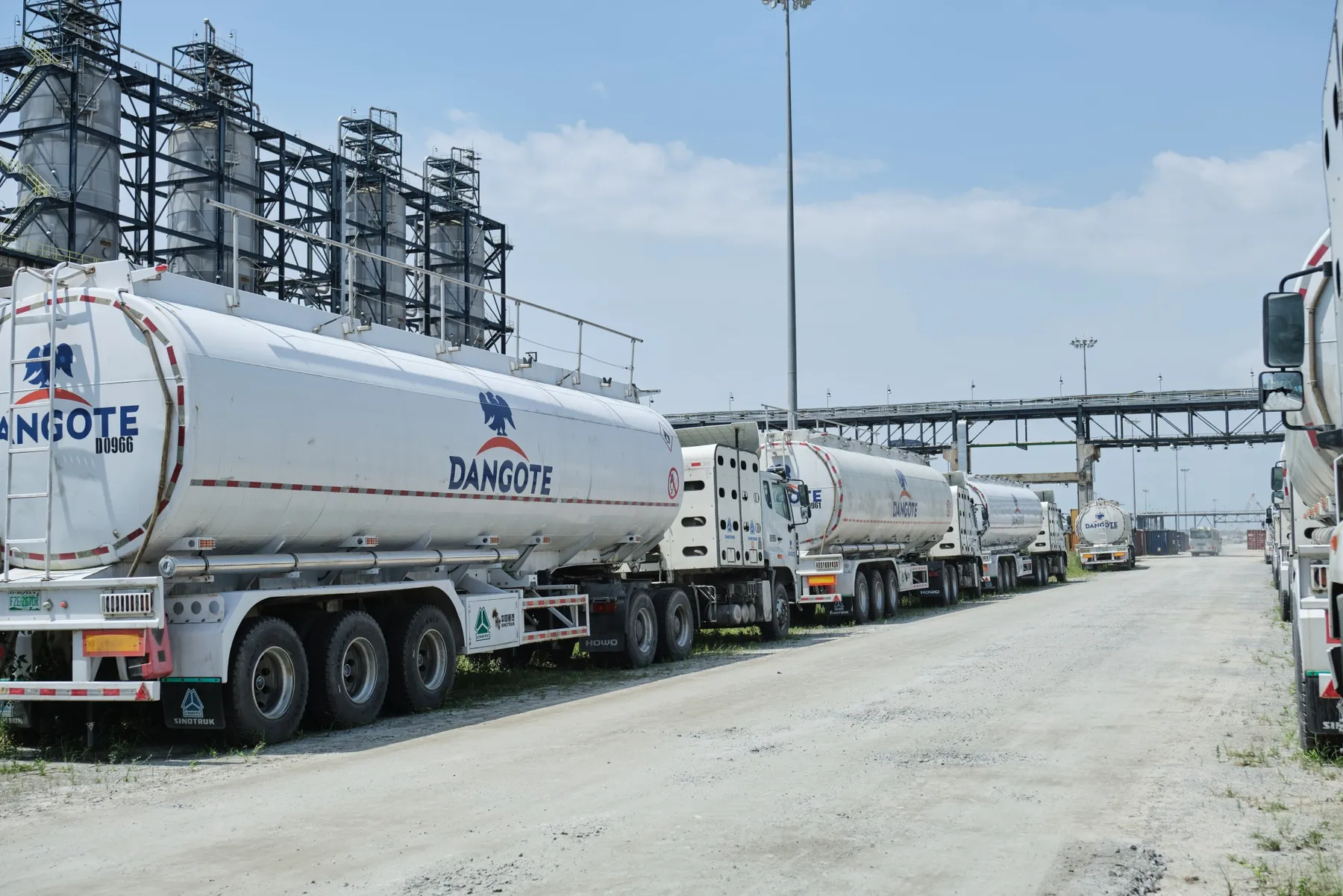
LAGOS, Nov 20 – Nigeria’s petrol supply increased in October 2026 as Dangote Petroleum Refinery and Petrochemicals Ltd raised its domestic deliveries by 12% to an average of 31.89 million litres per day. However, petrol imports also climbed by 47% to 15 million litres daily, reflecting continued reliance on imported products despite higher local refining output.
The figures are contained in the Nigerian Midstream and Downstream Petroleum Regulatory Authority’s (NMDPRA) October 2026 State of the Midstream and Downstream Sector Factsheet. The report also recorded higher fuel consumption and declining petrol stock sufficiency across the country.
Dangote increases domestic petrol deliveries
Dangote Refinery operated at 103.73% of its installed capacity of 650,000 barrels per day in October, producing an average of 48.51 million litres of petrol daily.
The refinery supplied 31.89 million litres to the domestic market, up from 28.5 million litres in September. Its petrol exports increased to 20.18 million litres per day, representing approximately 42% of daily production. The refinery also drew an average of 3.56 million litres daily from existing stock, while its closing petrol inventory fell by 37% to 229.9 million litres.
The refinery’s October operating rate was below the 105.98% recorded in September. The NMDPRA also noted a change in its reporting methodology, with export shares in the October factsheet calculated as a percentage of production rather than evacuation, as used in the September edition.
Beyond petrol, Dangote recorded average diesel production of 25.14 million litres daily, with domestic supply of 10 million litres and exports of 12.95 million litres. Aviation fuel production stood at 26.44 million litres daily, while exports reached 22.15 million litres, equivalent to 84% of production.
Petrol imports rise despite higher local supply
Total petrol receipts increased by 21% to 46.9 million litres per day in October, compared with 38.7 million litres in September.
The NMDPRA’s receipts measure covers volumes received into depots and products trucked directly out of refineries, capturing both imported products and locally supplied refinery output.
Domestic petrol supply increased by 12% to 31.9 million litres daily, while imports rose by 47% to 15 million litres from 10.2 million litres in September. The figures show that Dangote remained the dominant source of locally supplied petrol, although imported products continued to account for a significant share of Nigeria’s fuel availability.
Other petroleum product receipts also recorded mixed movements. Diesel receipts climbed by 93% to 16.8 million litres daily, comprising domestic supply of 10.7 million litres, up 32%, and imports of 6.1 million litres, compared with 600,000 litres in September.
Liquefied Petroleum Gas (LPG) supply increased by 11% to 5.2 kilotonnes daily, while aviation fuel receipts declined by 36% to 2.1 million litres per day.
Higher consumption puts pressure on fuel inventories
Nigeria’s petrol consumption increased by 5% to 46.5 million litres per day in October, from 44.4 million litres in September. Diesel consumption also rose by 7% to 15.5 million litres daily.
Despite higher receipts, petrol stock sufficiency declined from 23.9 days in September to 21.8 days in October, remaining below the NMDPRA’s required threshold of 30 days.
Diesel stock cover fell by 12% to 43.9 days, while LPG stock sufficiency declined by 7% to 14.8 days. Aviation fuel stock cover, by contrast, increased by 42% to 75.8 days, even as consumption fell by 7%.
Stock sufficiency measures the number of days available inventory can cover consumption, including stock held at Dangote Refinery. The October figures indicate that petrol and diesel inventories came under pressure despite increased product receipts.
Domestic refineries receive more crude oil
Crude oil receipts by domestic refineries increased by 19% to an average of 736,000 barrels per day in October, from 617,000 barrels per day in September.
Between January and October 2026, domestic refineries received 179.31 million barrels of crude oil. Domestic sources accounted for 144.98 million barrels, or 80.9%, while imported cargoes contributed 34.33 million barrels. October recorded the highest monthly crude oil receipts within the period, at 22.80 million barrels.
Dangote Refinery’s imported crude receipts increased by 39% to 118,400 barrels per day, while its locally sourced crude share declined from 86.1% to 83.9%.
The three state-owned refineries in Port Harcourt, Warri and Kaduna remained inactive throughout October.
Modular refineries supplied an average of 680,000 litres of diesel daily, compared with 620,000 litres in September. This represented approximately 4.9% of the NMDPRA’s 14 million-litre daily diesel demand benchmark. WalterSmith, Edo Refinery, Aradel and OPAC recorded varying levels of activity, while Duport Refinery remained shut.
Dangote expands its reach across African markets
Dangote Refinery is also pursuing opportunities beyond Nigeria as other African countries seek access to refined petroleum products.
In October, Botswana was reported to be seeking a fuel supply agreement with the refinery as part of efforts to diversify its petroleum sources.
Dangote Group also signed an agreement with Cameroon’s state-owned refinery, SONARA, and MRS Oil & Gas Company Limited to supply refined petroleum products to Cameroon. The parties did not disclose the supply volumes, financial value or duration of the arrangement.
The refinery’s export figures provide further context to its regional expansion. In October, Dangote exported a combined 55.28 million litres of petrol, diesel and aviation fuel daily, compared with domestic deliveries of 43.96 million litres.
Nairametrics had earlier reported that the refinery exported an average of 54.63 million litres of the three products daily in September, against 39.98 million litres supplied to the Nigerian market.
The October figures highlight the growing role of Dangote Refinery in Nigeria’s domestic fuel supply and regional petroleum trade, while also showing that higher local production has not eliminated imports or eased pressure on petrol inventories.
