
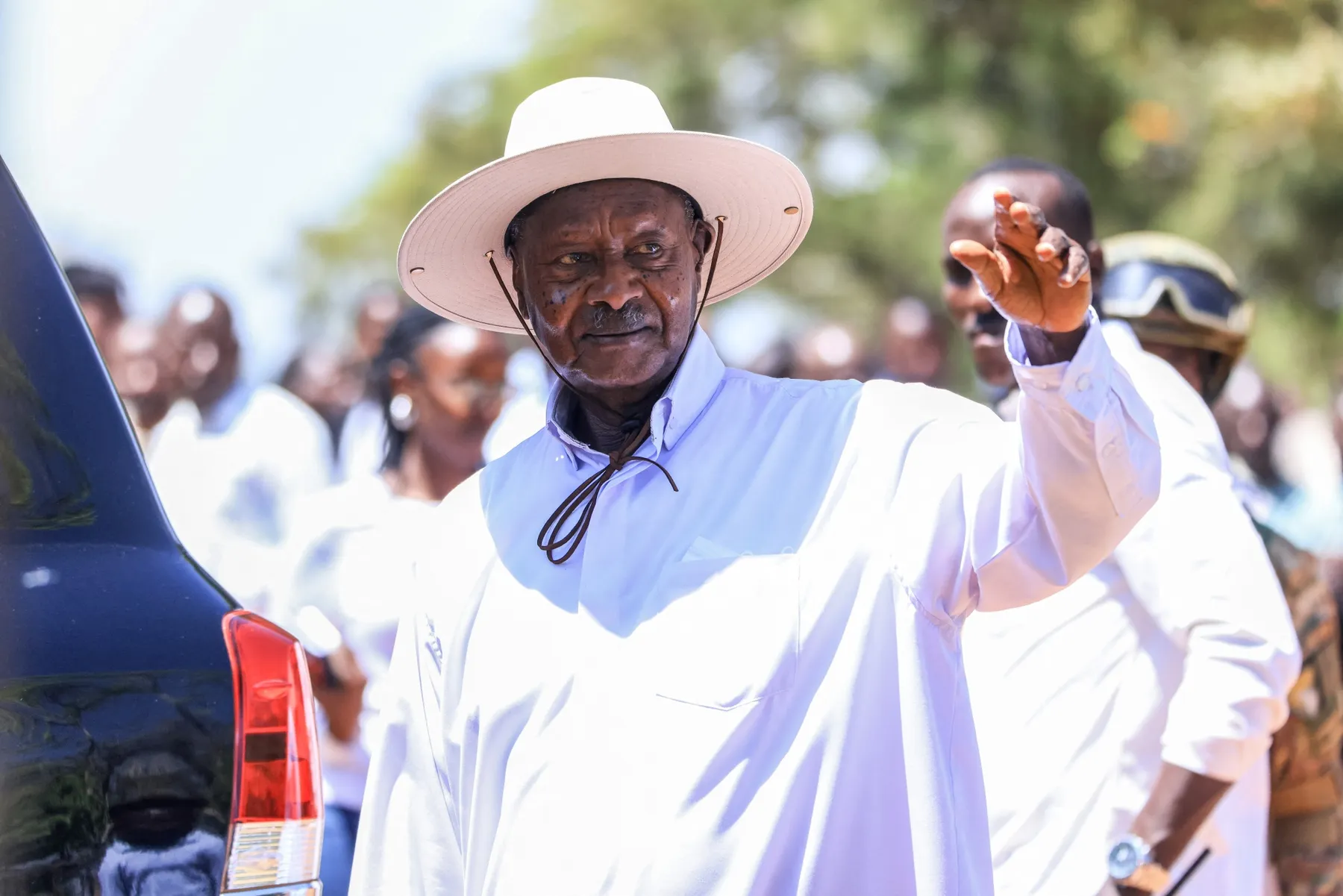
KAMPALA, May 18 – Uganda’s President Yoweri Museveni has signed into law a controversial sovereignty bill that imposes new restrictions on foreign influence and foreign-funded activities in Uganda, despite mounting criticism from economic officials and international institutions.
The legislation, known as the “Protection of Sovereignty” law, criminalizes actions deemed to promote “the interests of a foreigner against the interests of Uganda” and introduces strict registration requirements for foreign agents operating in the country.
The law also prohibits individuals or organizations acting on behalf of foreign interests from developing or implementing policy initiatives without prior government approval.
Violations could attract penalties including fines and prison terms of up to 10 years.
Museveni’s office confirmed late Sunday that the president had signed the bill into law following its passage by parliament earlier this month.
The 81-year-old leader, who has ruled Uganda since 1986, has repeatedly accused political opponents and civil society groups of advancing foreign agendas through external funding and influence.
Supporters of the legislation say it is designed to protect Uganda’s national sovereignty and limit external interference in domestic affairs.
However, critics warn the law could significantly damage investor confidence, development financing and international partnerships.
Michael Atingi-Ego, governor of the Bank of Uganda, warned that the measure could reduce financial inflows into the economy and place additional pressure on the country’s foreign-exchange reserves.
He described the potential consequences as an “economic disaster” for Uganda.
The World Bank also criticized the legislation, warning that its broad wording could expose routine development and aid-related activities to criminal liability.
Analysts say the law could complicate operations for non-governmental organizations, foreign-funded development agencies and international investors operating in Uganda.
The measure comes as several African governments increasingly move to tighten oversight of foreign-funded organizations and international influence amid rising geopolitical competition and domestic political tensions.
Uganda’s economy remains heavily reliant on foreign investment, aid inflows and multilateral financing, particularly as the country prepares for large-scale oil production projects expected to reshape its economic outlook over the coming years.
