
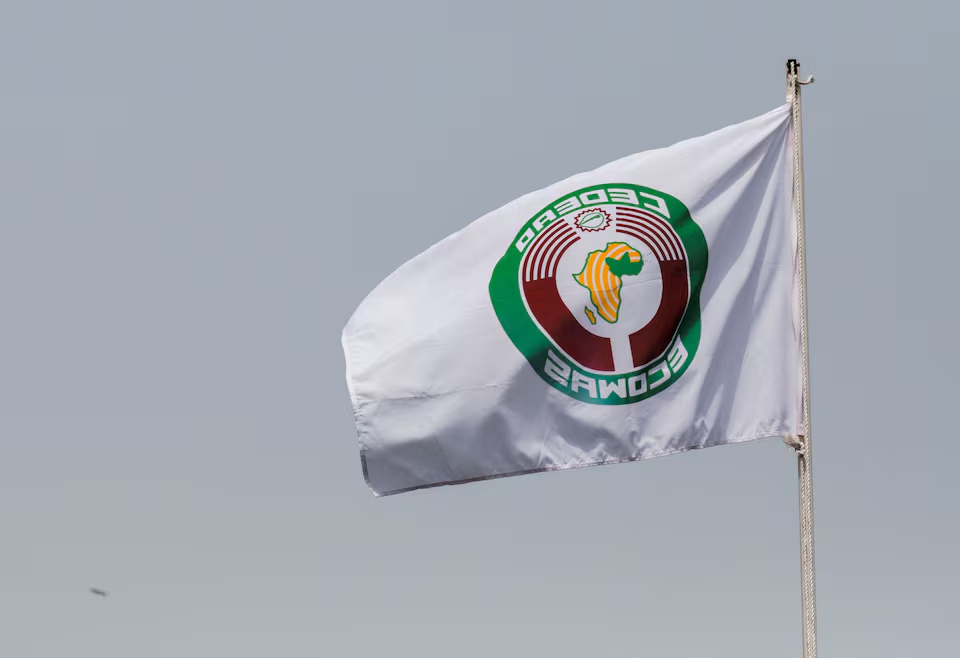
FREETOWN, July 20 – The Economic Community of West African States (ECOWAS) member states have signed an intergovernmental agreement supporting the Nigeria-Morocco Atlantic Gas Pipeline, marking a significant step forward for one of Africa’s largest cross-border energy infrastructure projects.
The agreement was signed in Freetown, Sierra Leone, according to a joint statement issued by Morocco’s National Office of Hydrocarbons and Mines (ONHYM) and Nigeria’s National Petroleum Company (NNPC) Limited.
The proposed pipeline is designed to transport up to 30 billion cubic metres (bcm) of natural gas annually from Nigeria through 13 West African countries to Morocco, creating a major regional energy corridor linking West Africa with Europe.
Under the project, 15 bcm of gas per year will be supplied to Morocco and European markets through the existing gas pipeline connecting Morocco and Spain, strengthening energy trade between Africa and Europe.
First agreed a decade ago by King Mohammed VI of Morocco and Nigeria’s President, the project will span approximately 6,900 kilometres using a combination of offshore and onshore infrastructure. The pipeline is estimated to cost around $25 billion.
The project has already completed its feasibility study and Front-End Engineering Design (FEED) phase, bringing it closer to implementation.
According to ONHYM, the pipeline is expected to promote regional economic integration by expanding access to natural gas for electricity generation while supporting industrialisation and mining development across participating countries. The project is also intended to strengthen Morocco’s position as a strategic energy gateway between Africa and Europe.
The next phase of the project will involve the signing of a bilateral agreement between Morocco and Mauritania, which is expected to take place in the presence of Nigeria’s president, according to the joint statement.
The Nigeria-Morocco Atlantic Gas Pipeline is widely regarded as one of Africa’s most ambitious energy infrastructure projects and is expected to enhance regional energy security, diversify export routes for Nigerian gas and accelerate economic cooperation across West Africa.
