
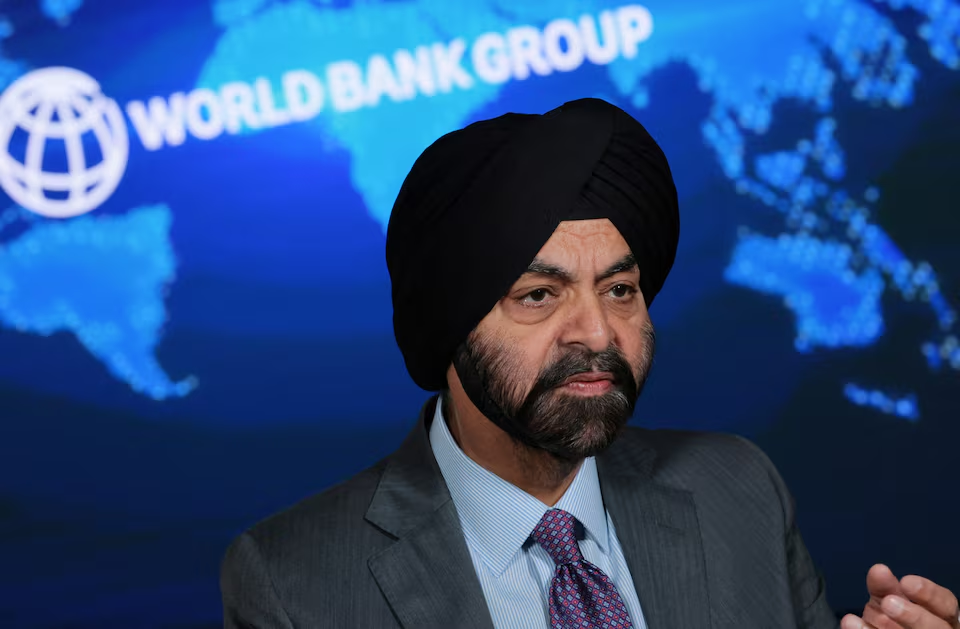
DAKAR, Sept 15 – World Bank President Ajay Banga is set to meet with Senegalese President Bassirou Diomaye Faye to advance discussions on Senegal’s debt restructuring plan under the Group of 20 Common Framework. Banga underscored the urgency of the matter, indicating his intent to expedite the process based on past experiences.
The discussions are expected to focus on how Senegal can move through the restructuring process more quickly, drawing on reforms introduced after earlier cases exposed delays within the framework.
“We’re going to discuss how we can be helpful to ensure that his case goes through the G20 Common Framework at the fastest speed of any of the prior cases,” Banga told Reuters.
Banga said G20 members had taken steps to improve the debt treatment process and shorten the time required to reach restructuring agreements, giving Senegal an opportunity to benefit from lessons learned from previous cases.
The meeting comes as Dakar prepares to reorganize part of its sovereign debt after reaching a staff-level agreement with the International Monetary Fund on a $2.2 billion, three-year lending programme.
Senegal said earlier this month that it would pursue an “enhanced” version of the G20 Common Framework. The planned debt treatment will exclude obligations denominated in the regional CFA franc currency.
The Common Framework was established in 2020 during the COVID-19 pandemic to provide a coordinated mechanism for restructuring debt owed by the world’s poorest countries. However, implementation has historically been slow. Zambia’s restructuring process lasted well over a year, while Ghana completed its case in slightly more than a year.
To address some of those delays, the World Bank, the IMF and G20 members established the Global Sovereign Debt Roundtable, bringing together borrowing countries, official creditors and private-sector participants to address obstacles in sovereign debt restructurings.
The participating institutions have also developed a debt restructuring playbook intended to provide clearer guidance on the process and improve transparency for countries and creditors.
For Senegal, the accelerated approach comes as the government seeks to stabilize its public finances following a debt crisis that led the IMF to suspend an earlier lending programme.
Faye’s Washington visit will also include meetings with U.S. Treasury Secretary Scott Bessent and IMF Managing Director Kristalina Georgieva, putting Senegal’s debt strategy at the centre of discussions with major international financial institutions and creditors.
Banga indicated that Senegal would still need to implement the necessary reforms for the restructuring process to succeed.
“He’s got to do the right things, but he’s focused on doing it, so we’ll see,” Banga said.
The World Bank’s engagement could give Senegal access to institutional experience accumulated through earlier Common Framework restructurings, while the enhanced process is intended to reduce delays that have historically complicated sovereign debt negotiations.
