
– Business, Finance, Markets & Economic News
  • Home
  • Economy
  • Business
  • Markets
  • Finance
  • Credit Ratings
  • Policy
  • Tech
– Business, Finance, Markets & Economic News
  • Home
  • Economy
  • Business
  • Markets
  • Finance
  • Credit Ratings
  • Policy
  • Tech
Top News
Kenya Set for About $400 Million World Bank Emergency Financing Amid Rising Risks
South Africa Swings to 2.6% Current Account Deficit as Higher Oil Costs Hit Imports
Emerging-Market Private Credit Fundraising Surges to $8.7 Billion in H1 2026
TotalEnergies Makes New Angola Oil Discovery, Expands Exploration Footprint
Egypt’s Annual Urban Consumer Price Inflation Eases to 14.5% in August, Stats Agency Says
Senegal to Put 109 Oil and Gas Blocks on Market as Dakar Seeks New Energy Investors
Angola Moves to Open $18.6 Billion Domestic Bond Market to Foreign Investors
India’s Lohum Begins Lithium Mining in Zimbabwe With First Overseas Shipment
Africa’s Deposits Rise 12% to $156.30 billion as Payment Activity Accelerates, Standard Bank says
Morocco and Guinea Sign 25 Agreements to Deepen Strategic Economic Partnership
Africa50 Targets $20 Billion Infrastructure Portfolio as Funding Gap Widens
Senegal Rejects Restructuring, Plans Debt Reprofiling Under $2.2 Billion IMF Deal
Africa’s Private Credit Market Set for Further Growth as Financing Gap Widens
Mauritius Explores Etihad Partnership as Island Seeks to Expand Aviation Network
DR Congo Tightens Control of Geological Data Amid Critical Minerals Race
SUBSCRIBE
– Business, Finance, Markets & Economic News
Subscribe
– Business, Finance, Markets & Economic News
  • Home
  • Economy
  • Business
  • Markets
  • Finance
  • Credit Ratings
  • Policy
  • Tech
Copyright 2026 - All Right Reserved
Home » Economy » South Africa Swings to 2.6% Current Account Deficit as Higher Oil Costs Hit Imports
Economy

South Africa Swings to 2.6% Current Account Deficit as Higher Oil Costs Hit Imports

by Mintesinot Nigussie September 10, 2026
written by Mintesinot Nigussie September 10, 2026
South Africa
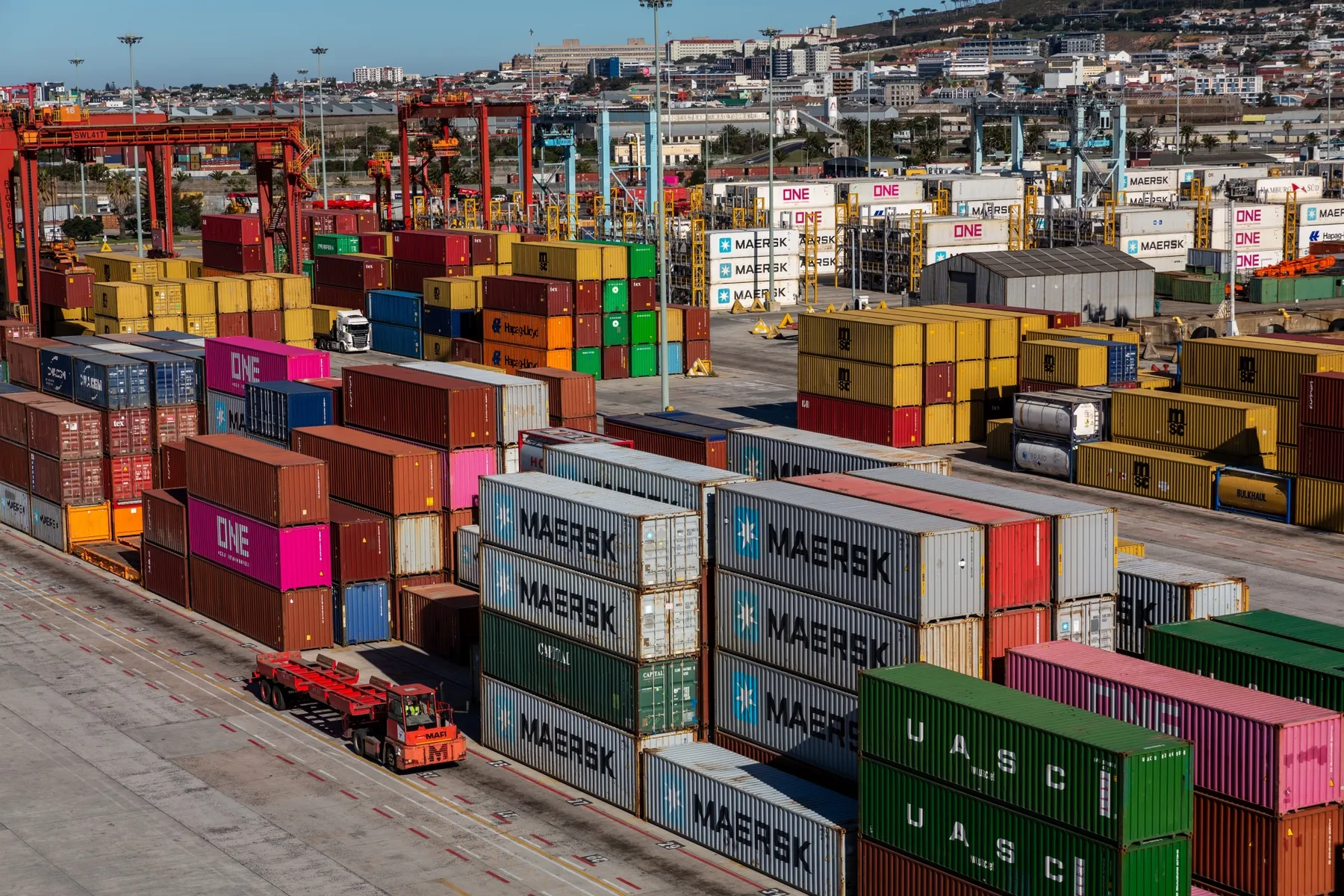
Containers at the Port of Cape Town.Photographer: Dwayne Senior/Bloomberg
FacebookTwitterLinkedinEmail
3

JOHANNESBURG, Sept 10 – South Africa’s current account swung into a deficit in the second quarter of 2026 as surging oil and petroleum import costs eroded the country’s trade surplus, according to data from the South African Reserve Bank.

The current account deficit stood at 2.6% of gross domestic product in April-June, reversing a surplus of 2.3% of GDP in the first quarter.

In absolute terms, the deficit reached 205.5 billion rand ($12.81 billion), compared with a surplus of 181.6 billion rand in the previous quarter.

The sharp deterioration was driven largely by a contraction in the trade surplus, which fell to 146.4 billion rand from 428.8 billion rand in the first three months of the year.

You Might Be Interested In
  • Nigeria’s Current Account Surplus Rises to $4.98bn on Stronger Oil Exports

The South African Reserve Bank attributed much of the pressure to a sharp increase in the cost of crude oil and refined petroleum imports, citing “heightened supply concerns related to the ongoing war in the Middle East”.

The value of crude oil imports increased by 82.1% during the quarter, while the volume purchased rose by just 1.8%. The divergence highlights the extent to which higher international energy prices, rather than significantly greater import volumes, drove the increase in South Africa’s oil bill.

Energy Exposure Drives External Pressure

South Africa imports most of the fuel consumed domestically, leaving its external accounts particularly sensitive to movements in global energy prices.

The latest deterioration therefore illustrates the vulnerability of South Africa’s trade position to geopolitical disruptions in major oil-producing regions. The conflict involving the United States, Israel and Iran that began in late February pushed energy markets higher and increased the cost of South Africa’s fuel imports.

The reversal in the current account also comes after a particularly strong first quarter, when the country recorded a substantial trade surplus. The sharp quarterly deterioration means that developments in global oil markets are becoming an important factor for South Africa’s external balance alongside domestic economic conditions.

For policymakers, sustained energy-price pressure could weigh on the country’s import bill and broader external position if elevated oil prices persist. Conversely, easing global energy costs would provide relief by reducing the value of fuel imports and supporting the trade balance.

Read Next

  • Nigeria Directs Fuel Marketers to Cut PMS Prices as Global Oil Prices Decline

    June 30, 2026
  • Kenya’s Central Bank Keeps Rate at 8.75% Amid Rising Inflation and Oil Price Risks

    June 10, 2026
  • African Governments Increasingly Turn to Multilateral Lenders as Debt Risks Persist, S&P Says

    February 24, 2026
  • Moody’s Upgrades Ghana Outlook to Positive as Fiscal Conditions Improve

    April 11, 2026
  • IMF Raises Egypt Growth Outlook to 4.6% on Stronger Investment, Tourism and Exports

    August 17, 2026

Newsletter

Subscribe to our newsletter for trusted insights on Africa’s economies, markets, and business.

African Economy Inc. Logo

About Us

We are a business and economic intelligence platform delivering in-depth reporting, analysis, and insights on markets, companies and economic developments across Africa.

Our Company

  • AEI Intelligence
  • About
  • Editorial Standard
  • Partnerships
  • Advertise With Us
  • Careers
  • Ownership

News

  • Economy
  • Business
  • Markets
  • Finance
  • Credit Ratings
  • Policy
  • Tech

Useful Links

  • Privacy Policy
  • Terms of Use
  • Closed Captioning Policy
  • Accessibility Statement
  • Personal Information
  • Data Tracking
  • Register New Account

Subscribe Newsletter

Subscribe to our newsletter for trusted insights on Africa’s economies, markets, and business.

©2026 Majons Media Inc. All Rights Reserved.

Facebook Twitter Instagram Linkedin
Manage Consent
To provide the best experiences, we use technologies like cookies to store and/or access device information. Consenting to these technologies will allow us to process data such as browsing behavior or unique IDs on this site. Not consenting or withdrawing consent, may adversely affect certain features and functions.
Functional Always active
The technical storage or access is strictly necessary for the legitimate purpose of enabling the use of a specific service explicitly requested by the subscriber or user, or for the sole purpose of carrying out the transmission of a communication over an electronic communications network.
Preferences
The technical storage or access is necessary for the legitimate purpose of storing preferences that are not requested by the subscriber or user.
Statistics
The technical storage or access that is used exclusively for statistical purposes. The technical storage or access that is used exclusively for anonymous statistical purposes. Without a subpoena, voluntary compliance on the part of your Internet Service Provider, or additional records from a third party, information stored or retrieved for this purpose alone cannot usually be used to identify you.
Marketing
The technical storage or access is required to create user profiles to send advertising, or to track the user on a website or across several websites for similar marketing purposes.
  • Manage options
  • Manage services
  • Manage {vendor_count} vendors
  • Read more about these purposes
View preferences
  • {title}
  • {title}
  • {title}
– Business, Finance, Markets & Economic News
  • Economy
  • Business
  • Markets
  • Banking & Finance
  • Energy
  • Tech
  • Policy