
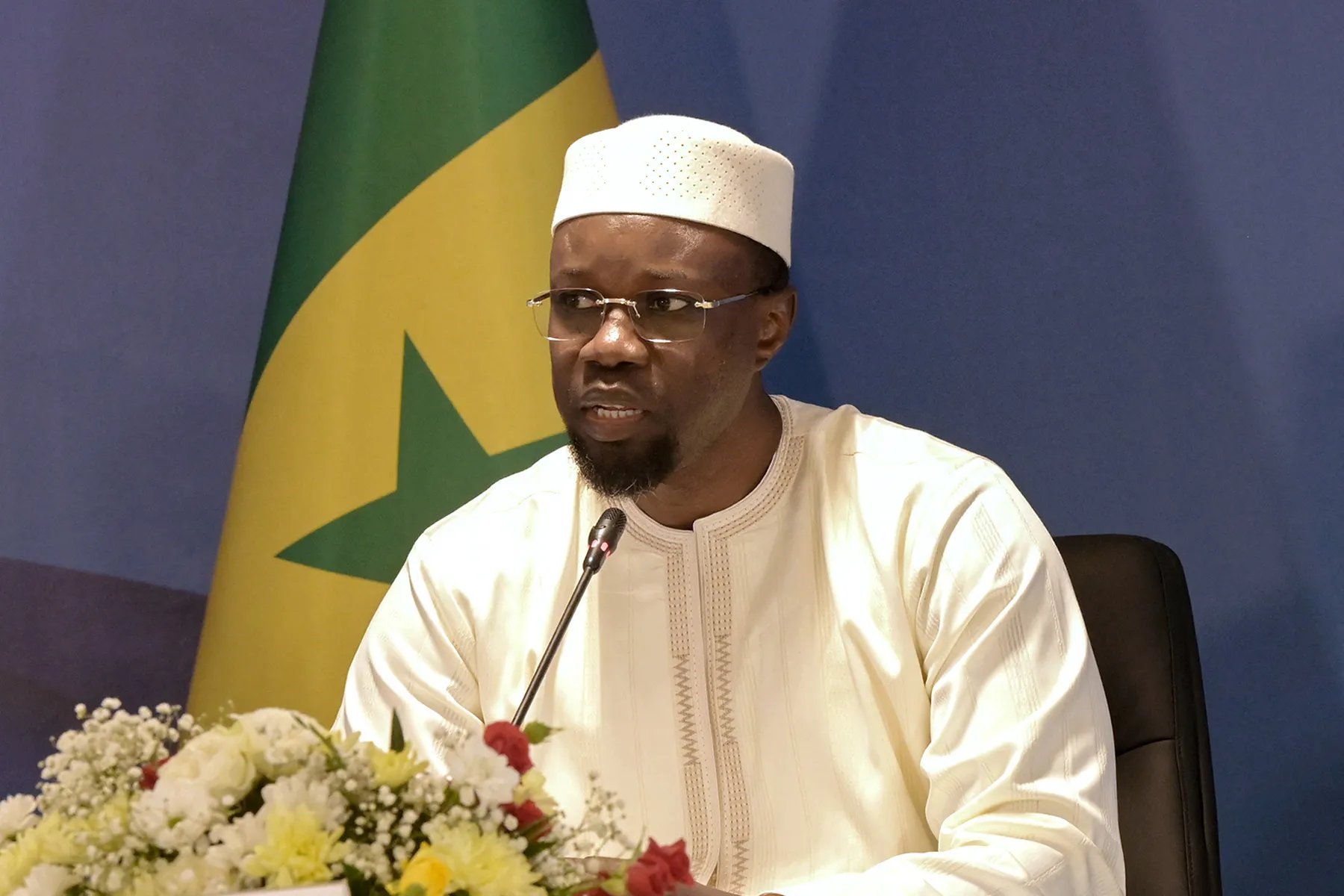
DAKAR, May 27 – Senegal’s former Prime Minister Ousmane Sonko has been elected Speaker of the national parliament just days after being sacked on Friday by President Bassirou Diomaye Faye, deepening political tensions at the top of the country’s leadership.
Lawmakers voted overwhelmingly in support of Sonko’s appointment, reinforcing his continued influence within Senegal’s ruling political movement despite his dismissal from government.
The vote followed a dramatic political fallout between the president and his longtime ally over the direction of economic reforms and how to address Senegal’s mounting debt challenges.
Sonko secured the backing of 132 lawmakers in the 165-seat assembly after first being reinstated as a member of parliament following the dissolution of the previous cabinet.
During his acceptance remarks, Sonko sought to calm speculation about a direct confrontation with the presidency, stating that parliament would fulfill its institutional responsibilities without positioning itself against the head of state.
Political observers, however, view the role as potentially giving Sonko a powerful platform to influence national policy debates and shape legislative priorities ahead of future political developments.
The latest developments come at a fragile moment for Senegal’s economy as the country continues negotiations linked to suspended financial support from the International Monetary Fund.
Investor concerns have intensified following the leadership dispute, with analysts warning that political uncertainty could increase pressure on Senegal’s sovereign debt position.
International financial markets reacted negatively to the government shake-up, with Senegalese bonds declining amid fears that tensions within the ruling coalition could complicate economic reforms needed to stabilize public finances.
The opposition criticized Sonko’s rapid return to a senior institutional role, questioning both the political process and the legal basis surrounding the developments.
The standoff highlights growing divisions within Senegal’s leadership at a time when the country is facing rising fiscal pressures, debt concerns and broader economic uncertainty.
