
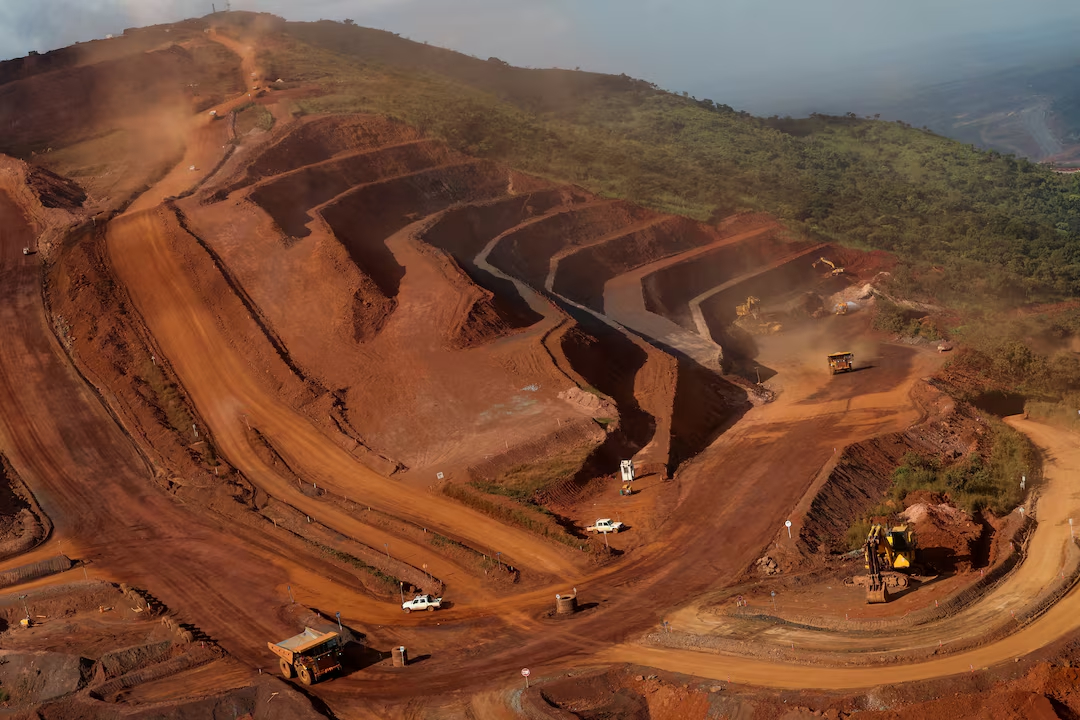
ADDIS, ABABA, Aug 3 – Mali is seeking to leverage revenues generated from its mining sector reforms to raise as much as 500 billion CFA francs ($883.1 million) for infrastructure development, as the military-led government looks to channel higher mining income into long-term economic projects.
The plan offers the clearest indication yet of how the government intends to utilise additional revenues generated by its 2023 mining code overhaul, which increased royalties, expanded state ownership in mining projects and strengthened fiscal contributions from mining companies.
The reforms have reshaped Mali’s mining sector and prompted disputes with several international operators, including Canadian mining company Barrick Mining Corporation, over the implementation of the new fiscal framework.
Speaking on state television following the inaugural meeting of the Energy, Water and Transport Infrastructure Development Fund, Finance Minister Alousseni Sanou said the fund had mobilised 109.14 billion CFA francs between January 1, 2025, and June 30, 2026.
According to Sanou, “The fund generates at least 50 billion CFA francs annually,” adding that the steady revenue stream could be leveraged to secure significantly larger financing for critical infrastructure investments.
Established in 2023, the infrastructure fund is financed exclusively through contributions from holders of both large-scale and artisanal mining permits.
The financing mechanism requires mining companies to contribute 1% of quarterly turnover, alongside 10% of ad valorem mining taxes during a mine’s first five years of production. The turnover contribution rises to 2% after the initial five-year period.
The government believes the predictable revenue generated by the fund can be used to unlock substantially greater financing for national infrastructure projects through leverage mechanisms.
Infrastructure and Transport Minister Dembele Madina Sissoko said projects submitted for funding include railway developments, road construction, the acquisition of boats and investments linked to the state-owned Mali Airlines SA.
Mali’s strategy reflects a broader trend across Africa, where governments are seeking to capture a larger share of revenues generated from natural resources to finance domestic development.
In December 2025, Malian authorities announced that a government audit had recovered 761 billion CFA francs in alleged unpaid obligations from mining companies, reinforcing the government’s efforts to increase fiscal returns from one of its most important economic sectors.
The latest initiative positions mining revenues not only as a source of government income but also as a catalyst for financing strategic infrastructure aimed at supporting long-term economic growth and improving connectivity across the country.
