
PRETORIA, July 13 – Africa’s banking landscape is undergoing a significant transformation as Gulf financial institutions expand across the continent while several European lenders continue to scale back their African operations.
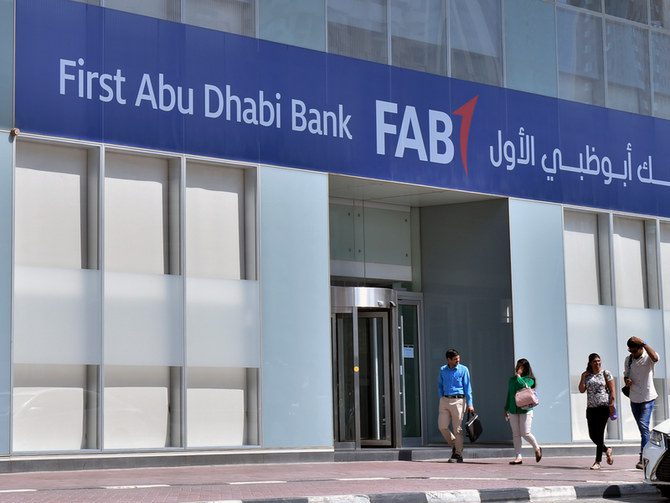
The latest signal came from First Abu Dhabi Bank (FAB), the United Arab Emirates’ largest lender with $406 billion in assets, bigger than Standard Bank and FirstRand combined, which successfully defended its trademark before South Africa’s Supreme Court of Appeal, clearing a key legal hurdle ahead of its planned application for a full South African banking licence.
According to the court’s majority judgment on July 7, 2026, there was no reason to doubt that FAB would satisfy the legal requirements to operate as a bank in South Africa once its trademark issue was resolved.
The move is widely seen as a strategic step in the bank’s expansion across Africa. FAB already operates in Egypt and Libya and opened a representative office in Lagos earlier this year. A South African banking licence would give the lender a presence across North, West and Southern Africa.
The expansion comes as several international banks have reduced their footprint across Africa in recent years. Institutions including HSBC, BNP Paribas, Barclays and Standard Chartered have exited or scaled back retail and wealth management businesses across multiple African markets as they refocus capital on core operations.
Who’s filling it, and how
Gulf institutions are the most visible replacement. FAB already operates in Cairo and Libya and opened a Lagos representative office in February; a South African license would give it a footprint spanning North, West, and Southern Africa simultaneously, a corridor no single foreign bank currently holds.
According to industry estimates, Gulf Cooperation Council (GCC) countries have deployed more than $100 billion into Africa, while bilateral trade between the Gulf and Africa has expanded to approximately $154 billion, growing at an average annual rate of around 8%.
Dubai’s DP World and Abu Dhabi Ports now hold port concessions across fifteen African countries which includes Algeria, Egypt, Somalia, Somaliland, Tanzania, South Africa, Guinea, Senegal, Sudan, the DRC, Mozambique, Congo-Brazzaville, Eritrea, Rwanda, and Niger, giving Gulf capital physical control over African trade infrastructure well beyond banking balance sheets. At last year’s G20 summit in Johannesburg, the UAE separately pledged up to $1 billion toward AI infrastructure funding across the continent, a signal the relationship is expanding into technology and data infrastructure, not just trade finance.
African institutions are moving to capture the same vacuum from the other direction. Absa, South Africa’s third-largest lender by assets, has been explicit that its rest-of-Africa strategy is built on European retreat creating acquisition opportunities, the Standard Chartered Uganda deal, alongside expansion ambitions in Tanzania and Zambia, sits on top of an already-established base in Ghana and Kenya.
Pan-African players including UBA, Standard Group, and Ecobank have simultaneously opened offices in Dubai or Abu Dhabi specifically to intermediate Gulf-Africa trade and investment flows, positioning themselves as the local execution layer for capital that increasingly originates in the Gulf rather than London or Paris. Morocco and Egypt’s banks have taken a parallel lead in cross-border African expansion, operating from regional hubs while most remaining international lenders manage the continent at arm’s length.
There is a partial Western counter-move, the European Bank for Reconstruction and Development committed at least $1.5 billion over three years to a five-market sub-Saharan expansion based out of Nigeria, targeting Kenya, Benin, Senegal, and Côte d’Ivoire. It is real capital, but it is development-finance capital with development-finance conditionality, a different instrument than the commercial banking licenses and port concessions Gulf capital is acquiring outright.
Why this is more than a change of lender
The easy read on this shift is capital diversification, Africa trading dependence on one set of foreign lenders for dependence on another, with the practical benefit of more competition and more available financing in markets, like Nigeria, Kenya, and Francophone West Africa, that have historically been underbanked by international standards. That benefit is real and shouldn’t be dismissed: FAB’s stated strategy targets trade finance, infrastructure funding, energy, and corporate banking, sectors where demand has consistently outstripped the capital European banks have been willing to commit since the 2010s.
But the more consequential shift is structural, and it’s happening quietly enough that it hasn’t yet been framed as a single story. FAB has joined China’s cross-border interbank payment system, the alternative to SWIFT that Beijing has spent a decade building alongside its African and Gulf expansion. That is not incidental.
As Gulf banks become Africa’s primary source of new commercial banking capacity, and as those same Gulf banks deepen their own integration into Chinese-anchored payment and settlement infrastructure, the practical effect is that a growing share of African banking relationships is being wired technically, not just commercially around Western-controlled payment rails rather than through them. European retreat and Gulf entry are not simply swapping one balance sheet for another; over time, they risk quietly re-routing which financial infrastructure African trade and capital flows ultimately clear through.
The governance dimension compounds this. Gulf sovereign wealth funds led by Abu Dhabi’s and Kuwait’s investment authorities joined forces with nine African sovereign funds, including Egypt, Morocco, and Nigeria’s, in a coordination arrangement last year, deepening a state-to-state capital relationship that operates on different disclosure and conditionality norms than the DFI-anchored, governance-conditional capital that has historically accompanied European and multilateral financing into Africa. That is not automatically worse for African borrowers. Gulf capital is frequently faster to deploy and less encumbered by the ESG and procurement conditionality that African finance ministries have long complained slows DFI disbursement.
But it is different capital, answering to different shareholders, under a different regulatory philosophy, and African institutions absorbing it at the current pace are making a consequential bet on whose standards will govern the next decade of the continent’s financial architecture largely without that bet being framed as a choice at all.
Why this is more than a change of lender
The easy read on this shift is capital diversification. Africa trading dependence on one set of foreign lenders for dependence on another, with the practical benefit of more competition and more available financing in markets, like Nigeria, Kenya, and Francophone West Africa, that have historically been underbanked by international standards. That benefit is real and shouldn’t be dismissed: FAB’s stated strategy targets trade finance, infrastructure funding, energy, and corporate banking, sectors where demand has consistently outstripped the capital European banks have been willing to commit since the 2010s.
But the more consequential shift is structural, and it’s happening quietly enough that it hasn’t yet been framed as a single story. FAB has joined China’s cross-border interbank payment system, the alternative to SWIFT that Beijing has spent a decade building alongside its African and Gulf expansion.
As Gulf banks become Africa’s primary source of new commercial banking capacity, and as those same Gulf banks deepen their own integration into Chinese-anchored payment and settlement infrastructure, the practical effect is that a growing share of African banking relationships is being wired technically, not just commercially around Western-controlled payment rails rather than through them. European retreat and Gulf entry are not simply swapping one balance sheet for another; over time, they risk quietly re-routing which financial infrastructure African trade and capital flows ultimately clear through.
The governance dimension compounds this. Gulf sovereign wealth funds led by Abu Dhabi’s and Kuwait’s investment authorities joined forces with nine African sovereign funds, including Egypt, Morocco, and Nigeria’s, in a coordination arrangement last year, deepening a state-to-state capital relationship that operates on different disclosure and conditionality norms than the DFI-anchored, governance-conditional capital that has historically accompanied European and multilateral financing into Africa.
Gulf capital is frequently faster to deploy and less encumbered by the ESG and procurement conditionality that African finance ministries have long complained slows DFI disbursement. But it is different capital, answering to different shareholders, under a different regulatory philosophy, and African institutions absorbing it at the current pace are making a consequential bet on whose standards will govern the next decade of the continent’s financial architecture largely without that bet being framed as a choice at all.
The risk sitting underneath the opportunity
There’s a fragility worth flagging for institutional readers that the current wave of coverage mostly omits. Gulf banking growth itself is not immune to the region’s own geopolitical exposure, S&P Global Ratings has flagged that Gulf lenders are facing performance headwinds tied to the broader war-risk environment in the Middle East, with total domestic deposit outflows across the region estimated near $307 billion and some GCC banking systems, particularly in Qatar and Bahrain, more exposed than others.
UAE and Saudi lenders are comparatively insulated by stronger sovereign balance sheets and deeper liquidity, which is precisely why FAB backed by Mubadala and Abu Dhabi’s ruling family, and chaired by the same figure who chairs the Abu Dhabi Investment Authority is the institution leading the African push rather than a Qatari or Bahraini peer. But it means the durability of Gulf capital’s African expansion is itself tied to a regional risk factor. Middle East conflict escalation that African finance ministries have limited ability to monitor or hedge against, layering one geopolitical dependency on top of the one it’s replacing.
What institutional actors should watch
For African banking regulators, the immediate task is less about whether to welcome Gulf capital, the European retreat means there is little practical alternative at the scale required and more about ensuring licensing and supervisory frameworks keep pace with a shift happening faster than most central banks’ regulatory review cycles. FAB’s South African application, if it proceeds, will be a test case for whether frontier-market entrants face the same prudential scrutiny previously applied to European incumbents, or a lighter touch born of eagerness to fill the capital gap.
For DFIs and Western multilaterals, the EBRD’s Nigeria-based expansion is a signal that some institutions have registered the competitive stakes, but $1.5 billion against $100 billion-plus in cumulative Gulf deployment is a rounding error, not a counterweight, the gap is unlikely to close through incremental commitments of this size.
For African pan-continental banks, Absa, UBA, Standard Group, Ecobank, the current moment is a genuine strategic window: European retreat plus Gulf capital inflow creates acquisition and partnership opportunities simultaneously, and the institutions moving fastest to establish Gulf-facing offices and absorb divesting European units are positioning themselves as the indispensable local layer regardless of which foreign capital source ultimately dominates. The banks that treat this as a temporary disruption to wait out, rather than a permanent reordering to position inside of, are the ones most likely to find themselves disintermediated by the time the transition settles.
Africa did not choose to have its banking relationships rewired this quickly. European capital retreated for its own balance-sheet reasons, and Gulf capital moved into the space that created because the opportunity and the liquidity were both there. But the continent’s institutions regulators, pan-African banks, and finance ministries alike still have a narrowing window to shape the terms of that rewiring, rather than simply absorb it.
